3D Printing News Briefs, April 18, 2026: Educational Grants, Bambu X1, & More

In today’s 3D Printing News Briefs, SPE announced a collaboration to expand 3D printing education through its equipment grant program. Bambu Lab has retired its X1 Series of FFF 3D printers, and ISRO acquired a Spacetime 4D Akasha300 3D printer.
SPE Collaborating with 3DSHQ to Expand Educational Grant Program
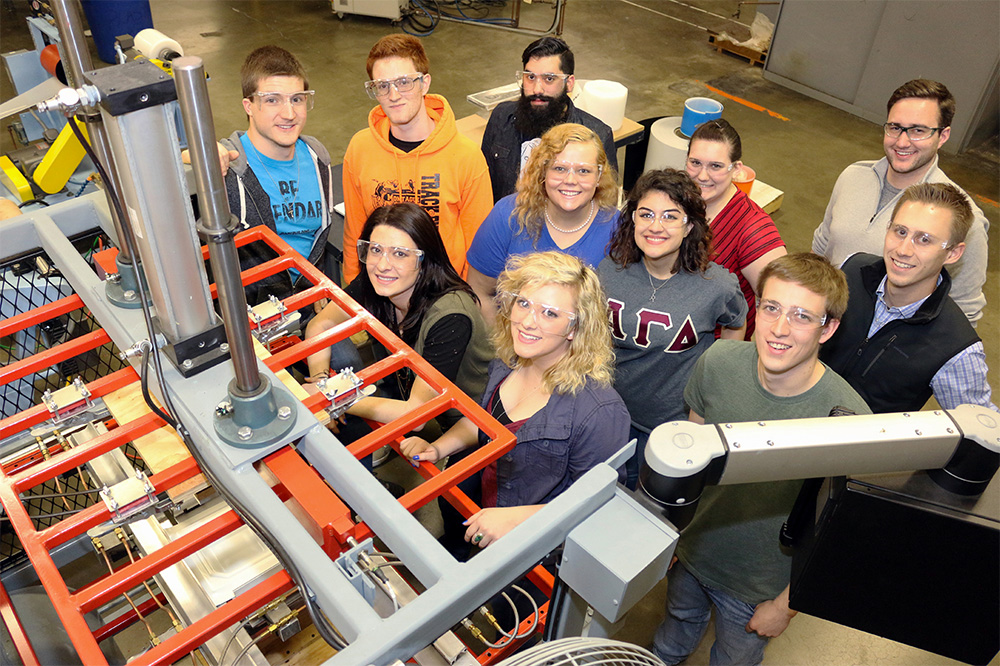
Image: SPE Foundation
The Society of Plastics Engineers (SPE), a division of the Plastics Industry Association (PLASTICS), is collaborating with U.S. based 3D Supply Headquarters (3DSHQ), which offers 3D printing hardware, materials, services, professional development, and technical support to businesses, consumers, and educational institutions around the country. Together, the two will work to expand the SPE Foundation‘s 3D Printer Grant Program for educational systems, which is open to educational institutions at all levels. 3DSHQ will provide FlashForge Adventurer 5M Pro 3D printers, materials, logistics support, and technical assistance to the winning schools. The organization also develops instructional videos to guide educators on the setup, operation, and maintenance of 3D printers, and these will also be made available to grant recipients. By pairing 3DSHQ’s technical expertise with the SPE Foundation’s plastics education leadership, the program will offer educators and their students hands-on experience in 3D printing. The first grant recipient to benefit from this new collaboration is Akron Public Schools (APS), in my home state of Ohio. They will receive eight new 3D printers to replace outdated equipment and expand STEM learning, providing instruction in CAD, plastics manufacturing, and prototyping.
“This partnership represents a meaningful step forward in our commitment to plastics education. By working with 3DSHQ, we’re increasing access to advanced manufacturing tools while ensuring educators and students have the support needed to use them effectively from day one,” said Eve Vitale, SPE Foundation Executive Director.
Bambu Lab Officially Retires X1 Series of FFF 3D Printers
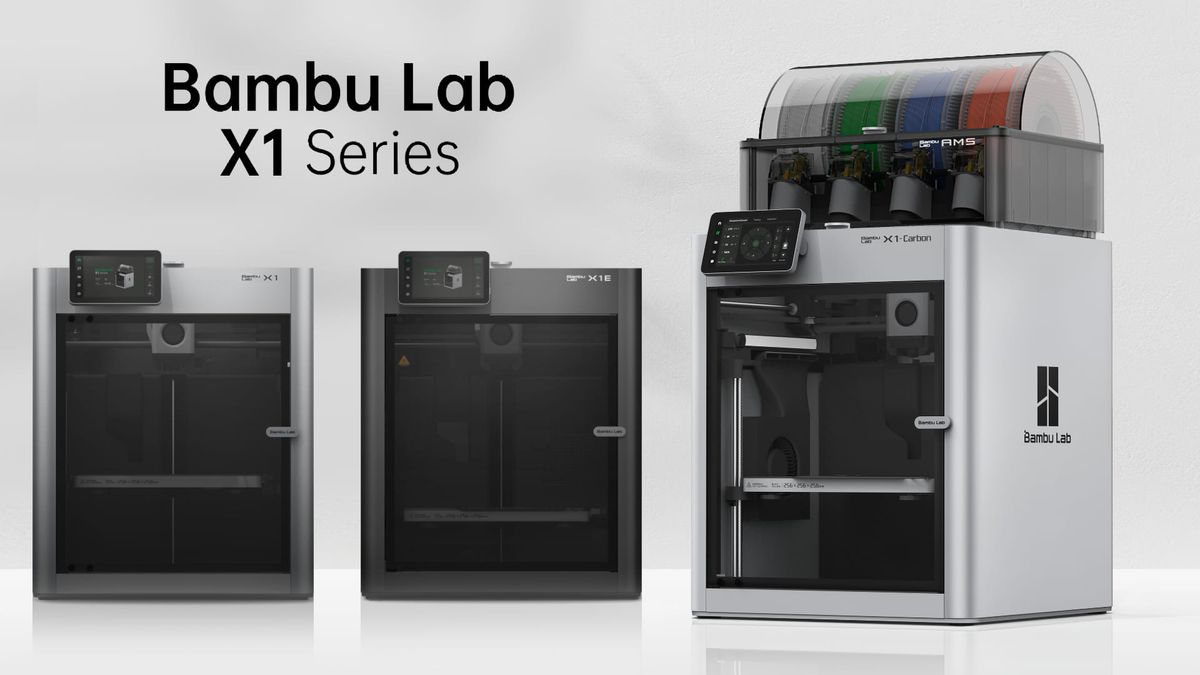
Image: Bambu Lab
In 2022, Chinese 3D printer OEM Bambu Lab launched a Kickstarter campaign for the X1 3D printer, promising an affordable price, 20,000 mm/s² acceleration, 500 mm/s speed, automatic calibration, built-in camera, a dedicated neural processing unit, and a multi-color printing system that supported four filament spools. While it may have seemed too good to be true, the campaign ended up being the third most successful Kickstarter ever for 3D printing hardware. Since then, the company has continued its meteoric rise, and recently announced the retirement of its X1 Series, including the X1, X1 Carbon, and X1E. Manufacturing of these systems has already ended, and the replacement is the P Series, consisting of the $599 P2S and $399 P1S. However, the company has promised that software and firmware bug fixes will be available through May of 2027, security patches will continue into 2029, and spare parts and service for the X1 Series will be available under best-effort terms for five more years.
“The EOL of the X1, X1 Carbon and X1E marks the end of a chapter – but not the story. Machines already in users’ hands will keep working, supported until March 31, 2031 – spare parts, security updates, technical support included,” Bambu Lab wrote. “During the 5-year service period, related spare parts will remain available through our Online Store and in authorised service centers. However, some parts may sell out earlier, so we recommend purchasing replacements in a timely manner.”
Spacetime 4D’s Akasha300 Supporting Prototyping & Materials Research
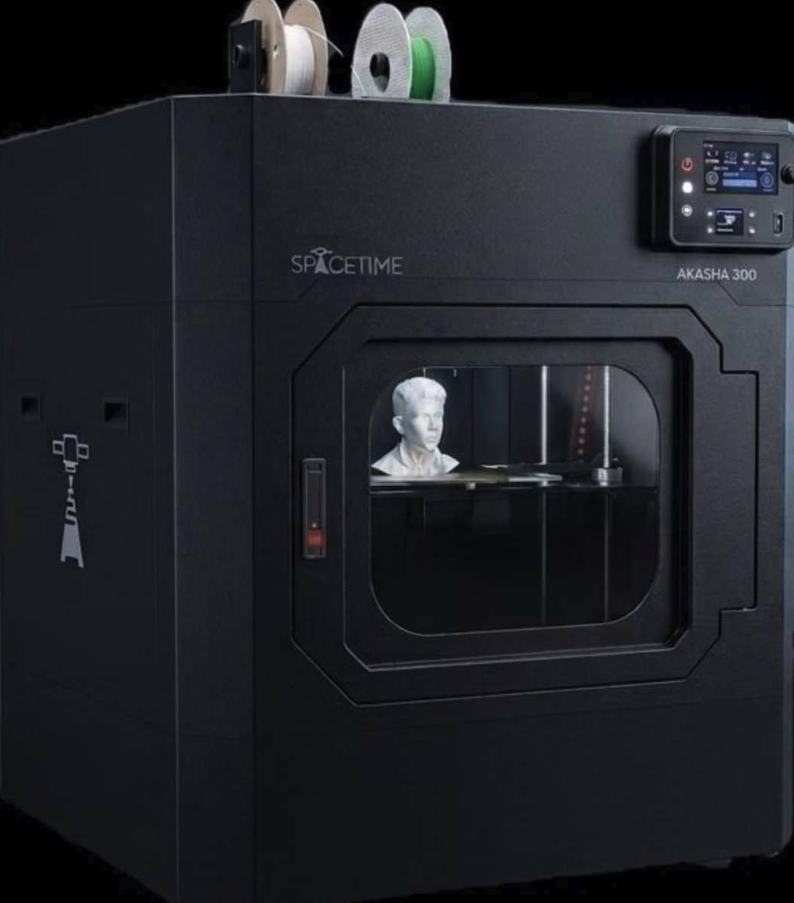
The Akasha300 3D printer is a high-temperature, multi-material extrusion system developed by Spacetime 4D for aerospace and industrial applications / Spacetime 4D
Kerala, India-based additive manufacturing startup Spacetime 4D recently delivered its Akasha300 3D printer to the Indian Space Research Organisation (ISRO), specifically its Liquid Propulsion Systems Centre (LPSC). The addition of the industrial-grade, high-temperature system will strengthen ISRO’s in-house capacity for 3D printing complex aerospace components, which fits in with India’s self-reliance objectives. The LPSC will use the printer to support both advanced materials research and rapid prototyping for aerospace and space applications. The multi-material Akasha300 is a material extrusion printer, centered around a dual-extrusion architecture that’s said to operate at nozzle temperatures of up to 350°C; Spacetime 4D has plans to upgrade this to 550°C. The system also features a heated build platform that gets up to 110°C, and an enclosed, temperature-controlled build chamber that maintains up to 80°C. All together, these features should make it a good printer for the demanding requirements—both structural and thermal—of aerospace components made with materials like PEEK, PEKK, and carbon fiber-reinforced composites.
Showcasing the increasing synergy between startups, academia, and government institutions in India’s space technology sector, the Space Technology Innovation and Incubation Centre (STIIC) at the Indian Institute of Space Science and Technology (IIST) and the Kerala Startup Mission (KSUM) supported Spacetime 4D’s development of the Akasha300 system. The high-temperature printer is positioned as a research platform rather than a tool for the typical production line, and ISRO, which previously acquired AddUp’s Magic 800 DED system, will use the Akasha300 to experiment with next-generation materials and complex part designs. This will enable the scientists and engineers at ISRO to achieve rapid design iteration of propulsion system components and satellite hardware with materials that match flight-grade standards. On a broader scale, this shows how India’s deep-tech ecosystem is being positioned next to other, more established international organizations.
Subscribe to Our Email Newsletter
Stay up-to-date on all the latest news from the 3D printing industry and receive information and offers from third party vendors.
Print Services
Upload your 3D Models and get them printed quickly and efficiently.













You May Also Like
AM & National Competitive Advantage, Part One: the Real Problem with US Manufacturing
The problem with US manufacturing is the productivity growth rate. Depending on the source, US manufacturing productivity has either been flat or slightly declined since 2010. Before going any further...
Advanced Manufacturing at IMTS 2026: 3D Printing and AI and Drones, Oh My!
Last week’s International Manufacturing Technology Snow (IMTS) in Chicago welcomed over 90,000 attendees to the jungle that is McCormick Place. With over 1.17 million square feet of exhibit space, and...
Let the Games Begin! Xi Throws Down the Advanced Manufacturing Gauntlet
Sangmin Lee went to TCT Asia back in March and reported on the event for 3DPrint.com. He wrote two articles arguing that China’s AM industry looks “ready to scale.” This...
What 3D2GO Says About 3D Printing’s Growth in Southeast Asia
The Philippines offers an interesting case study in how 3D printing can develop in Southeast Asia, and Manila-based 3D2GO helps illustrate it. 3D printing in Southeast Asia doesn’t have to...