Cutting 2,048 Experiments Down to 12: How Lean Thinking Is Making 3D Printing Smarter


Experimenting in industrial 3D printing can quickly become intense.
Every small change, such as a new material, a slightly higher temperature, or a different surface finish, adds one more variable to test. Before they know it, engineers can be looking at hundreds or even thousands of combinations to find what works best.
Even a few changes can add up fast. For example, controlling four variables with just three settings each already means 3⁴, or 81 different test combinations. Add a few more parameters, and suddenly you’re looking at thousands of possible tests. In fact, just three more variables take you from 81 to over 2,000 possible combinations.
That’s why the usual trial-and-error method often doesn’t work well when it comes to additive. It’s slow, costly, and doesn’t always show how different settings affect each other. A small change in temperature might not matter on its own, but combined with a new material or print speed, it could completely change the result. Researchers studying both polymer and metal 3D printing have pointed this out for years, showing that trial-and-error wastes time and materials.
Instead, many are turning to a method called Design of Experiments (DoE). It’s a structured, data-driven way for engineers to plan their experiments, find useful patterns, and see how different settings affect each other without wasting time or materials.
A recent case study from UK-based consultancy Learn Six Sigma, carried out with an unnamed advanced manufacturer in the 3D printing space, shows how the DoE method can turn that chaos into clarity. By applying structured statistical tools rather than guesswork, the team was able to shrink an overwhelming 2,048 potential test combinations down to just 12 and still achieve meaningful, data-backed results.
A Smarter Way to Experiment
The project began during a Lean Six Sigma Black Belt training course run by Learn Six Sigma, which trains professionals in process improvement and data-driven problem solving. According to Matthew Hayden, who led the course, the idea came straight from participants eager to solve real production challenges.
“This case study came from one of several ideas for future projects from attendees of a Lean Six Sigma Black Belt course that we ran at an advanced manufacturer in the 3D printing space,” Matthew Hayden told 3DPrint.com. “Part of the course covered the design of experiments, from which several interesting project ideas for the optimization of material performance came about, including adhesion primer performance, metal parts post annealing, and plastic parts from fused deposition modeling machines.”
The approach gives engineers a way to make sense of countless process variables —layer height, print speed, temperature, infill, and more —without testing them one by one.
From Guesswork to Insight
While DoE isn’t new, it’s still underused in additive manufacturing. Engineers often rely on intuition, running long series of single-variable tests to isolate what might improve part strength or finish. But as Martin Hayden, the engineer behind the case study, points out, that approach wastes both time and resources.
“Design of experiments helps us to predict the performance of a process in an effective and efficient way, with the least cost and time invested. It allows us to optimize performance, reduce costs, and dramatically shorten product or process development,” Martin Hayden explained. “In the case of 3D printing, there are a large number of variables potentially controlling the process and the final performance of the output. Random or haphazard approaches to investigating these variables are really inefficient and lead to huge delays in delivering useful knowledge.”
By using a statistical design to plan tests, the team identified which variables truly mattered and how they interacted, something nearly impossible to spot through manual iteration.
This Matters
Every 3D printing company wants faster optimization cycles, stronger parts, and lower costs. But as machines, materials, and applications multiply, the number of possible process combinations skyrockets. A smart, data-driven testing strategy like DoE helps companies move from intuition to evidence.
Martin Hayden said there are already accessible tools for teams looking to start: “There are many stock experimental designs, recommendations for collecting data, as well as free software which we can employ to create effective and useful models quickly.”
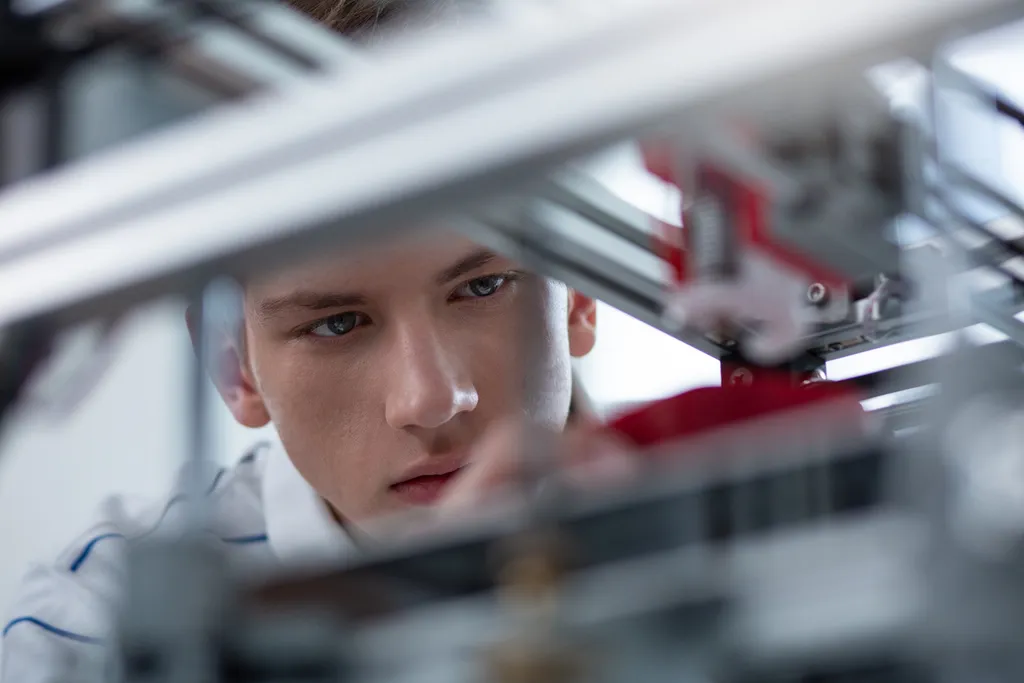
Surface finish was judged by human appraisal against a reference standard: errors in measurements will create inaccuracy in modeling. Image courtesy of Learn Six Sigma.
The case study shows how Lean and Six Sigma methods, long used to improve quality in car and aerospace factories, can also benefit 3D printing. Instead of treating the process as unpredictable, DoE makes it more measurable and repeatable.
For manufacturers looking for consistency, that’s more than an engineering success; it’s good business. Cutting thousands of tests down to a few is a win for everyone: not only does it save time and lower costs, but it also helps 3D printing move a little closer to becoming a very industrial process.
Subscribe to Our Email Newsletter
Stay up-to-date on all the latest news from the 3D printing industry and receive information and offers from third party vendors.
Print Services
Upload your 3D Models and get them printed quickly and efficiently.













You May Also Like
South Korea’s Lincsolution Announces AM Defense Hub as Nation is Caught in US-China Trade War
In my most recent post about RIMPAC, I noted that US military joint exercises appear to be the latest function of the US government to be leveraged by the Trump...
Additive Economics 101, Part 1: Betwixt Rolex and Ryanair
Let’s look at what matters when we make things that matter. What considerations are there, what is important, what affects cost? Look at the levers in laser powder bed fusion,...
The Formlabs X1 Versus the HP 1200: Costing, Throughput & 30% Packing Density
We are at one of the most important moments in the powder bed fusion market’s entire history. EOS is on the retreat, retrenching itself in higher-volume industrial systems while dropping...
Talking About the Need for Speed at MMX 2026
On the first day of the recent MMX 2026, the annual Members Meeting and Exchange held by America Makes in Youngstown, Ohio, someone asked me if I had any early...