Ursa Major to Work With EOS On Hypersonics

Ursa Major plans to buy three AMCM M 450-4 FLX machines, in addition to the two M400 systems and an AMCM M 290-1 FLX that the company already owns. The machines are to be used in the production of components for hypersonic vehicles at their Youngstown, Ohio, facility.
Nick Doucette, VP of Operations at Ursa Major, stated,
“EOS and AMCM have been fantastic to work with – proven reliability, a responsive U.S. service team, and the largest deployed fleet of metal AM systems in the country. Beyond that, they bring an openness and engineering partnership. Together, we’re challenging legacy approaches to part qualification and process qualification, pushing the entire additive industry forward.”
Greg Hayes, Global SVP of EOS’s Additive Minds, said,
“Ursa Major’s work with EOS demonstrates the next era of additive manufacturing where advanced users are empowered to innovate on their own terms. With EOS technology and the support of our Additive Minds team, this collaboration shows how OEM and user together can unlock progress at a pace never seen before,”
While President of EOS North America, Glynn Fletcher, thinks that,
“Ursa Major exemplifies what’s possible when a forward-thinking company leverages EOS technology to its fullest potential. Their team’s deep technical fluency and bold vision inspire us. We’re proud to support them as they shape the next decade of advanced manufacturing to the defense industry.”
Additionally, Ursa will use the EOS toolpath API to enable unique settings, build strategies, and parameters. Traditionally, it has been difficult to customize or change parameters beyond what EOS allows, so this is a welcome development.
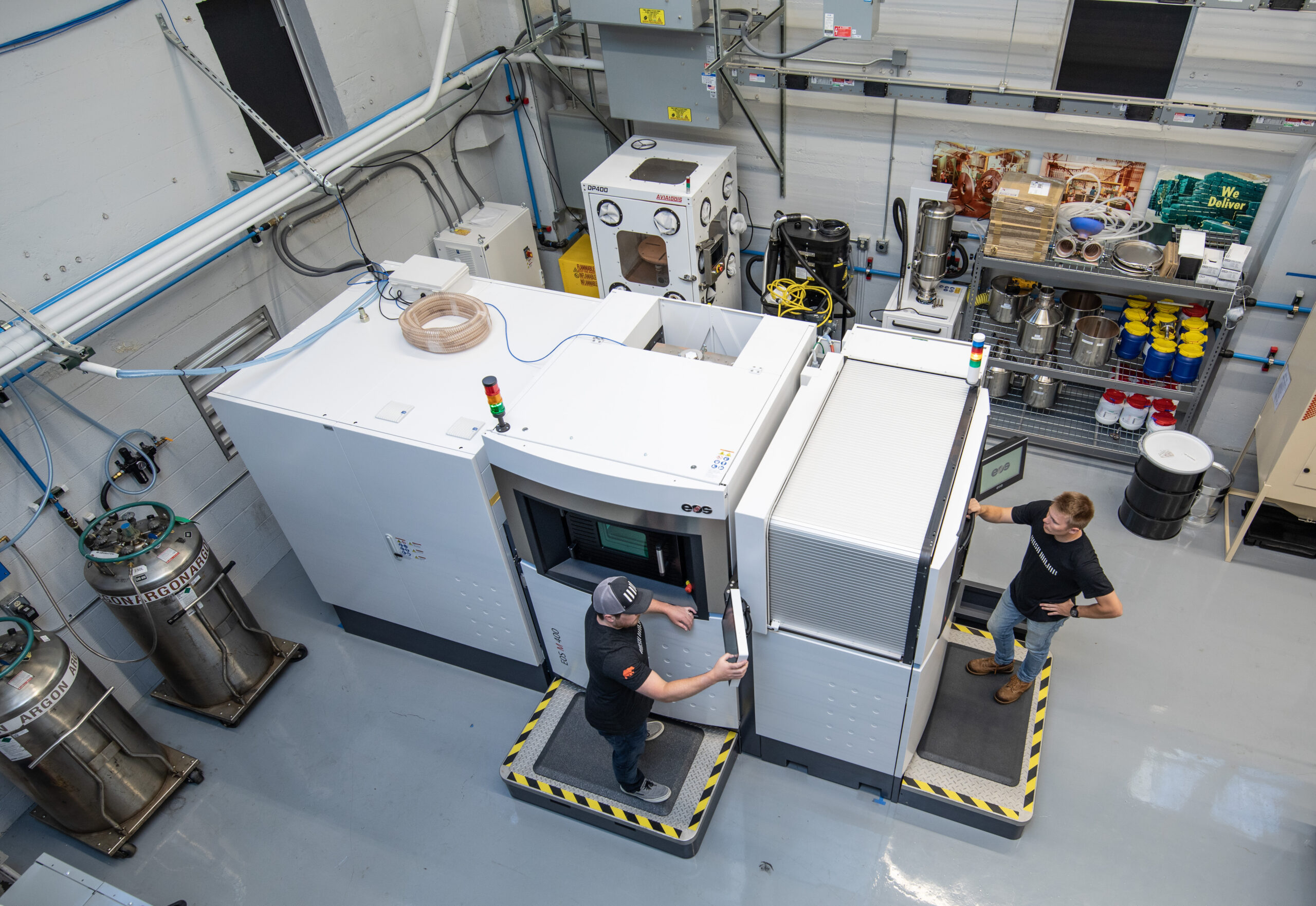
A more open EOS is definitely what the company needs right now. Many advanced users are pushing the limits of what is possible with standard machines. They don’t want a good production box for most things; they want a very specific machine for particular parts in a specific material. Through API, Additive Minds consultancy, and AMCM, EOS is becoming more open and more able to implement specific wishes. AMCM is really becoming the growth engine for EOS and is a part of the firm that is able to engage customers directly around their manufacturing challenges. Meanwhile, Additive Minds helps customers adopt EOS technology quickly and take it further.
The new systems will have beam shaping on board, which will make them much faster and allow for novel part properties. Beam shaping is one of the most talked-about new technologies for additive manufacturing and has the potential to really improve both yield and capabilities. It would be amazing if there were an easy upgrade program in place to qualify parts and machines using new beam shaping lasers to produce more profitably.
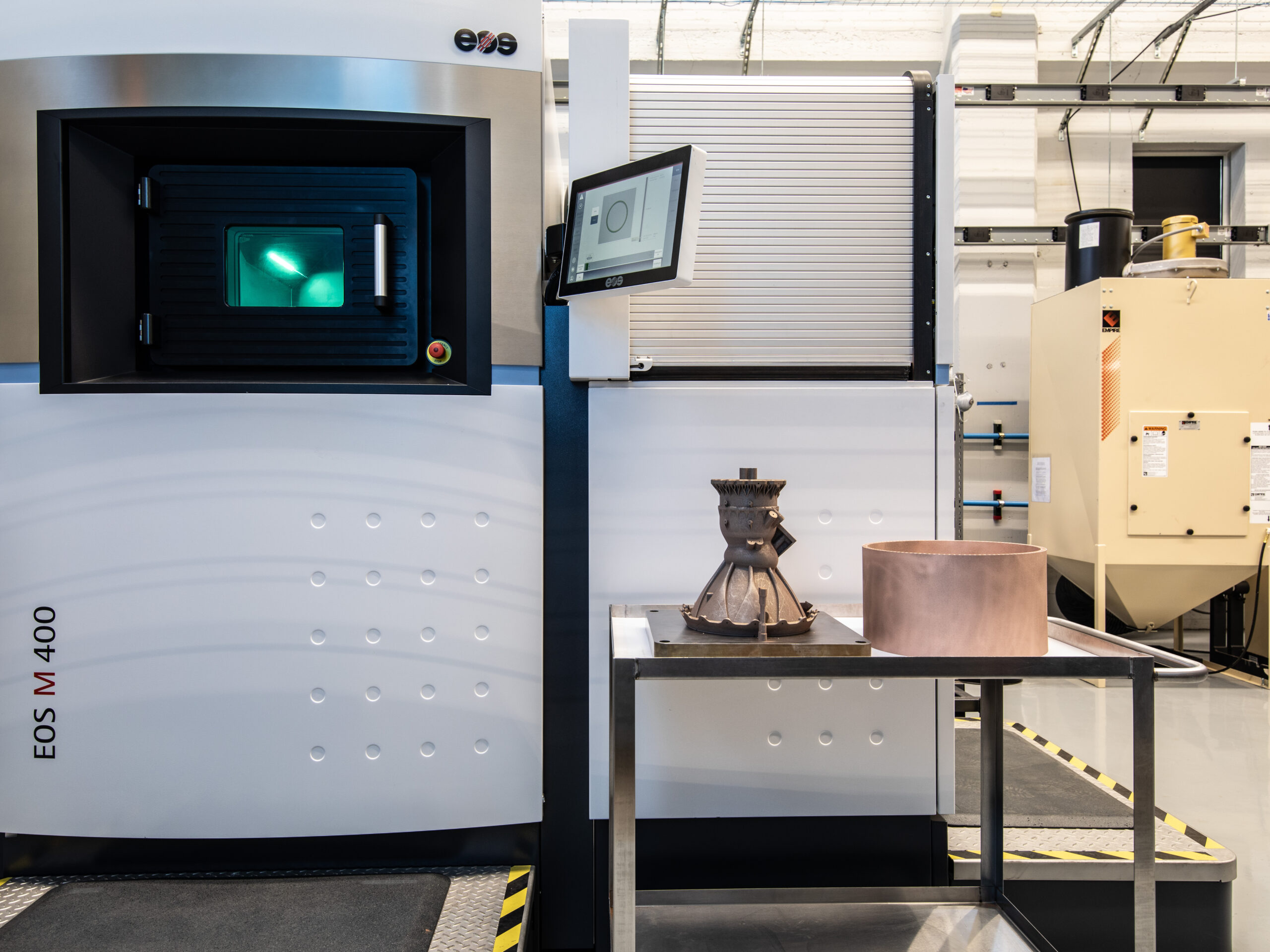
This is an important win for EOS as Ursa is seen to be a U.S. Department of Defense (DoD) favorite, whether it be in missile propulsion or now hypersonics. In fact, hypersonics are the new high ground and could see someone put a vehicle, sensor package, or lethal payload anywhere on earth in a few hours. There are currently missiles capable of hypersonic speeds, but these still travel in predictable arcs from their point of origin. This means that the launch can be spotted easily and traced. The missile can also be easily tracked, its path can be predicted, and it can be intercepted. Now, if you combine speeds of six or fifteen times the speed of sound with maneuverability, a lot changes. You can’t really tell where the missile came from; it’s just a mosquito that sometimes pops into your awareness and then disappears. You also don’t know where it is going or where it will end up. It’s similar to a world of propeller aircraft, and all of a sudden having some aircraft that have jet engines. Hypersonics could be the ideal first strike weapon, the ideal weapon to take out command structures, or the ideal surgical strike tool. This is a development that seems like it could be more significant than stealth and more difficult as well.
Vehicles will have to be as compact as possible and use a lot of difficult-to-machine materials. If additive becomes the production technology of choice for hypersonic propulsion units, nose tips, cruiser fins, cruisers, and more, it will firmly nestle itself at the core of the U.S. defense establishment and capabilities. Companies such as Ursa Major could become indispensable to the U.S.’ critical defense needs, and additive manufacturing could be the technology that helps them do it.
Images courtesy of EOS
Subscribe to Our Email Newsletter
Stay up-to-date on all the latest news from the 3D printing industry and receive information and offers from third party vendors.
Print Services
Upload your 3D Models and get them printed quickly and efficiently.













You May Also Like
The Manufacturing Race Behind the Drone Revolution
We are in the middle of a major manufacturing shift focused on the production speed and payload capacity of uncrewed aerial systems (UAS), or drones. A recent Manufacturing Dive article...
ADDMAN to Buy Up to $10.8M in Nickel 718 Powder from 6K Additive Over 30 Months
After years of buildup, we’re finally starting to see what the US metal additive manufacturing (AM) market could look like at scale. To be sure, it’s still not quite there,...
Metal AM in a Multipolar World, Part 2: How PBF and DED Could Change by 2035
The first decades of PBF development were heavily shaped by machine capability: more power, more lasers, larger build volumes, better recoating, and improved process monitoring. These developments will continue, but...
Advanced Manufacturing at IMTS 2026: 3D Printing and AI and Drones, Oh My!
Last week’s International Manufacturing Technology Snow (IMTS) in Chicago welcomed over 90,000 attendees to the jungle that is McCormick Place. With over 1.17 million square feet of exhibit space, and...