Adaptiv AI: Ivan Madera’s Mission Is to Unify Manufacturing, from Desk to Shop Floor

When Ivan Madera left Morf3D in 2023, he wasn’t done solving manufacturing problems. After helping build one of the leading metal additive manufacturing (AM) companies in the U.S. and driving its acquisition by Nikon, Madera launched Adaptiv AI to tackle what he says is the next big bottleneck: the lack of connection between design, engineering, production, and quality systems.
“We’re helping from the desk to the shop floor,” Madera said during an interview with 3DPrint.com. “Most folks focus on the shop floor, but a lot of the real decision-making happens at the engineering level. Adaptiv AI is about connecting those dots in real time.”

Still in stealth mode, Adaptiv AI is building a secure, enterprise-grade software platform designed to link traditionally siloed manufacturing systems, including Product Lifecycle Management (PLM), Manufacturing Execution Systems (MES), Enterprise Resource Planning (ERP), and quality control tools. The goal is to give teams real-time visibility across design, production, and inspection, all in one integrated environment.
From Consulting to AM to AI
Before founding Morf3D, Madera spent over a decade in management consulting, leading large-scale supply chain and manufacturing transformations. His journey through 3D printing showed him how disorganized most digital manufacturing systems still are.
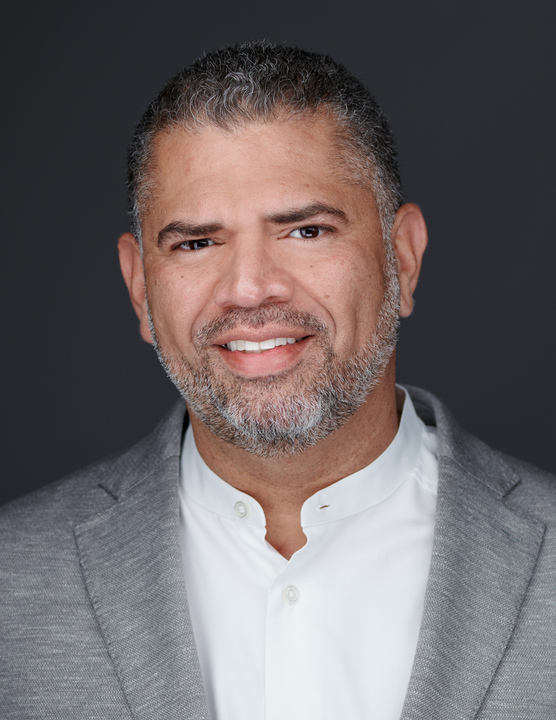
Ivan Madera. Image courtesy of Adaptiv AI.
“There’s simply no way the industry can scale into thousands of large metal 3D printing components unless we change the way we do things,” he said. “Additive manufacturing won’t meet its full potential until we solve the data problem. Most manufacturers are buying machines to fill capacity, and then they buy more machines. But they’re not building systems of work. There’s no real-time visibility across engineering, production, and quality. The idea behind Adaptiv AI is to bridge those silos, connect PLM, MES, ERP, and quality systems to provide actionable insights in real time. We couldn’t do this before AI.”
Although still in its early stages, Adaptiv AI is already being tested by several companies in aerospace and defense, including a large rocket manufacturer, a leading U.S. Department of Defense (DoD) contractor, and a satellite maker.
“These are folks we worked with before,” Madera noted. “They don’t open up their data to just anyone. It’s a big deal. We’re not just plugging into public AI models. There’s a whole security protocol designed to meet regulated environments. From day one, we built our backend with compliance in mind, because that’s the only way you get access to the kinds of sensitive data we’re working with.”
Towards the Factory of the Future
At the heart of Adaptiv AI’s platform is a tool that helps manufacturers get straight, useful answers to practical questions; it could be about scrap rates, quality problems, or engineering issues. These AI-powered responses can help teams respond faster, cut delays, and help operations scale more efficiently.
Madera believes “this kind of horizontal connectivity is essential if the additive industry wants to meet rising demand. There’s simply no way we can scale to thousands of large-format metal parts unless we change how we work.”
At the same time, Adaptiv AI is also exploring AI-driven toolpath adaptation for directed energy deposition (DED) and hybrid manufacturing processes. The idea is to mill, inspect, and adjust parts during deposition, dramatically reducing cycle times.
“We’re working toward a continuous process that can go from days to just one,” he noted. “Right now, large metal parts made with DED can take several days because you’re stopping to mill, inspect, and adjust. But if you can do all that in real time—if the system can see, adapt, and respond as it goes—then you eliminate those starts and stops. That’s how you unlock the factory of the future.”
Lessons from Morf3D
While Adaptiv AI is a software company, Madera’s roots in hardware run deep: “At Morf, we had to build everything from scratch. There was no ecosystem, no standardization. We learned everything the hard way.”
Those hard-won lessons are now being applied to Adaptiv AI, with an emphasis on real-world manufacturing needs.
“This isn’t kids building AI. We’re engineers who’ve lived the pain,” he said. “We’ve built companies, run machines, and dealt with real manufacturing bottlenecks. That experience shapes everything, from how we train our models to how we design the interface. It’s not just about writing software; it’s about solving the problems we have faced firsthand.”
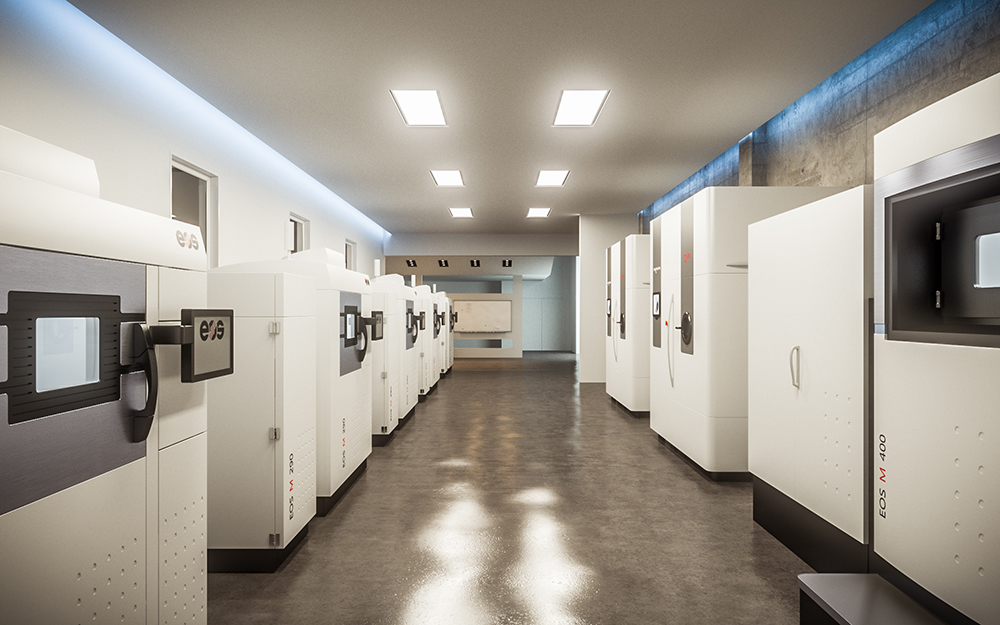
Morf3D facilities. Image courtesy of Morf3D.
Madera said he is “moving carefully,” starting with a few trusted partners to build confidence in the platform. With an eight-person core team and a few contractors, Adaptiv AI is still early-stage and under wraps, but not for long, Madera suggested.
“The companies we’ve talked to haven’t said no. We’re just moving carefully so we can deliver. We’re not pushing product, we’re pushing solutions—real ones that solve real problems. That means building trust, not hype. We’re taking the time to understand what each partner actually needs and making sure we can scale it the right way. The intent is to take everyone’s use cases and combine them into a product others can use—and benefit from. That’s how you scale impact across the industrial base.”
With a 2025–2026 product launch on the horizon and growing interest across sectors, Adaptiv AI might be Madera’s most ambitious project yet. It combines his consulting, manufacturing, and entrepreneurial roots into a solution positioned to drive smarter, faster manufacturing at scale.
Subscribe to Our Email Newsletter
Stay up-to-date on all the latest news from the 3D printing industry and receive information and offers from third party vendors.
Print Services
Upload your 3D Models and get them printed quickly and efficiently.











You May Also Like
The Maritime Industrial Base is on Full Display at Additive Manufacturing Strategies 2026
2025 is the year that the AM ramp-up by the U.S. Maritime Industrial Base Program (MIB) became common knowledge throughout the industry. But everyone who attended AMS 2024 was already...
Metal Powder Works & Austal USA Form Partnership Surrounding US Navy 3D Printing
There are few companies that have been more integral than Austal USA to the U.S. Navy’s ongoing additive manufacturing (AM) buildup. Among other steps that the subsidiary of the Australian...
HII’s NXG 600E Order Shows Why Nikon Dominates Large Defense AM Systems
Huntington Ingalls Industries‘ (HII) Newport News Shipbuilding (NNS) unit has ordered a Nikon SLM Solutions NXG 600E. HII is a $11 billion revenue shipbuilder that builds the Gerald R. Ford-class...
New Materials and Curing Unit at Formlabs
Formlabs is showcasing new SLA materials and a new curing solution. The new Tough 1000 Resin, with a tensile modulus of 1000, a Tough 1500, and an improved Tough 2000...