How 3D Printing Helped Kids Walk Again—Join HP’s Webinar to Learn More



What does it take to get a prosthetic limb to a child halfway around the world? For many, getting a prosthetic still involves complex logistics, long waits, and high expenses. But today, thanks to advances in digital manufacturing, that process is being reinvented, and the results are already changing lives.
HP‘s digital workflow, powered by its Multi Jet Fusion (MJF) 3D printing technology, recently helped deliver custom prosthetic legs to children in Kenya. This first pilot, part of a broader mission led by the Limb Kind Foundation, included five 3D printed sockets out of the 53 prostheses delivered. The work took place across countries but was designed to be easy and efficient. Each child was scanned using a mobile phone, and within 36 hours, their custom-fitted prosthetics were designed, printed overnight, and ready for fitting.
From scanning patients in Africa to designing in the U.S., printing in an advanced manufacturing facility, and shipping the final products back for fitting, every step was optimized for speed, accuracy, and care. It’s a powerful example of how 3D printing is opening new pathways to access, especially in places where traditional prosthetic services are not easy to get.
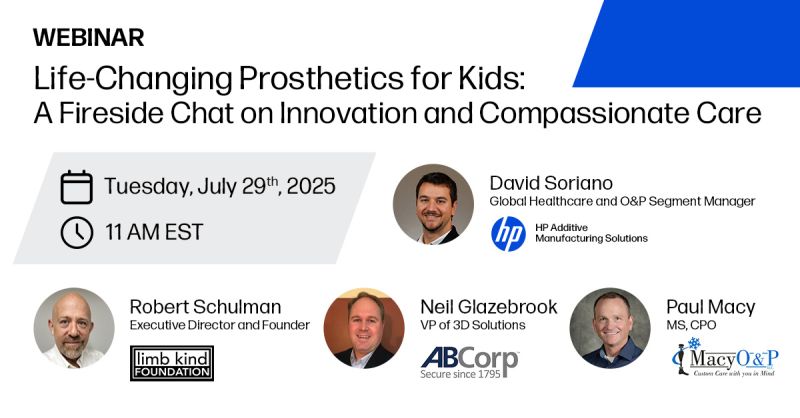
To share the full story, HP is hosting a free webinar on July 29 at 11 AM ET: “Life-Changing Prosthetics for Kids: A Fireside Chat on Innovation and Compassionate Care.” Speakers from the project team will explain how 3D printing, digital design, and global collaboration came together to deliver mobility to children in need.
The conversation will feature Rob Schulman from the Limb Kind Foundation, Paul Macy from Macy Orthotics and Prosthetics (O&P), Neil Glazebrook from ABCorp, and HP’s David Soriano. Together, they’ll walk through how the project came to life, what it means for the future of assistive technology, and why digital workflows are key to making healthcare more equitable.
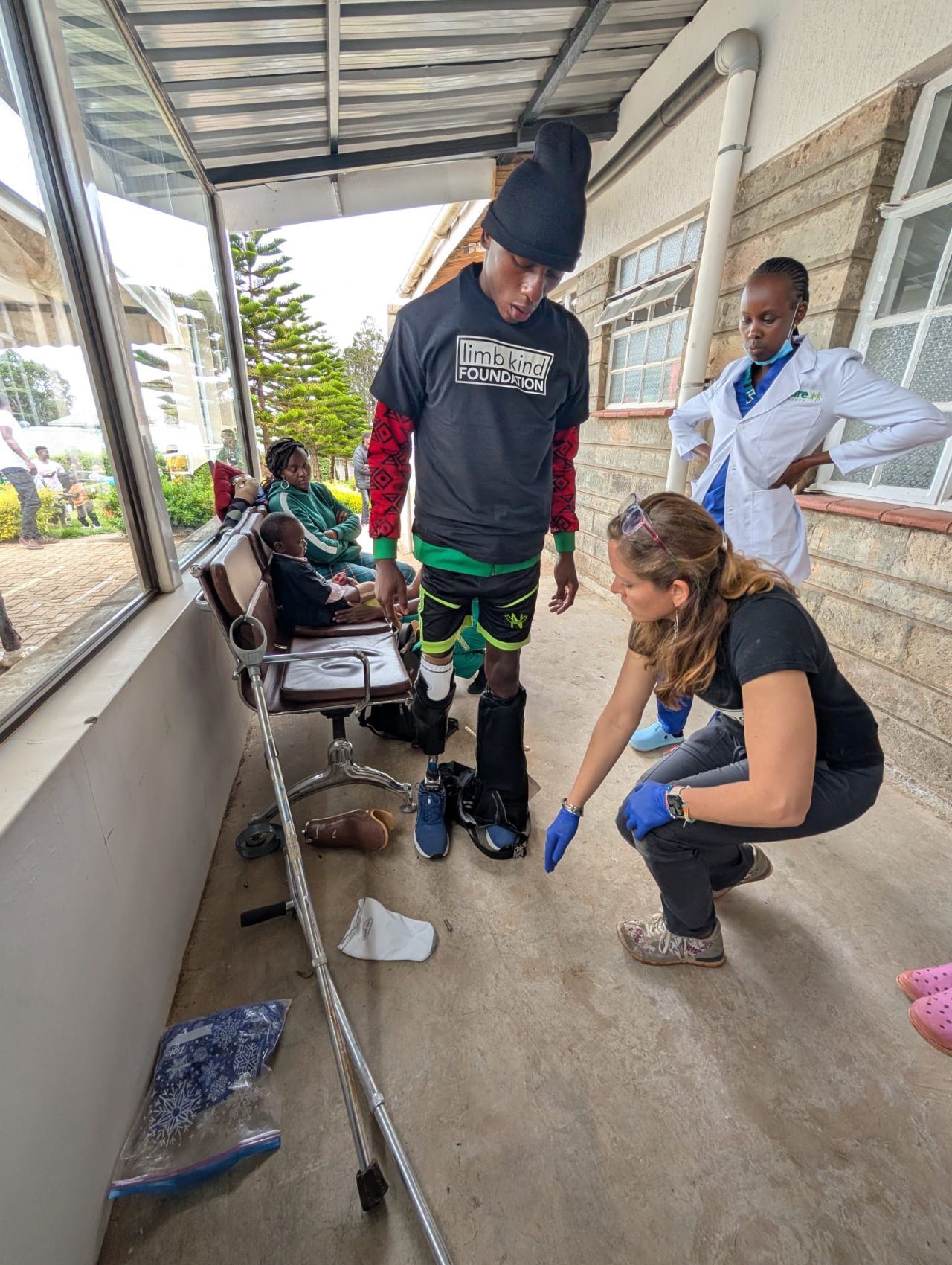
Delivering prostheses to children in Kenya.
Bridging Borders
This groundbreaking effort brought together nonprofit care providers, clinical designers, production experts, and HP’s digital manufacturing team. Together, the team used a fully digital design and manufacturing workflow to create and deliver life-changing devices. Scans of each child’s limb were taken in Kenya. Those scans were sent to the Macy O&P team in the U.S., who digitally designed personalized sockets. The parts were then 3D printed using HP’s MJF technology at ABCorp’s facility and shipped back for final fitting and adjustment.
The result is a lightweight, strong, comfortable prosthetic, explicitly designed for each child—delivered faster and more affordably than traditional methods allow. What’s more, the entire process drastically reduced the time and cost of getting high-quality prosthetics to patients in need, especially children who are still growing and require frequent adjustments.
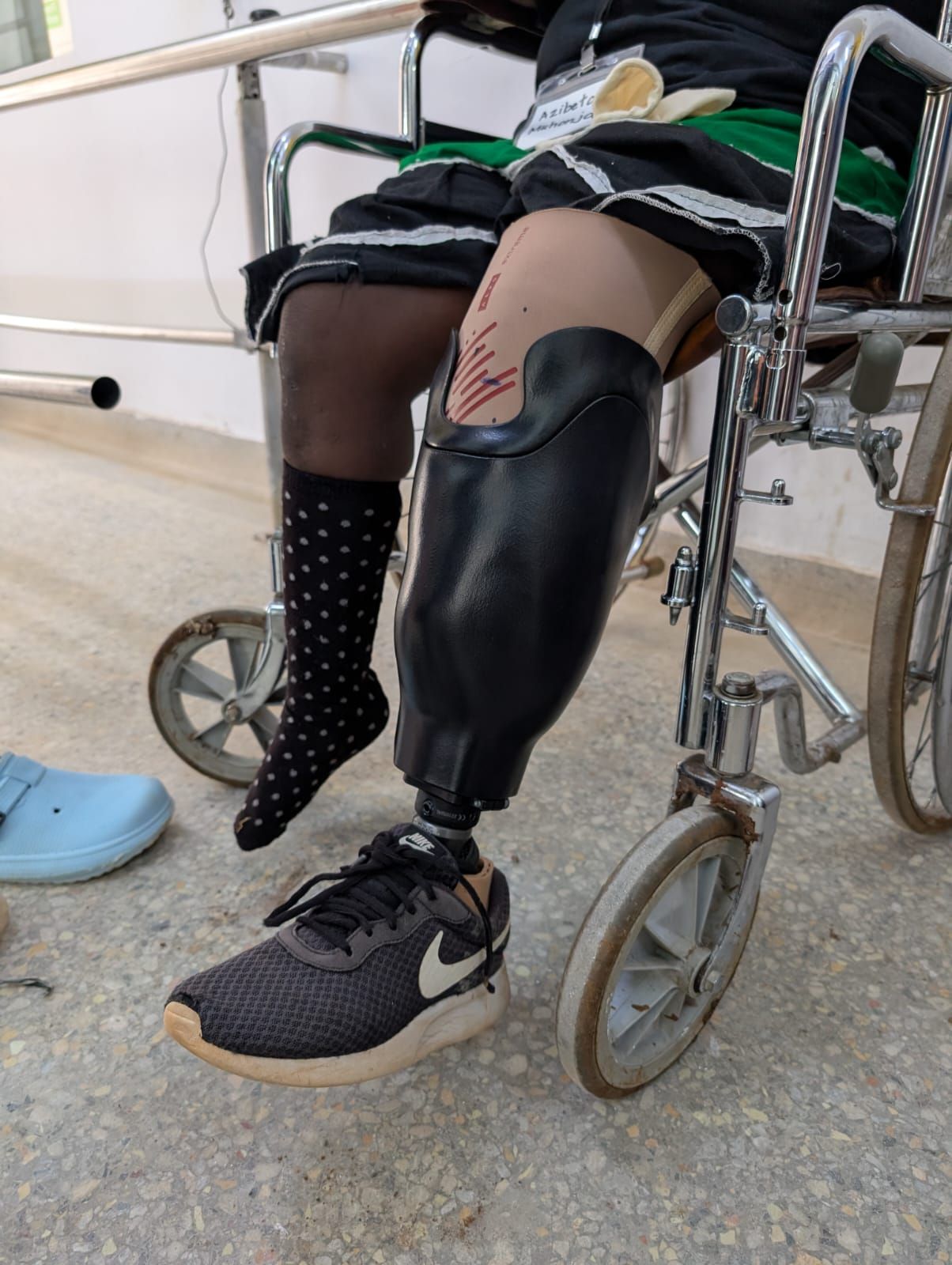
Delivering prostheses to children in Kenya.
The need for accessible prosthetic care is huge. Millions of people globally live with limb differences, but only a small fraction have access to proper treatment. Around the world, only one in ten people who need assistive devices, such as prosthetics, can access them. Children are especially vulnerable and face long waits, few specialists, and limited access to services. In fact, roughly 55% of the 30 to 40 million people in developing countries who need prosthetics are children, and most of them still can’t get proper treatment.
By replacing traditional fabrication methods with a digital 3D printing workflow, the team behind this project has created a faster and more scalable approach. It’s not just about improving production; it’s about expanding access and restoring mobility to those who might otherwise be left behind.
Technology can’t fix everything. But with care and empathy, it can help close big gaps in care. This is more than innovation; it’s impact. To hear how it all came together, sign up for the free webinar here.
Images courtesy of HP
Subscribe to Our Email Newsletter
Stay up-to-date on all the latest news from the 3D printing industry and receive information and offers from third party vendors.
Print Services
Upload your 3D Models and get them printed quickly and efficiently.












You May Also Like
How the World’s Most Advanced Tech Companies Are Using 3D Printing
3D printing has been around for decades. For most of that time, it was a prototyping tool. Engineers used it to check if a design looked right before spending money...
Aires Tide Designed with AI, Supercomputers, and 3D Printing
The Department of Energy‘s National Nuclear Security Administration (DOE/NNSA) is part of the US government that manages the US nuclear stockpile, helping to upgrade, improve, and maintain nuclear weapons, and...
Excellent Desktop Injection Molding, Made in Italy by Robot Factory
I was captivated when I saw my first Robot Factory 3D printer. The robust, precise machine was built to last. And this was in an era of very flimsy, disposable,...
Killer 3D Printing Applications: Tools
A previous Killer 3D Printing Applications article looks at tool voids and tool storage. With 3D printing, we can connect different sets and make cases to organize tools. We can...