ORNL Moves Forward with 3D Printed Steel Nuclear Parts


The nuclear industry has been working with additive for many years: Only recently have we been finding out about all of the components that are currently being used. The work going on in nuclear is extensive and increasing. Westinghouse is forging ahead, E-beam is being used, and Oak Ridge National Laboratory (ORNL) previously produced a specimen capsule for use in its HFIR reactor. These rabbit capsules (or irradiation vessels) are used extensively for testing at nuclear sites; they have to contain and transport nuclear materials. Now, ORNL researchers have furthered their work with capsules at the High Flux Isotope Reactor (HFIR). There, they will play a role in the ORNL Accident Tolerant Fuel Neutron Irradiation Program, which aims to discover new cladding materials and test their safety. These materials are meant to be used for particle accelerators and nuclear reactors. The HFIR produces a lot of neutron flux—indeed, its reactor and flux trap have been so designed as to maximize this to enable testing of new materials. In this series of experiments, tensile strength, fracture toughness, and more will be tested for components in materials such as Kanthal (a rather exotic FeCrAl alloy used in high temperature applications, mainly in heating elements). The rabbit capsules are there to maintain the integrity of the experiment and the safety of staff.
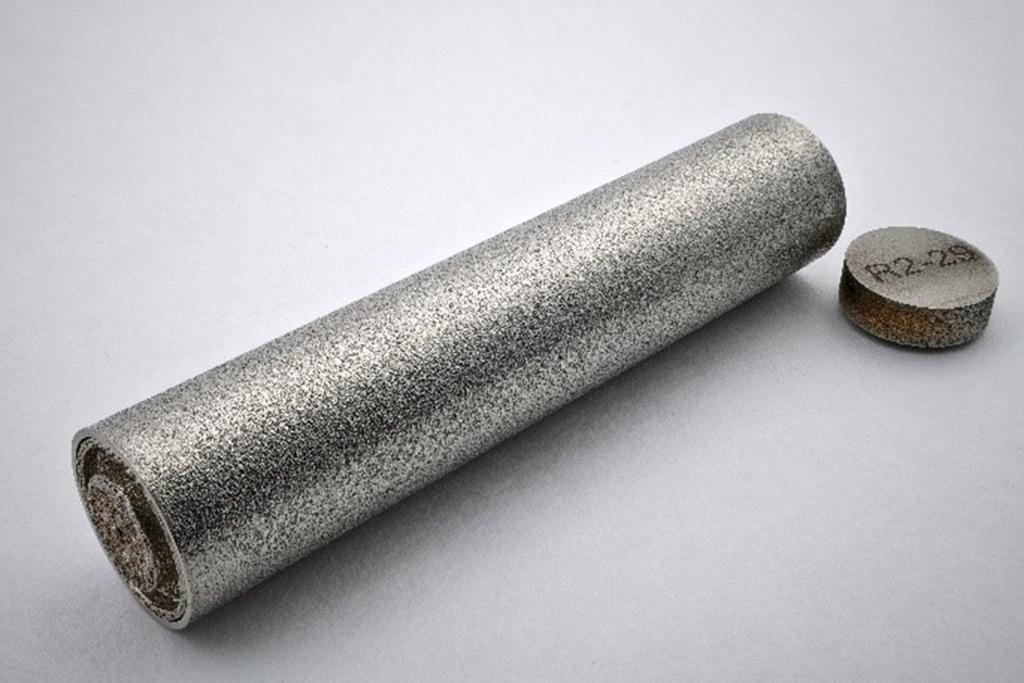
First produced in January, these parts were tested for a month, and have now passed the relevant safety reviews and standards. Made in 316H, a high-carbon, high-temperature resistant, austenitic, high-strength steel in LPBF, hundreds of these may be used eventually. The hope is that through 3D printing, these capsules could be made more quickly and at lower cost. The DOE Office of Nuclear Energy’s Advanced Materials and Manufacturing Technologies (AMMTO) is paying for the work, which is being carried out by AMMTO and ORNL’s Manufacturing Demonstration Facility (MDF).
Ryan Dehoff, Director of the MDF at ORNL, said:
“As we demonstrate the reliability of these printed components, we’re looking at a future where additive manufacturing might become standard practice in producing other critical reactor parts,”
Richard Howard, of ORNL´s Nuclear Energy and Fuel Cycle Division, stated:
“The nuclear materials and fuels research communities are being asked to qualify advanced reactor technologies to survive very harsh conditions. Additive manufacturing will expand my group’s toolset to develop innovative experiments to support this critical need,”
For a long time, we knew that a lot was happening in the nuclear industry, but little news was coming out. Newfangled technology used extensively in your nuclear power plant is not a headline that many would find an attractive one. As we learned from Adam Travis, specific geometries, novel materials, lower costs, and faster turnaround times are some of the drivers for the adoption of additive in the nuclear industry.
Qualification is, thankfully, rigorous and difficult, and the room for error is very limited. Many parts of nuclear power facilities are custom, and many more are low-volume. Power plants also have very lengthy life spans of 50 years or more, making the continued availability of parts an issue. A lot of vendors may be bankrupt, and traditional processes may take many months to replace a part. That time to market advantage also plays a part in power plant construction. Nuclear plants are often decades and billions of dollars late, complicating their financing. Any improvement in this area would therefore have a lot of impact. Many new nuclear power plant designs are being developed now, and there are innovative startups trying to improve reactors. Work in tokamaks also advances apace, and there is broader plasma and energy research that would benefit from better creep, heat, and strength-resistant parts. This is therefore broader than steel test tubes. Additive could be used extensively in the nuclear industry, and this could be a very profitable engagement for us, while creating a lot of value for the world through more efficient, safer energy.
Subscribe to Our Email Newsletter
Stay up-to-date on all the latest news from the 3D printing industry and receive information and offers from third party vendors.
Print Services
Upload your 3D Models and get them printed quickly and efficiently.













You May Also Like
Mastrex 3D Printers: Made in the USA?
Mastrex has launched a line of six metal LPBF printers starting at $39,000. Recently, the firm partnered with Continuum Powders to validate its metal powders on Mastrex machines. But the...
The Formlabs Shuffle
For the latest development on 8/31/26, please see an update at the end of this article. Formlabs is doing a management shuffle, pointing the firm even more surely towards an...
3D Printing News Briefs, August 20, 2026: Metal Powders, Patent Infringement, Scanners, & More
We’re starting with metal 3D printing business news in today’s 3D Printing News Briefs, as SBO is expanding its capacity in the US and the UK, and Continuum Powders is...
Additive Economics 101, Part 1: Betwixt Rolex and Ryanair
Let’s look at what matters when we make things that matter. What considerations are there, what is important, what affects cost? Look at the levers in laser powder bed fusion,...