3D Printed Drone Accelerator Firestorm Labs Continues Its Tear With $47M Series A

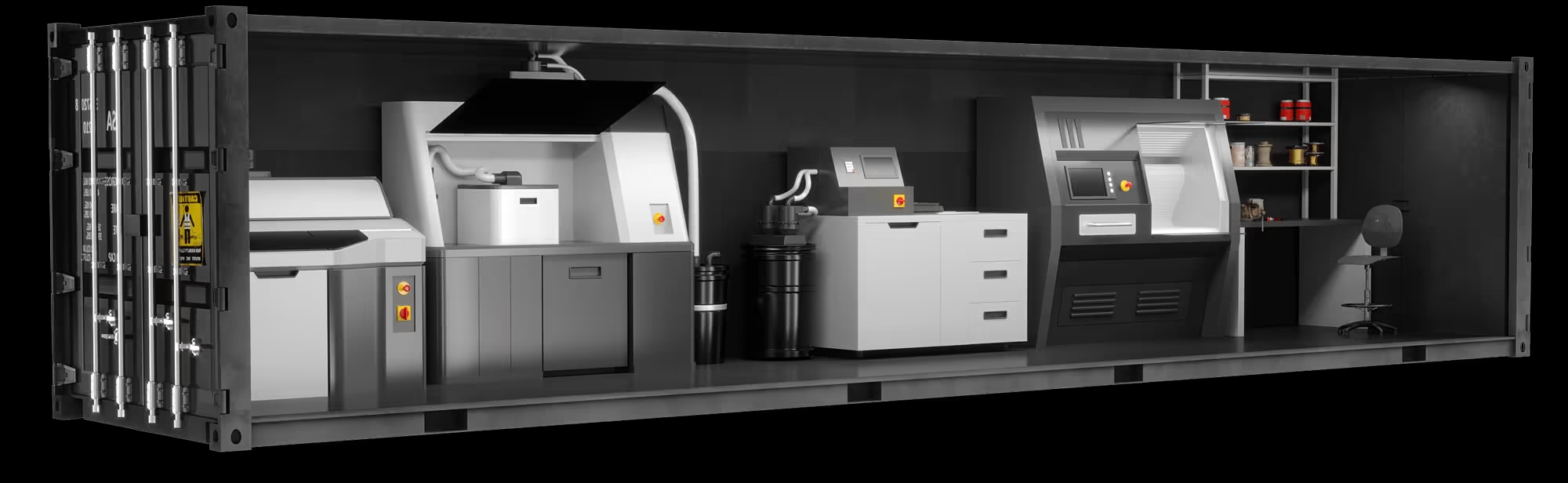
Firestorm Labs dominated the additive manufacturing (AM) industry’s attention in the first half of 2025, kicking off the year with its announcement of a $100 million Indefinite Delivery, Indefinite Quantity (IDIQ) U.S. Air Force contract to deliver modular, 3D printed drones over a five-year period. The company has also recently formed a partnership with HP to integrate the Multi Jet Fusion (MJF) ecosystem into Firestorm’s flagship xCell deployable production unit, positioning the company to ultimately branch out beyond the defense sector by targeting application areas such as emergency medical response.
Now, Firestorm has formally announced the results of its Series A round, and the numbers live up to the company’s buzz: $47 million, which follows a $12.5 million seed round announced in Q1 last year. Even more impressive than the dollar amount is the list of investors, with the round being led by New Enterprise Associates, a venture firm whose portfolio includes some of the most successful startup investments anyone could’ve made over the last couple of decades.
Also participating in the round were the venture arms of defense primes like Booz Allen and Lockheed Martin, the latter of which also contributed to the seed round. Firestorm, based in San Diego and founded in 2022, plans to allocate the Series A funds to a production facility that can handle scaled-up output, as well as to hire new engineers.
3D printing has revolutionized drone production, a trajectory drastically accelerated by conflicts in Ukraine and the Middle East, and sending Western companies — and the DoD — scrambling to make up lost ground. Over the last several months, U.S. military officials, particularly those from the U.S. Army, have been increasingly vocal about ramping up the role of AM in the DoD’s internal drone manufacturing capacity.
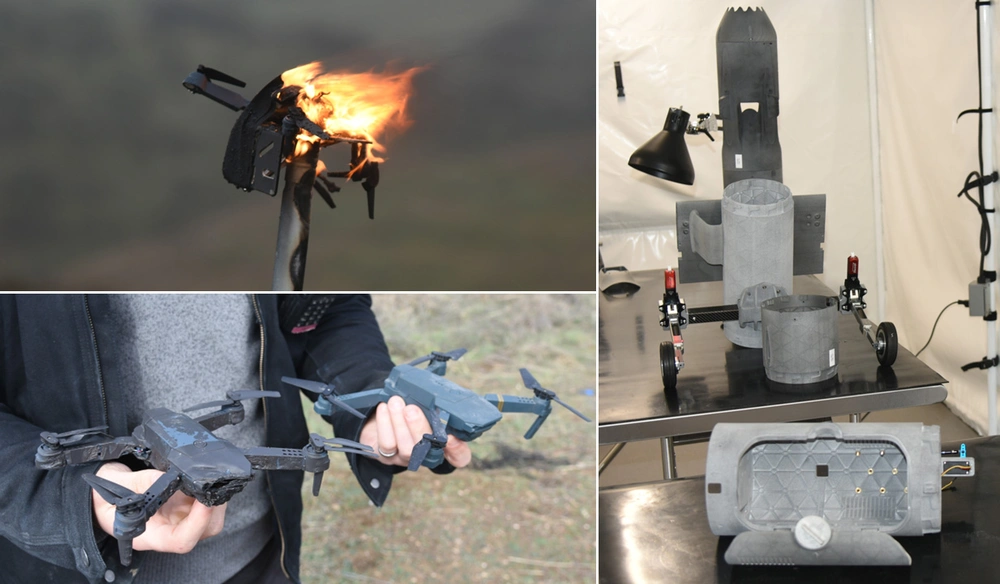
Firestorm’s drones being tested at the Joint Interagency Field Experimentation exercises. Image courtesy of Daniel Linehan, Naval Postgraduate School, via DVIDS.
In a press release about Firestorm Labs’ $47 million Series A round, Brian MacCarthy, managing partner of Booz Allen Ventures, said, “Sustaining a competitive advantage means investing boldly in technologies that match the pace and complexity of modern threats. Firestorm is delivering breakthrough technology designed for speed, scale, and survivability in the world’s most challenging environments. Their ability to move fast and solve hard problems is exactly what the U.S. and its allies need to stay ahead in the battlespace.”
The CEO and co-founder of Firestorm Labs, Dan Magy, said, “We’re thrilled about this milestone, because it empowers Firestorm to deliver critical, battlefield-ready solutions faster and at scale. Our unique ability to 3D print modular airframes on-site dramatically reduces production timelines, costs, and logistical constraints, giving the U.S. and allied forces the adaptive technology they urgently need in complex and contested operational environments.”
Unmanned Aerial Systems. Image courtesy of Firestorm Labs
Firestorm is doing what all the most successful AM companies have been doing over the last several years: rather than simply inventing new products, it’s inventing new approaches to logistics. Just like propulsion specialist Ursa Major, Firestorm is succeeding by embracing its status as an AM company, something that most AM companies are (justifiably) reluctant to do these days.
What can other companies learn from the Firestorms and the Ursa Majors, aside from the fact that they should target the defense sector? Above all, perhaps, the lesson is that the AM industry needs to go wherever hardware producers are putting a premium on rapid iteration cycles.
It sounds strange that the AM industry should need to be reminded of this, given that the original purpose of additive technologies was precisely to enable rapid iteration. However, the valid objective to move beyond prototyping may have obscured the reality that AM’s greatest value proposition is its ability to deliver agility in product design.
Intriguingly, that’s how Firestorm’s focus on logistics, the latest current in the AM industry, ties back to the industry’s roots. By placing manufacturing technologies as close as possible to the point of need — wherever that may be — Firestorm is putting the user experience directly at the forefront of the design cycle.
Subscribe to Our Email Newsletter
Stay up-to-date on all the latest news from the 3D printing industry and receive information and offers from third party vendors.
Print Services
Upload your 3D Models and get them printed quickly and efficiently.













You May Also Like
EOS Joins the MAT‑H2 Consortium
EOS is joining the MAT‑H2 consortium. MAT is an EU-funded group that aims to do research into a hydrogen-led economy. The thinking is that hydrogen will be a clean energy...
Where the Money is Going, Part Two: Why All Roads Lead to AI
In Part One of this article, Vanesa Listek expertly described the major themes driving infrastructure investment so far this decade, illustrating how the same concerns are driving both public and...
DTU 3D Prints New Fuel Cell Design With 5x Power Boost
Technical University of Denmark (DTU) researchers have used Lithoz ceramics 3D printing to make more efficient hydrogen fuel cells. With a part made from Lithoz Yttria Fully Stabilized Zirconia (8YSZ),...
Fraunhofer ILT Tests 3D Printed Titanium Reactors to Generate Hydrogen Onboard Heavy Vehicles
The Aachen-based Fraunhofer Institute for Laser Technology (Fraunhofer ILT) is to research titanium aluminide hydrogen reactors and heat exchangers. The hope is that lightweight, better-performing 3D printed components will make...