AM Research Webinar Explores Continuum’s Sustainable Metal Additive Manufacturing Powders

Metal additive manufacturing (AM) powder supplier Continuum Powders is working to develop solutions that empower industries to reduce waste and optimize their resources. An independent life cycle assessment (LCA) of Continuum’s proprietary Greyhound Melt-to-Powder (M2P) technology, completed by the Industrial Sustainability Laboratory at Oregon State University, found that the process lowers carbon emissions by nearly 100% when compared to traditional nickel powder production methods.
The results of this LCA, which is the focus of the latest Additive Manufacturing Research webinar, show just how sustainable metal powder can be. The researchers compared different production scenarios, and found that the conventional method, which uses 100% energy-intensive virgin nickel, contributes to 96% of the global warming potential (GWP) in the process. Continuum’s M2P differs from this method, as it can convert recycled nickel scrap into high-performance AM powders without the use of chemical adjustments or remelting. Using 100% recycled nickel and green energy sources, the LCA determined that Continuum’s method achieved a 99.7% reduction in carbon emissions.
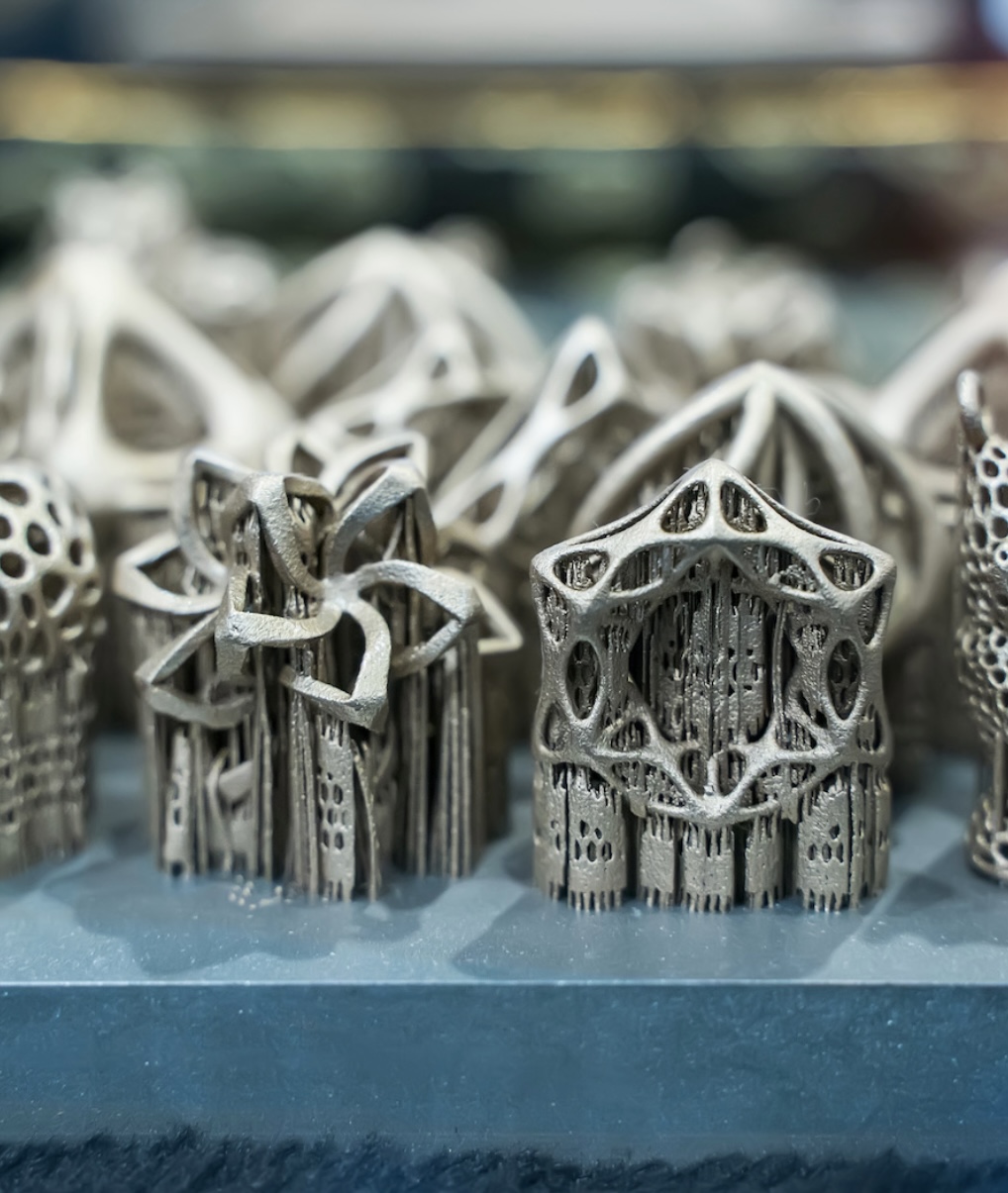
Image: Continuum Powders
Moderated by Scott Dunham, Executive Vice President of Research at AM Research, the webinar will be held this coming Tuesday, July 1st, at 12 pm EST. “Reclaiming Value: Turning Nickel Scrap into Sustainability, Savings, & Supply Chain Strength,” will discuss the results of the LCA, and further explore the team’s work.
The expert speakers include Dr. Sunil Badwe, Vice President of Research & Development at Continuum; Dr. Karl R. Haapala, a professor in the School of Mechanical, Industrial, and Manufacturing Engineering at OSU; Kamyar Raoufi, a post-doctoral scholar in the same school; and Michael Ferelli, the President of Revolutionary Technologies (Rev-Tec). A leader in advanced metal recycling, Rev-Tec specializes in sourcing, qualifying, and processing reclaimed titanium and nickel-based alloys for demanding industries, like the firearms and defense. The company’s work supports both the front end of the supply chain—by securing certified reclaimed materials—and the back end, by enabling manufacturers to reduce procurement costs and advance ESG objectives.

During the webinar, attendees will learn all about the key methodology and results from Oregon State University’s LCA study, the real-world implications for manufacturers who are under pressure to meet ESG goals, why recycled feedstock can outperform 100% virgin material in both cost and sustainability, and how Continuum Powders enables a closed-loop model with ASTM International-grade output. The speakers will also discuss what’s next in terms of growing circular economy models across industries.
“In this webinar, we’ll break down the findings from the LCA study and explore how this work is reshaping the future of additive manufacturing for energy, aerospace, and defense. Join academic researchers, industry experts, and Continuum Powders’ leadership to discuss what this means for manufacturers seeking real carbon reduction, cost-effective material strategies, and circular supply chain solutions.”
You can register for “Reclaiming Value: Turning Nickel Scrap into Sustainability, Savings, & Supply Chain Strength” here. Join us at 12 pm EST this Tuesday, July 1st!
Subscribe to Our Email Newsletter
Stay up-to-date on all the latest news from the 3D printing industry and receive information and offers from third party vendors.
Print Services
Upload your 3D Models and get them printed quickly and efficiently.













You May Also Like
EOS Joins the MAT‑H2 Consortium
EOS is joining the MAT‑H2 consortium. MAT is an EU-funded group that aims to do research into a hydrogen-led economy. The thinking is that hydrogen will be a clean energy...
Where the Money is Going, Part Two: Why All Roads Lead to AI
In Part One of this article, Vanesa Listek expertly described the major themes driving infrastructure investment so far this decade, illustrating how the same concerns are driving both public and...
DTU 3D Prints New Fuel Cell Design With 5x Power Boost
Technical University of Denmark (DTU) researchers have used Lithoz ceramics 3D printing to make more efficient hydrogen fuel cells. With a part made from Lithoz Yttria Fully Stabilized Zirconia (8YSZ),...
Fraunhofer ILT Tests 3D Printed Titanium Reactors to Generate Hydrogen Onboard Heavy Vehicles
The Aachen-based Fraunhofer Institute for Laser Technology (Fraunhofer ILT) is to research titanium aluminide hydrogen reactors and heat exchangers. The hope is that lightweight, better-performing 3D printed components will make...