India’s MIRA 3D Delivers Fast, Affordable Build Prep Software for AM


A 2022 startup out of Mumbai, India, caught my attention at RAPID + TCT 2025. The company, known as MIRA 3D and officially registered as Samisan Tech Private Limited, was founded by engineer Mohit Kumar, who now serves as its CEO, and mathematician Jeet Desal, who holds a Ph.D. from École Polytechnique in Paris and is currently the company’s Chief Technology Officer (CTO). The pair teamed up to build robust, affordable 3D printing software.
Although still relatively unknown, the company has already made a strong impact across India, the Middle East, and Europe. In part, this is because its initial product focused on 3D printing for jewelry, which comprised its early customer base. Since then, it has expanded into engineering applications. In fact, in the 18 months since its launch, MIRA 3D has gained over 150 paying users, averaging two hours of usage per day, with nearly 15% placing repeat orders.
“There is a need for good, affordable print preparation software,” said Kumar. “When I was making DLP machines, I sensed an opportunity for software to contribute toward accelerating the adoption of AM.”

MIRA Max User Interface delivers a fresh take on Build Prep software, designed to be easy and intuitive to use.
MIRA 3D began with MIRA Pro, a software solution for desktop polymer 3D printers, and followed it with MIRA Max, geared toward industrial machines, thereby expanding its offerings to cover the full AM ecosystem. The company has also recently launched a 3D inspection software tool to compare scan data with CAD files, as well as MIRA Aakar, a product that helps reduce and optimize gold usage in jewelry printing.
The founders have taken a thoughtful and strategic approach, even down to the company name, Samisan, the official registered name behind MIRA 3D, is derived from Sanskrit and translates to “World of Equations.” (A nice touch that my friend Harshil Goel at Dyndrite would appreciate.) Today, MIRA 3D counts every major jewelry brand in India, Turkey, and the United Arab Emirates (UAE) among its customers, and it is now targeting advanced engineering users in the US and Europe.

An example of Optimized Path Finding supports in an industrial part.
MIRA Pro supports DLP(Digital Light Processing), LCD (Liquid Crystal Display), and SLA (Stereolithography) 3D printers. It works with STEP (Standard for the Exchange of Product Data), IGES (Initial Graphics Exchange Specification), and STL (Stereolithography) file formats.
Its features include:
- Automatic mesh repair
- Auto/manual support generation
- Ultra-fast thickness analysis
- Fast SLC generation
- Surface selection & mesh editing
- Boolean operations
- Lattice infill & drainage hole support
- Fast 2D nesting
- SLC to STL conversion/CAD import
From brief demos, these functions appear to work very quickly and effectively. MIRA Max, which builds on MIRA Pro, has these additional features:
- Optimized Path Finding Supports
- Quotation Generation
- Thickness Analysis
- 3D Nesting
“We focused on ease of use, speed, and top-notch algorithms to make this easier for customers—as well as far more affordable,” said Kumar. “We tried to think from the user’s perspective when developing our unique OPF (Optimized Path Finding) supports, minimizing post-processing effort, reducing material usage, and cutting overall build time. Our automatic support anchor point generation is also among the most accurate on the market. We really worked to put the math behind the UI.”
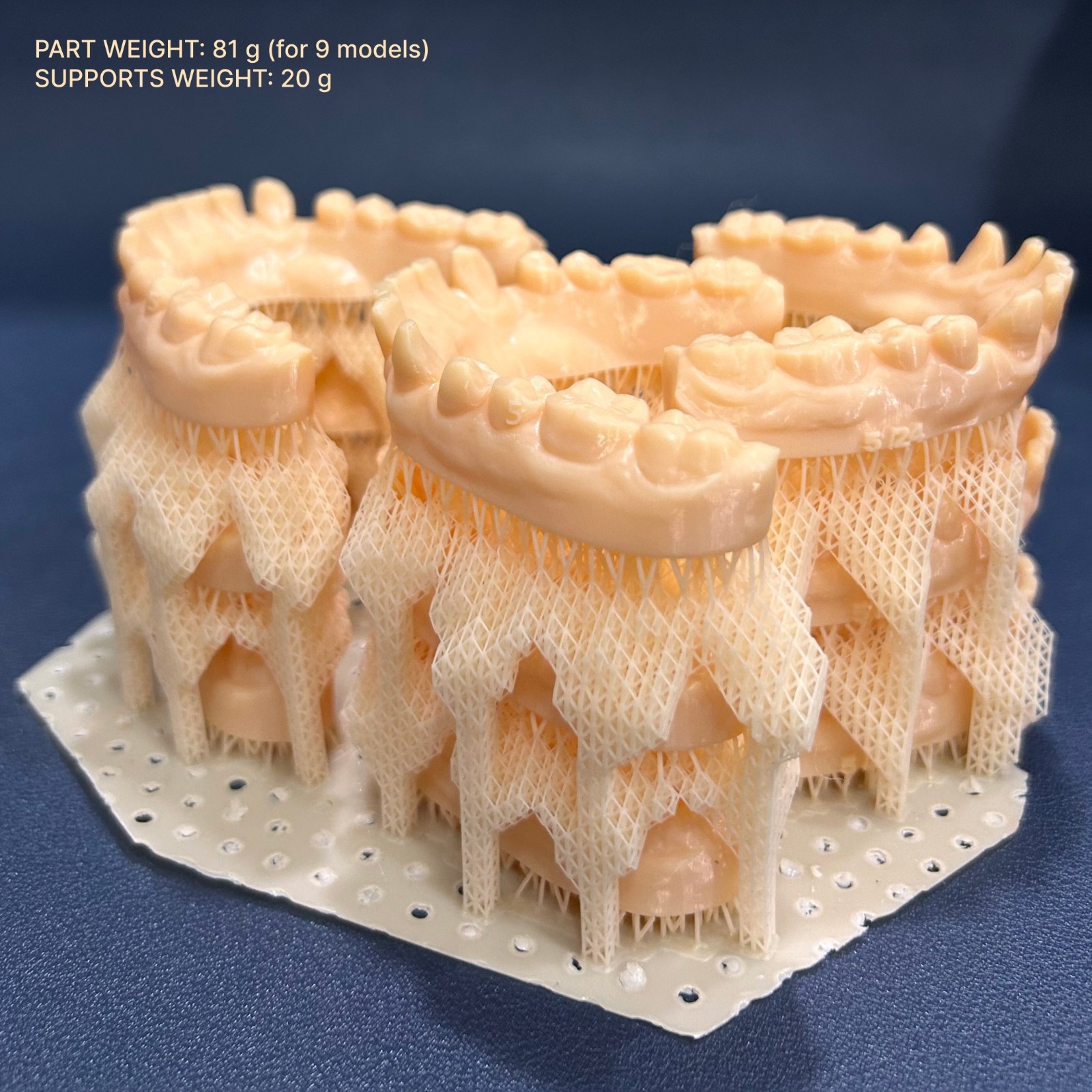
Examples of OPF support within a print run.
Polygonal offsetting has also been implemented in a way that preserves edge and surface sharpness, maintaining part accuracy.
“This one wasn’t easy to solve, but at the end of the day, it’s just equations—albeit some complex ones,” Kumar added.
Since the geometric data was already being processed, Kumar and Desai saw a natural opportunity to expand into 3D scan-to-CAD inspection software. The result is MIRA Analyse, a fast and handy tool that offers deviation map reports, scan overlays, measuring functions, and custom data point comparisons.
One particularly intriguing tool not yet listed on their website is MIRA Finder. This AI-based tool scans a local library of 3D models or rendered images on the user’s computer and returns the closest matches, helping users quickly locate design files.
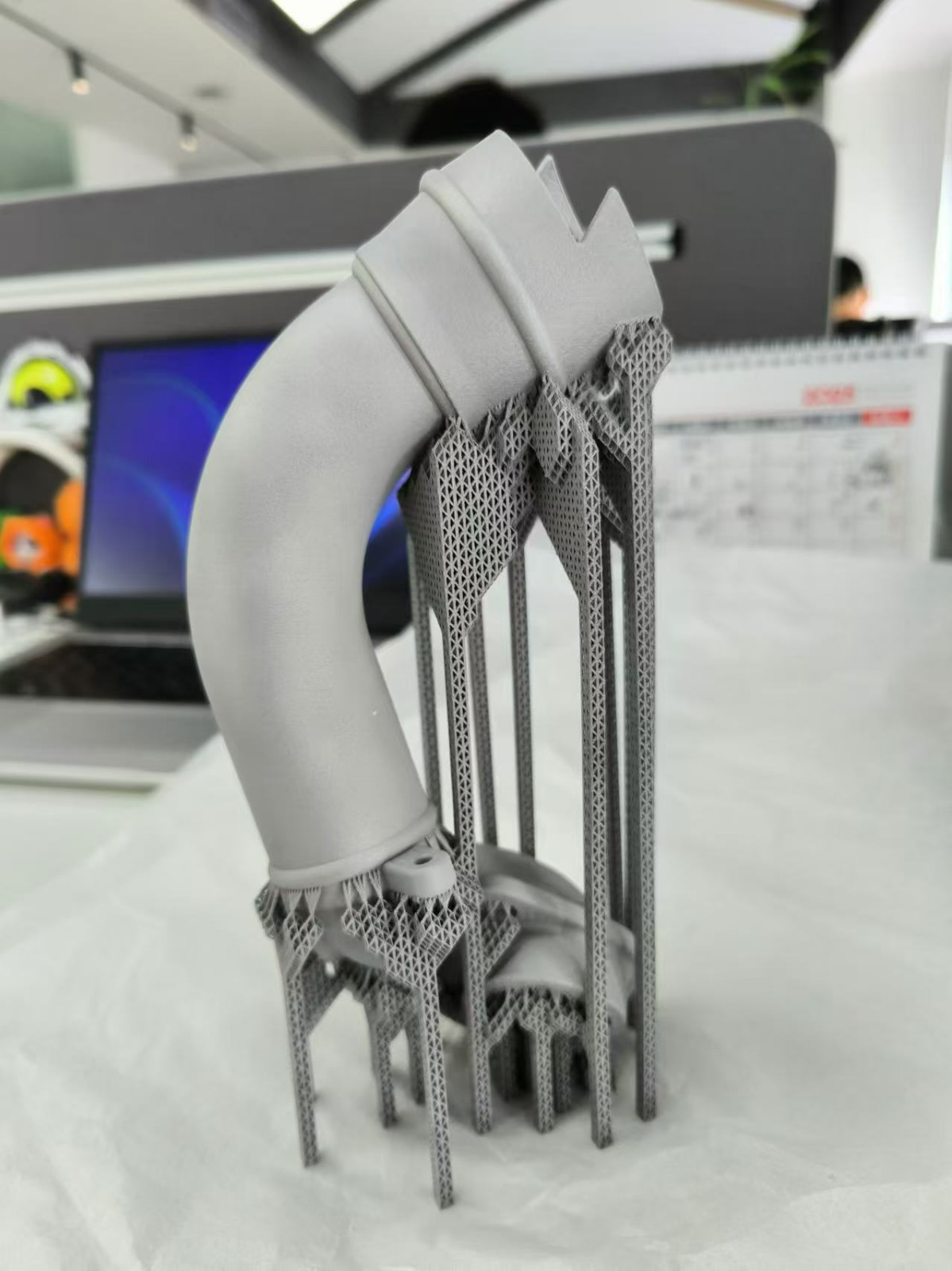
Dental applications are growing in popularity among MIRA customers.
All software is available for a free trial on request. MIRA 3D is also looking for partners in Europe and North America, and you can contact the company here.
MIRA 3D is just one example of how India’s 3D printing industry is growing, not just in hardware, but in smart, affordable software that can compete globally.
Images courtesy of MIRA 3D.
Subscribe to Our Email Newsletter
Stay up-to-date on all the latest news from the 3D printing industry and receive information and offers from third party vendors.
Print Services
Upload your 3D Models and get them printed quickly and efficiently.












You May Also Like
Aurora Labs Raises A$6M to Scale 3D Printed Turbojet Production
Australian metal 3D printing company Aurora Labs (ASX: A3D) is raising A$6 million ($4.2 million) to expand production of its small turbojet engines for defense and aerospace customers. The financing...
Russia’s 3D Printed Missiles & Can NATO Get Its Act Together?
For most of US history, however much the two major parties differed on domestic policy (in some cases a lot, overall less than you’d think), there was always essentially a...
Deals, Dollars and 3D Printing: What’s Moving in AM
There’s been plenty of business activity in additive manufacturing (AM) lately, with new deals, partnerships and investments in production. One of the bigger moves comes from Sweden, where investment firm...
Oerlikon Adds ATLIX’s xBUILD 5000, Plans More for 2027
Oerlikon has installed a new ATLIX xBUILD 5000 metal 3D printer at its facility in Huntersville, North Carolina, marking the first production deployment of the system worldwide. The machine will...