Auxilium Starts Human Trial for Nerve Implant First Bioprinted in Space

Auxilium Biotechnologies has officially launched a clinical trial for its proprietary NeuroSpan Bridge, a nerve-regeneration implant first bioprinted in space. The implant, created using the company’s AMP-1 bioprinter aboard the International Space Station (ISS), is now being tested on patients with traumatic nerve injuries back on Earth.
This marks a major moment not just for Auxilium, but for bioprinting and regenerative medicine. It’s the first time a device made using space-based bioprinting is being used in a clinical trial to help restore movement and sensation in people with severe nerve damage.
NeuroSpan Bridge is a small implant designed to guide nerve regeneration after injury. Surgeons place it inside the body at the site of the damaged nerve, and the device copies the natural structure of nerves using tiny microchannels, which help new nerve fibers grow in the right direction. It’s meant to speed up healing, reduce problems like chronic pain, and improve overall recovery.
The trial, called Neurospan-1, has enrolled the first patient in the US and aims to include 80 participants. It is taking place at several major medical centers, including New York University Langone, the University of California, San Francisco (UCSF), the Ohio State University Wexner Medical Center, and the San Antonio Orthopaedic Group (TSAOG). The study is focused on people with traumatic nerve injuries, like those caused by car accidents or workplace injuries, and will test how well the implant works, how safe it is, and how it compares to current treatments.
“We’ve spent years developing a technology with the potential to change lives, and today, we are one step closer to making that a reality,” said Jacob Koffler, CEO of Auxilium.
From Orbit to Operating Rooms
The most striking part of the NeuroSpan Bridge story is where it began: in orbit. In February 2025, Auxilium announced that it had successfully manufactured the implant aboard the ISS using its AMP-1 bioprinter. The printer was built to operate in microgravity, which allows for higher precision and more complex structures than can often be achieved on Earth.
By printing in space, the company was able to create implants with extremely fine details, like the microchannels that help nerves grow back properly, without the risk of structural collapse caused by gravity.
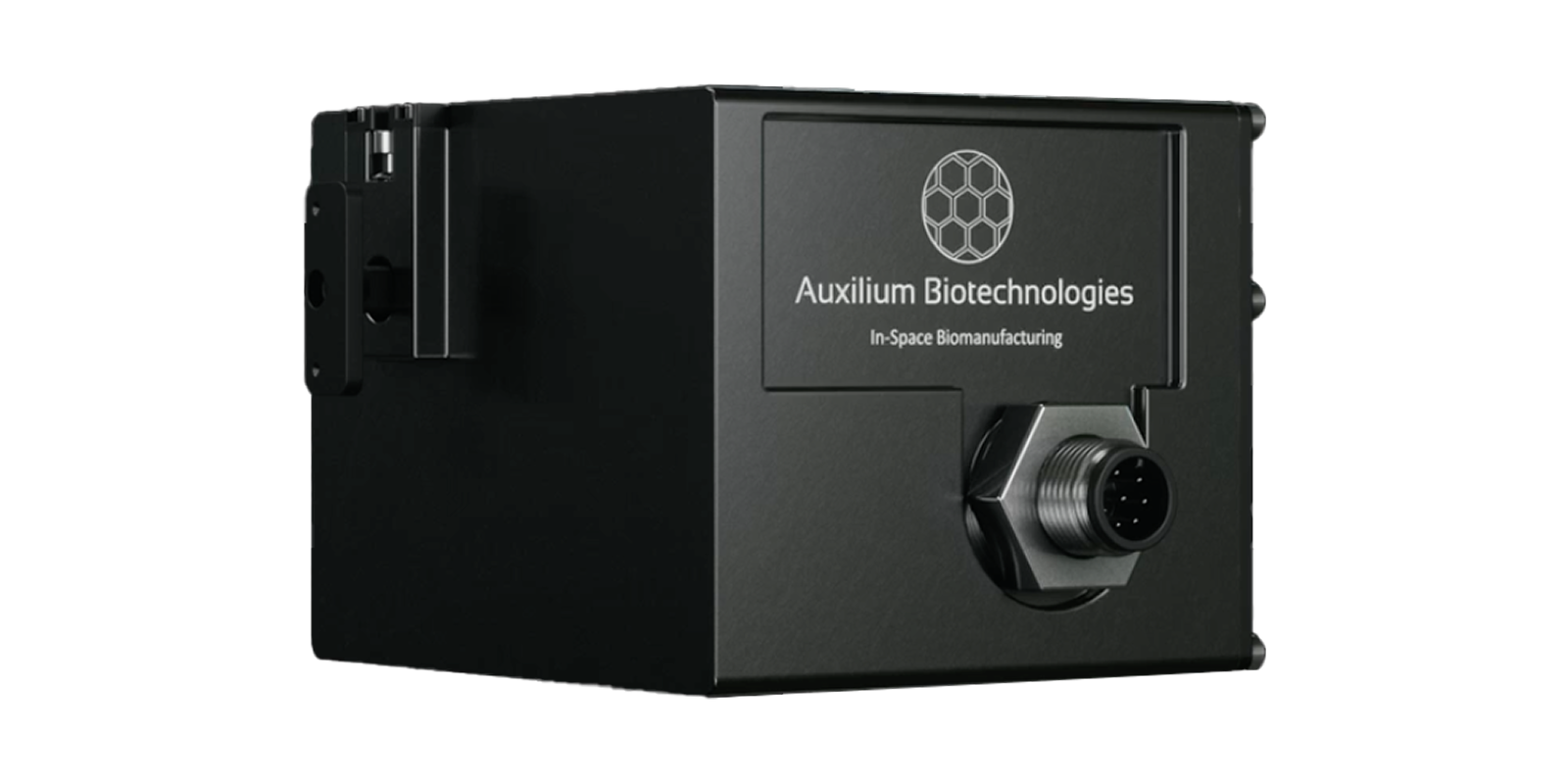
AMP-1 bioprinter. Image courtesy of Auxilium Biotechnologies.
The AMP-1 bioprinter uses small, preloaded cartridges with biological materials, taking less than a minute of astronaut time per session. The printed implants are then sent back to Earth for use in trials like Neurospan-1.
“This represents a leap in technological innovation,” said Isac Lazarovits, Director of Engineering at Auxilium. “With AMP-1 now operational, we are advancing our biomanufacturing research and the development of regenerative medical devices at an unprecedented pace.”
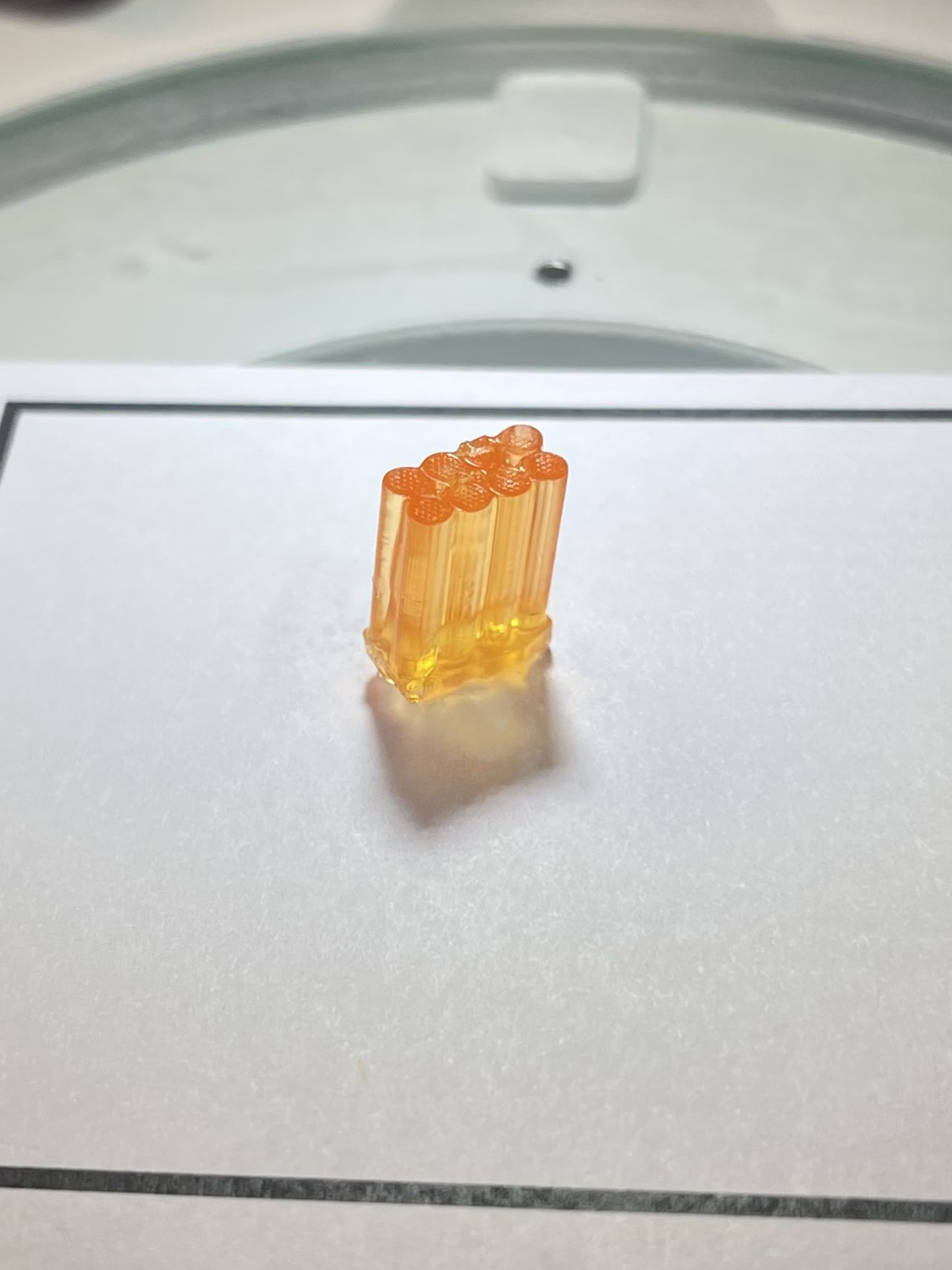
Auxilium Biotechnologies 3D bioprinted eight implantable medical devices for repairing nerve damage aboard the ISS. Image courtesy of Business Wire.
Why Space Bioprinting Matters
Bioprinting in space offers real manufacturing benefits, especially for implants made from soft, living, or complex biomaterials. According to the researchers, microgravity lets materials settle more evenly, helping create better shapes, more stable structures, and more reliable performance in the body.
This could open the door to new treatments for injuries that previously had limited options. For now, the printed implants will be used on Earth, but the same technology may someday help astronauts recover from injuries during long missions to the Moon or Mars.
Auxilium’s success also shows how space-based manufacturing, once the domain of large aerospace firms, has become more accessible to smaller biotech companies focused on solving real-world medical problems.
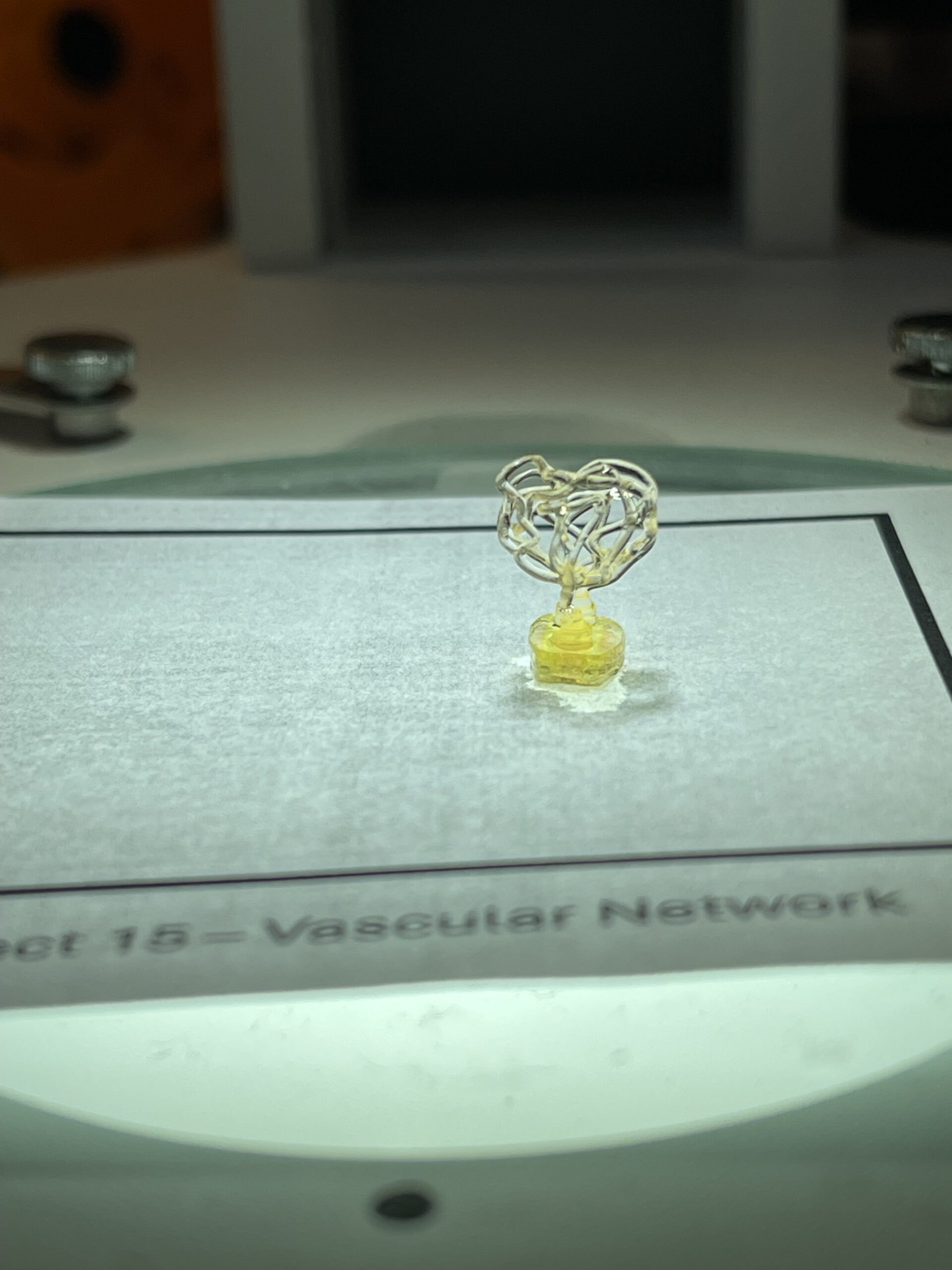
Auxilium Biotechnologies 3D bio-printed perfusable vasculature aboard the ISS, demonstrating the ability to print blood vessels. Image courtesy of Business Wire.
With the trial underway, the focus now is on the results. Auxilium hopes to prove that the NeuroSpan Bridge can help patients recover faster and with fewer long-term problems than with traditional grafts or nerve repair techniques.
Meanwhile, the company is also looking at the sustainability side of this. Since the NeuroSpan Bridge is made from metal-based materials, any leftover powder from the printing process is sent back to Auxilium’s partner, Global Advanced Metals, for recycling. This creates a full closed-loop system, reducing waste and making manufacturing more sustainable.
Overall, Auxilium’s trial proves that what started in orbit is now being tested on patients, marking a major step for space-based bioprinting in real-world medicine.
Subscribe to Our Email Newsletter
Stay up-to-date on all the latest news from the 3D printing industry and receive information and offers from third party vendors.
Print Services
Upload your 3D Models and get them printed quickly and efficiently.











You May Also Like
The AM Applications Game: Where Additive Manufacturing Is Actually Winning
When Additive Manufacturing Research (AM Research) announced its upcoming webinar, “3DP/AM Market Insights: 2025 Review and 2026 Preview,” it pointed to a key issue for the industry: which sectors are...
MIT’s Enterprise Additive Manufacturing Program Heads to RAPID + TCT 2026
MIT will offer the class Enterprise Additive Manufacturing over the course of five days. Three and a half days will take place at MIT, while two half days will see the...
The Great AM Reset: Why Applications Will Decide Who Survives
For decades, the AM industry has been powered by an exciting narrative of endless growth and disruptive potential. We celebrated every new technology, every injection of capital, and every bold...
Bambu Lab Says 2025 Was a Breakout Year: 10 Million Monthly Users and Real Business Growth
Chinese 3D printer maker Bambu Lab reported strong results for 2025, showing that the company’s push into community and small-business 3D printing is working. The numbers suggest consumer 3D printing...