
HAMR Industries Gets a FormAlloy X5R at Neighborhood 91


The Neighborhood 91 (N91) cluster of additive manufacturing firms in Pennsylvania has acquired a FormAlloy robot arm X5R Directed Energy Deposition (DED) system; specifically HAMR Industries. The X5R can work with either wire or powder, and can even switch between the two within one component or build job. This means that you could use the same system for things such as advanced armor, cladding applications, coating a part with a dissimilar material after printing it, repairing parts, and more. The machine can make both gradient and bimetallic parts, and others as well. That kind of functionality is very in vogue at the moment. For applications like hypersonics and advanced armor, mixing powders and materials and making gradient components could be the manufacturing solution for the future. At the same time, for component repair and cladding, this DED system could also be used for high-volume production.
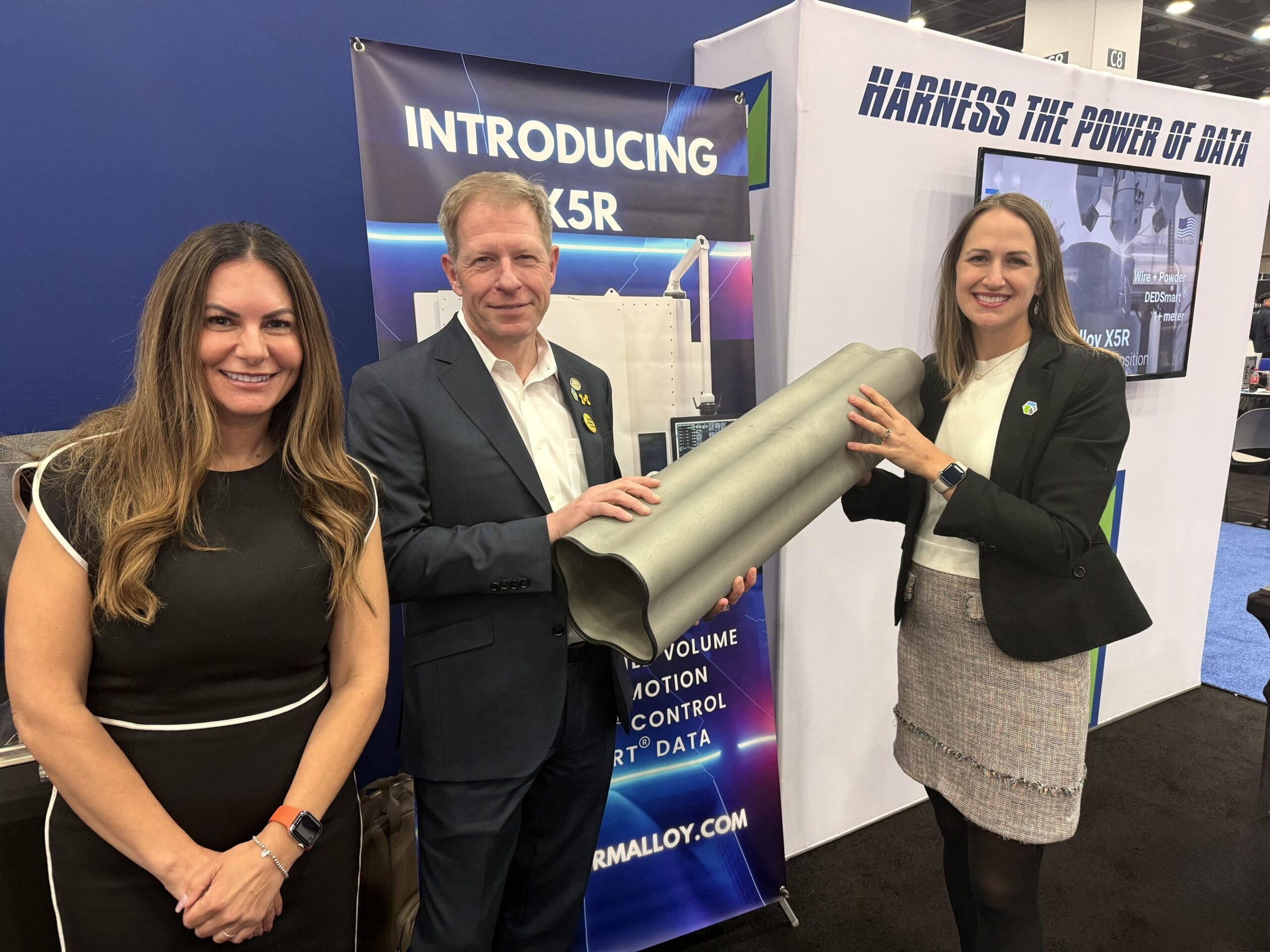
L-R: Melanie Lang, FormAlloy; John Barnes and Jennifer Coyne, The Barnes Global Advisors
The X5R was obtained by the Industrial Base Analysis and Sustainment (IBAS), which is managed and executed by the Innovation Capability and Modernization (ICAM) office, and the Resilient Manufacturing Ecosystem (RME) program, both funded by the DOD. The RME program is powered by IBAS and managed by The Barnes Global Advisors (TBGA), and its goal is to see and show how a cluster like N91 can successfully manufacture parts, train staff, and meet the needs of the DOD. Local people will be trained to work in additive, components will be manufactured to spec, and the whole approach will be documented, so that other clusters can learn from it. In a kind of ‘it takes a neighborhood to bomb a village’ approach, a collection of clusters could be critical to the future of additive in the US. Rather than all of the information and skills being kept inside one company, a more open and approachable group of firms could more readily provide access to new technologies. If this kind of effort were replicated, it could lead to networks of small firms across the states making the country’s additive efforts more resilient and localized. A network of firms with many nodes could very well be a much faster way to adopt additive as a nation than just having a few Primes master it for themselves.
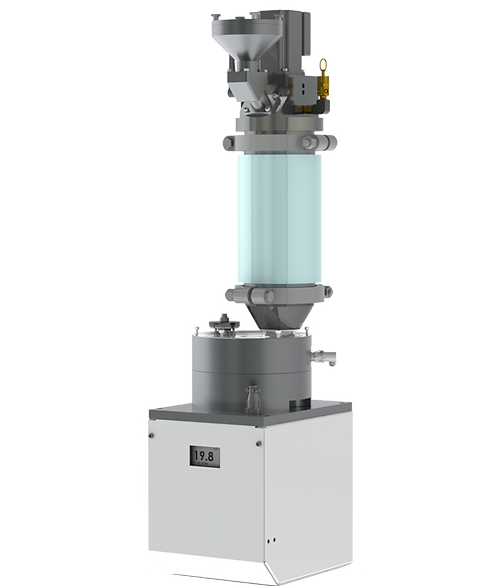
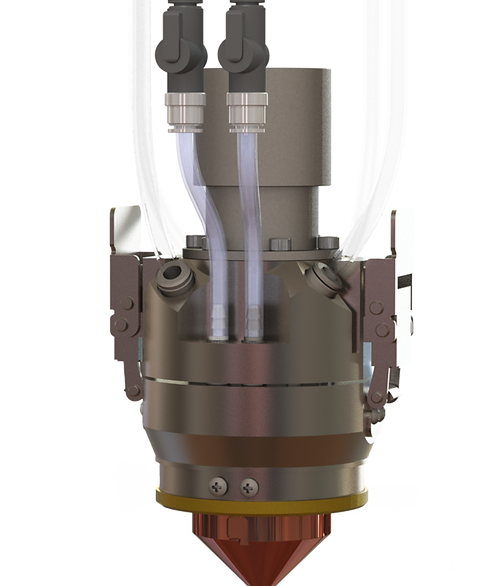
The FormAlloy X5R can deposit up to 7 kilos of material an hour, be fed by four different feed units, and has closed loop monitoring and control. HAMR Industries will use the unit for hypersonics, propulsion applications, and Navy work. HAMR, which already has a SPEE3D system, was started by Penn State’s Dr. Michael Schmitt and Dr. Jeremy Schreiber, who specialized the firm for work for harsh environments. The team says they focus on “gas turbine engines, hypersonics, directed energy weapons, advanced munitions, nuclear power, plasma facing components for fusion, 3D printed solid oxide fuel cells, downhole equipment for oil & gas, among others.”
That’s a plum area of specialization to be in at the moment, and it seems like the FormAlloy system will see some interesting work come its way.
HAMR Industries CEO Michael Schmitt said,
“The ability for the X5R to operate with multiple feedstocks, build meter sized components, and functional grade is a huge advantage. We expect to utilize both wire and powder capabilities to balance economics with part size and complexity, while functional graded materials will be used for a variety of high-performance applications.”
Jennifer Coyne, Director of Operations at The Barnes Global Advisors, explained,
“RME was established as a model to demonstrate how to structure a sustainable advanced manufacturing supply chain. The ability to integrate innovative equipment like the X5R provides immense value to moving this endeavor forward.”
Neighborhood 91 is a great idea, and globally we can see more cities and countries toy with the concept of localizing, embedding, and growing additive in specific clusters. Specializing a cluster on a particular industry or vertical is risky, as it means that you depend on few customers. But, it also lets you build capacity specific to the challenge at hand. Clustered adoption of additive could be a very valuable and fast path forward. But, we don’t yet know it it will work. That’s why we should watch N91 closely, this particular Neighborhood could serve as a model on how we spread additive globally.
Subscribe to Our Email Newsletter
Stay up-to-date on all the latest news from the 3D printing industry and receive information and offers from third party vendors.
Print Services
Upload your 3D Models and get them printed quickly and efficiently.












You May Also Like
AM Investment Strategies 2026 Sets the Stage for AMS 2027
AM Investment Strategies 2026 Nov. 5 · 12 p.m. ET · Free online event RESERVE YOUR SPOT ↗ A one-hour online discussion featuring some of the biggest names in 3D...
With Its Latest $200M Round, ICON May Be Running Away With the 3D Printed Construction Market
I used to view ICON, the Austin-based additive construction (AC) firm, as one of a handful of companies that could realistically consider itself the leader of the 3D printed construction...
How Should Businesses Build New Business? Dirk Simon Weighs In — Part 1
Dirk Simon had deep experience in materials and chemistry before joining the 3D printing industry. Instrumental in BASF and Farsoon’s market introduction, Dirk has spent a lot of time thinking...
3D Printing Services Near $2.5B as AM Market Shifts Beyond Hardware
The additive manufacturing market may be growing again, but one of the more interesting numbers behind that recovery has little to do with selling 3D printers. AM services generated nearly...


























































