Continuum Powders Turns Siemens Scrap Into High-Value 3D Printing Material


Over the last five months of 2024, Continuum Powders turned almost one ton of nickel scrap per week from Siemens Energy into high-quality metal powder, the kind used for 3D printing in critical industries like aerospace and energy. That is a powerful shift toward a circular, more flexible supply chain.
It all started with a problem most manufacturers face: leftover metal parts with nowhere to go. Siemens Energy had leftover nickel parts from its facility in Winston-Salem, North Carolina; basically, scrap from repairing and servicing equipment like turbines and generators. That kind of waste might end up in traditional recycling or even landfills. But with Continuum’s help, it’s getting a second life.
From Scrap to Superalloy Powder
Continuum Powders used its patented Greyhound M2P plasma atomization process to take the unused nickel engine parts and turn them into fresh metal powders. These powders are especially valuable in additive manufacturing (AM) because they allow printed parts to meet the same demanding standards as traditionally manufactured components.
This kind of nickel-based superalloy powder is in high demand, mainly for making complex parts that need to handle extreme heat and stress, like in jet engines, defense systems, and power plants. But making this powder the traditional way—starting with raw mined metals, melting them down, and atomizing them—uses a lot of energy and produces plenty of emissions. It also increases the need for new raw materials, which are expensive and often come from supply chains that can be hard to rely on. Instead, Continuum took metal already in circulation and turned it into something new—without starting from scratch.
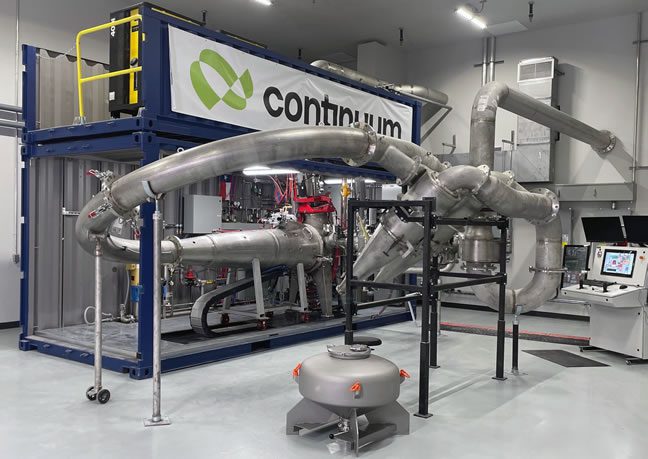
The Greyhound M2P System.
A Win for Supply Chains
Beyond the environmental benefits, this initiative helps to strengthen supply chains. By recycling existing materials and making them available for reuse, companies like Siemens Energy don’t have to depend as heavily on outside sources or brand-new raw materials, which are expensive and sometimes hard to get.
“This milestone reflects our unwavering commitment to innovation and sustainability,” said Rob Higby, CEO of Continuum Powders. “By prioritizing efficient recycling and high-quality production, we are helping industry leaders reduce their environmental impact and build supply chain resiliency.”
These days, having a reliable supply chain makes a big difference. With disruptions in global shipping, rising costs, and political tension—including a now-paused tariff plan from the Trump administration—companies are searching for ways to make their supply chains more local, stable, and predictable. This partnership shows that recycling high-value metals locally can be a big part of that.

The Continuum team with Rich Voorberg and Ramesh Subramanian of Siemens Energy at the AMGTA Annual Member Summit.
Rich Voorberg, President of Siemens Energy in North America, explained that this is not just a one-time win but part of a bigger strategy.
“Our goal is to recycle scrap materials into high-quality metal powders for reuse in additive manufacturing because when we minimize waste and boost circular manufacturing, it makes us a stronger player in the energy sector,” he said.
In fact, the energy sector uses a lot of nickel-based alloys in its turbines and systems, and turning waste into usable powder means Siemens can potentially reintroduce that material right back into its supply chain. Next, the two companies plan to test how the recycled powder can return to Siemens Energy’s production process.
Other companies are moving in the same direction, like 6K Additive, which turns scrap metal into high-quality powders for 3D printing; Outokumpu, a Finnish stainless steel producer that’s now making recycled metal powders specifically for AM; and Elcan Industries, which reprocesses used additive powders so they can be reused instead of wasted.
Cleaner, Cheaper, Smarter
Traditional metal recycling usually involves melting down scrap, transporting it long distances, and using heavy equipment, all of which consume energy and add to emissions. Continuum says its Greyhound M2P process cuts a lot of that out. It’s faster, cleaner, and done closer to where the scrap is collected.
“Our recycling and powder production capabilities prove that innovative solutions can deliver significant environmental and economic value while meeting the most demanding industry requirements,” said Michael Brennen, Sales Director at Continuum Powders.
Many manufacturers today are looking for a combination of high performance and low environmental impact. In fact, a 2023 survey by Plex found that 95% of manufacturers were making sustainability a priority. According to PricewaterhouseCoopers (PwC), 80% of consumers in 2024 said they’re willing to pay more for products made or sourced sustainably, pushing manufacturers to meet these environmental goals.
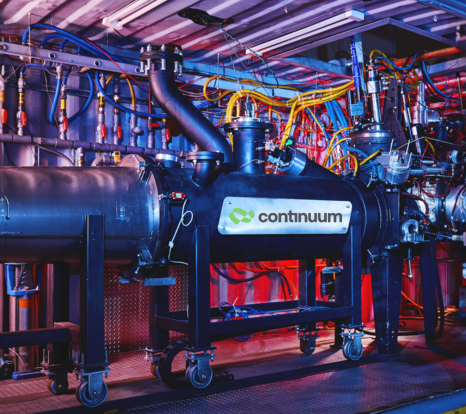
The Greyhound 3.0 powder production system from Continuum Powders.
Continuum’s approach is part of a growing movement toward circular manufacturing, where materials are used again and again rather than tossed aside after a single use. What’s more, by taking in over 16,000 kilograms (or more than 35,600 pounds) of nickel scrap in just five months, Continuum has shown that this kind of system could work. The company is already applying this model beyond Siemens, operating in Texas and California and supplying recycled metal powders to clients across aerospace, defense, energy, and automotive industries, and it is looking to grow.
All images courtesy of Continuum Powders.
Subscribe to Our Email Newsletter
Stay up-to-date on all the latest news from the 3D printing industry and receive information and offers from third party vendors.
Print Services
Upload your 3D Models and get them printed quickly and efficiently.












You May Also Like
AM Asia Watch: Chinese Company Claims Advances in Titanium Powder Beyond 700C
They’re a familiar sight at trade shows: Chinese powder companies with barren stands lacking parts. There’s maybe some glass vessel with powder in it and a semi-complete data sheet, but...
Aires Tide Designed with AI, Supercomputers, and 3D Printing
The Department of Energy‘s National Nuclear Security Administration (DOE/NNSA) is part of the US government that manages the US nuclear stockpile, helping to upgrade, improve, and maintain nuclear weapons, and...
Largest Publicly Announced, Single Order in EOS History: Beehive Industries Spends $50M on M4 ONYX 3D Printers
Earlier this year, Beehive Industries received a $29.7 million contract to produce its Frenzy 6 and Frenzy 8 engines for the US Air Force. The metal additive manufacturing (AM) user...
Blue Origin’s New Glenn Explosion Comes During Major Manufacturing Push
Blue Origin‘s orbital New Glenn rocket exploded during a hot-fire test at Launch Complex 36 in Cape Canaveral on May 29, setting back the company’s launch ambitions at a time...