BellaSeno’s 3D Printed Breast Implants Keep Shape with 87% Fat Volume, Avoids Silicone Risks

At a medical conference in Austin this week, a new kind of breast implant took center stage. It is not made from silicone but from a 3D printed, fully resorbable scaffold designed to help the body heal itself.
BellaSeno, a German-Australian company using 3D printing to build advanced medical implants, presented new clinical data showing how its printed scaffolds can help patients regain natural-looking breasts without the long-term risks of traditional implants.
Not Your Usual Implant
What makes BellaSeno’s approach different is that instead of inserting silicone or saline-filled implants, their doctors place a 3D printed scaffold made from a medical-grade, biodegradable polymer called polycaprolactone. This scaffold is shaped to match the patient’s breast and is filled with the patient’s fat tissue, taken from other areas of their body.
Over time, the scaffold slowly dissolves, leaving behind a natural, vascularized breast made entirely from the patient’s tissue. This process is known as guided tissue regeneration, and 3D printing is the key to making it work.
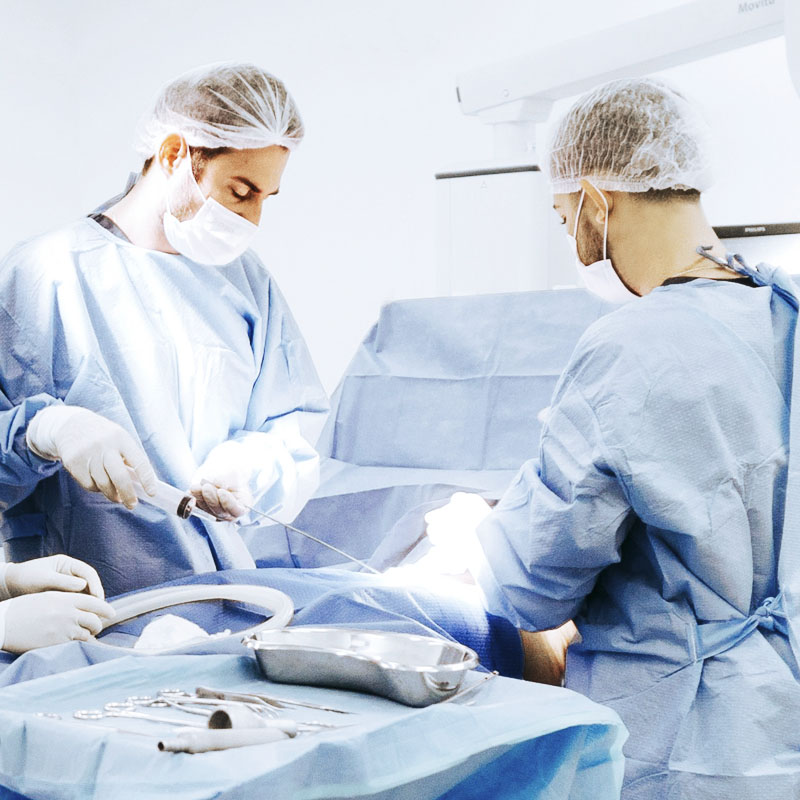
Breast implant surgery. Image courtesy of BellaSeno.
At the Aesthetic MEET 2025 conference in Austin, Texas, Anand Deva, a leading plastic surgeon and head of cosmetic surgery at Macquarie University in Australia, shared results from an ongoing clinical trial using BellaSeno’s technology.
The study involved 19 women who had previously received silicone implants that failed or caused complications. These patients were given BellaSeno’s printed scaffolds instead.
One year after surgery, patients retained 87% of their breast volume with no major complications. This data could make a real difference, considering the problems often seen with silicone implants and fat grafting alone, mainly infections, scarring, calcification, and even the hardening of tissue known as capsular contracture.
Even more impressive is that some patients showed signs of successful blood vessel formation within the new breast tissue at the two-year follow-up. This means their bodies were not only keeping their shape but actually growing fully integrated, living tissue.
“These clinical findings demonstrate that BellaSeno has developed a safe, high-performance alternative to silicone breast implants,” said Deva. “BellaSeno’s implants enhance and protect the body’s own regenerative potential, replacing and/or augmenting like tissue with like tissue.”
Moving Away from Silicone
Silicone implants have been around for over 60 years. Even though silicone implants still make up around 80% of all breast implant surgeries, they have raised questions over time; they can rupture, shift, or trigger immune reactions. Plus, patients often need replacements every ten to fifteen years, and complications can lead to difficult revision surgeries, which in turn means going under anesthesia again, something that comes with its own set of risks and concerns.
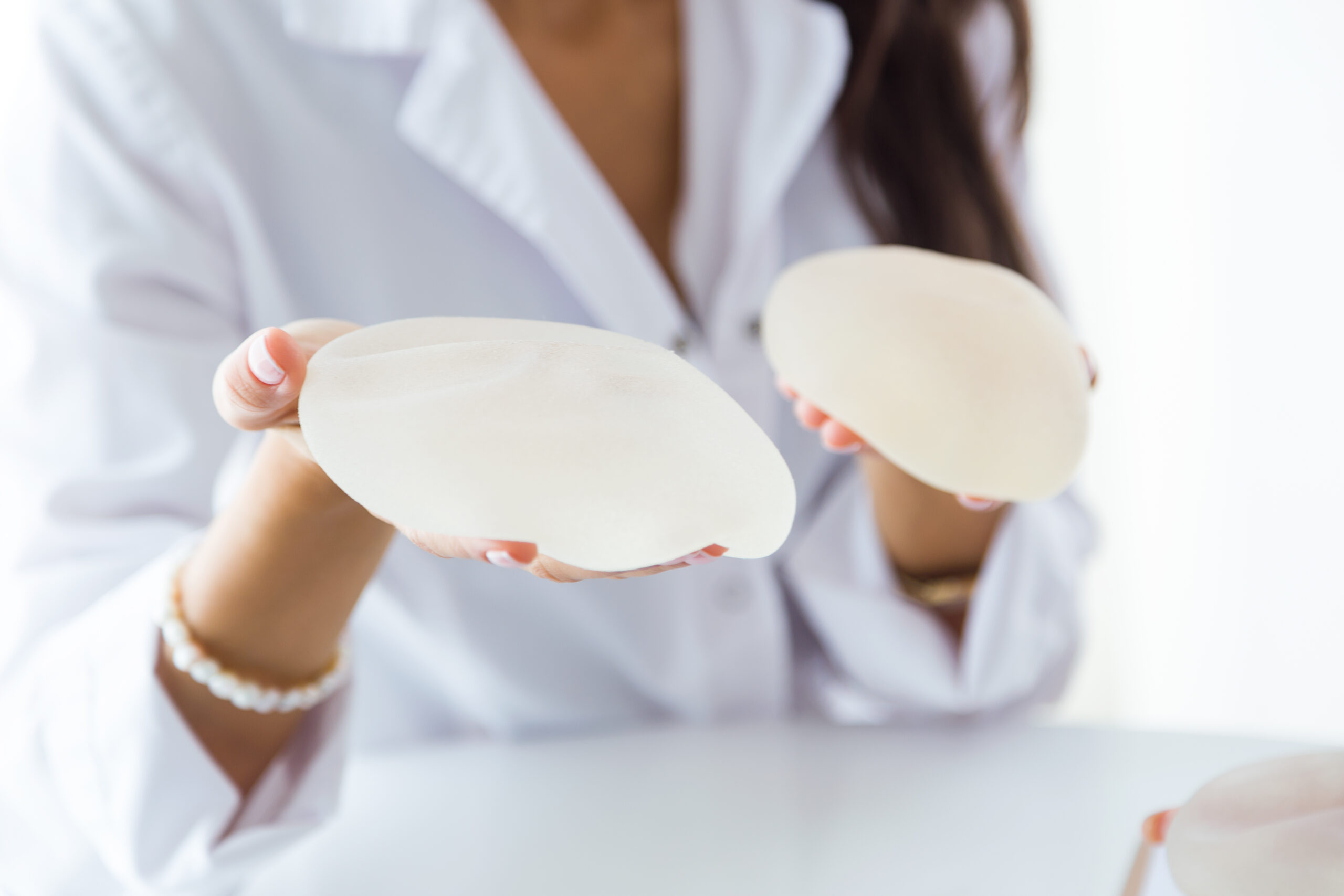
Doctor choosing silicone prosthesis. Image courtesy of Freepik.
Women who choose to remove their implants often don’t have many good alternatives. Fat grafting alone often doesn’t hold its shape, and surgery can be difficult and invasive. Meanwhile, BellaSeno’s 3D printed scaffolds offer a new approach that gives patients the benefits of both implants and fat grafting without the downsides.
While BellaSeno’s clinical trial focused on women who had their silicone implants removed, the company’s plans go further. It also hopes to help women who need reconstruction after a lumpectomy—a surgery where part of the breast is removed to treat cancer—as well as those looking for a more natural option for cosmetic breast augmentation. In both cases, BellaSeno’s 3D printed scaffold offers a way to rebuild the breast using the body’s fat without relying on permanent implants. This could be a game-changer for women who want lasting results without the risks and complications that can come with silicone.
What makes this product work is the way the scaffold is carefully designed and produced. BellaSeno describes how 3D printing can create finely tuned structures with specific shapes and internal designs. These structures aren’t just placeholders. They’re designed to encourage cells to grow, blood vessels to form, and fat tissue to stay in place without being reabsorbed by the body.
“This is another milestone demonstrating that our pioneering approach offers a risk-optimized, high-quality solution for patients who have experienced complications related to silicone breast implants, promising them a natural alternative,” said Mohit Chhaya, CEO of BellaSeno. “Pleasingly, our scaffolds enabled the breasts to maintain their shape, volume, and form over time and achieved softness, another crucial performance measure.”
3D printing allows BellaSeno to control every detail of the scaffold: its size, geometry, porosity, and stiffness. All these features are essential for supporting fat grafts and encouraging the body to rebuild natural tissue. The process would be nearly impossible using traditional manufacturing techniques.
And because the implants are printed using polycaprolactone, they naturally break down in the body over time, typically within two to three years, leaving behind only new, living tissue.
Smart Engineering and Medical Insight
BellaSeno was founded in 2015 in Leipzig, Germany, and now has offices in Brisbane, Australia. The company has always focused on combining regenerative medicine with 3D printing to create soft tissue and bone implants.
Its scaffolds are made under ISO 13485 medical device standards and have received support from both public and private investors, including Germany’s Federal Ministry of Education and Research and the Australian government.
The technology behind the implants results from years of collaboration between engineers, surgeons, and scientists. By controlling every detail of the design, BellaSeno can make implants that match the patient’s anatomy and promote the growth of healthy, functional tissue.
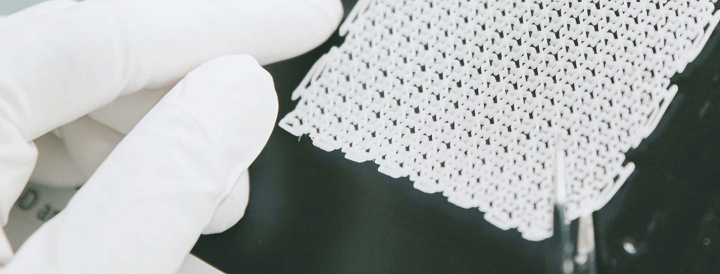
BellaSeno technology. Image courtesy of BellaSeno.
While BellaSeno is currently focused on breast reconstruction, the same technology could be applied to other areas in the future, including facial reconstruction, soft tissue defects, or even custom bone scaffolds.
As the clinical trial continues, BellaSeno is working toward broader use of its implants in both reconstructive and cosmetic procedures. Since the product is still in the clinical stage, it isn’t widely available yet. The company will need to collect more data and secure regulatory approvals—such as a European Union’s Conformité Européenne (CE) mark or U.S. Food and Drug Administration (FDA) clearance—before these implants can be offered more broadly.
Subscribe to Our Email Newsletter
Stay up-to-date on all the latest news from the 3D printing industry and receive information and offers from third party vendors.
Print Services
Upload your 3D Models and get them printed quickly and efficiently.











You May Also Like
Advancing Workforce Development for Industrial Additive Manufacturing
As additive manufacturing (AM) continues its transition from a niche technology to a core element of industrial production, workforce development has emerged as one of the industry’s most pressing issues....
Stratasys’ Jesse Roitenberg on Why Additive Manufacturing Is Becoming a Basic Skill
After nearly two decades working at Stratasys — and most of that time focused on education — Jesse Roitenberg has seen additive manufacturing (AM) move from novelty to necessity. 3DPrint.com...
Titomic Lands First Order for 3D Printed Semiconductor Capital Equipment Components
One of the markets that should be a reliable source of growth well into the future for the additive manufacturing (AM) industry is semiconductor capital equipment (semicap). When Additive Manufacturing...
Northrop Grumman & Titomic Achieve Successful Hot Fire Test with 3D Printed Thrust Chamber
Back in April, leading Australian cold spray additive manufacturing (CSAM) original equipment manufacturer (OEM) Titomic announced that the company was partnering with defense giant Northrop Grumman to test the use...