Welcome to the Desktop 3D Printing Revolution: Astronomics

In 2014, I wrote that FDM desktop 3D printers would not be suited for production. By 2018, however, we were making parts for highly regulated industries using Ultimaker desktop machines. These machines even printed faster than industrial ones. Subsequently, highly optimized Prusa Research machines were used for high-volume production, creating very accurate parts. People began deploying print farms with hundreds of inexpensive Prusa clones to produce tens of thousands of parts. Now, with the advent of Bambu Lab, it is much easier to set up your own print farm. Many companies are turning to Bambu and other systems to produce industrial and enterprise parts. At the same time, the material landscape has evolved, making truly industrial parts more accessible. The combination of much more powerful desktop 3D printers and higher-performance materials will fundamentally change our industry.
Material Availability: Astronomics. Our Stuff
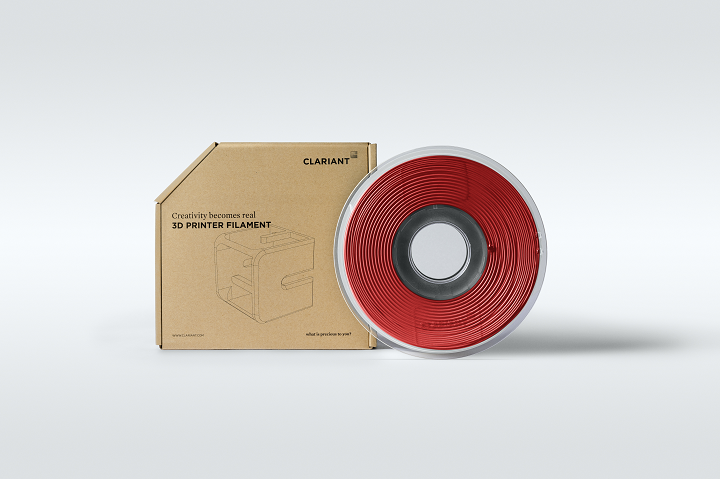
Clariant 3D Printer Filament.
Many large chemical and polymer companies were drawn to the Material Extrusion space because most printers were open and the market was experiencing astronomical growth. At the same time, numerous small OEMs populated the desktop space, allowing big materials firms to pick and choose, leveraging these manufacturers to promote their own materials. The key question became: how can we push our material into the market? Somewhere, we have a production line capable of making 5,000 kilos or 5,000 tons of a polymer per hour. How can we, with minimal compounding, sell this for prices we could previously only dream of? Although the volumes were tiny, the expectation was that growth would eventually solve this problem.
We now know that large companies ran out of patience before those volumes materialized. Ironically, by keeping their prices high, they stifled the market’s growth. I call this “Astronomics”—we expect astronomical growth, demand astronomical prices, but no growth occurs. We make margins, but invest so much that these margins become irrelevant, and since we only care about revenue at this stage, it never materializes—largely because high prices are inhibiting it. The result is astronomical disappointment when the growth fails to appear.
I also refer to this as “PowerPoint Lamarckism“—the market is expected to behave according to the magical thinking in our PowerPoints. Despite this, the hype did lead many polymer R&D teams to get involved, and many firms developed some excellent materials. This increased material availability, attracting long-term users familiar with those products.
We Know Covestro PC!
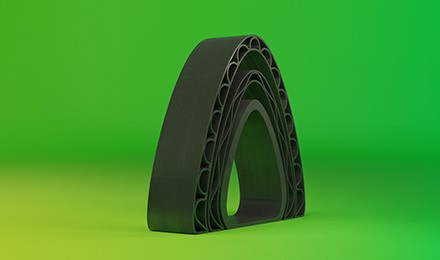
DSM’s glass-reinforced Arnite AM8527 PET 3D printing material. Image courtesy of Royal DSM.
The comfort zone of many companies expanded significantly due to the influx of materials they knew and trusted. Many industries and companies have quasi-standardized on specific materials. For filament producers, it was relatively easy to take an extrudable material and turn it into filament. Once they had invested in filament production lines, they could easily switch between colors and even different materials. This led to a wide variety of colors, grades, and material variants, which explains the proliferation of hot pink, glitter materials, and many pastel options.
For companies, similar economics resulted in them being offered 3D printing materials they were already familiar with, increasing their comfort level and likelihood of adopting 3D printing. Seeing suppliers of a similar size in the market also gave them a sense of reassurance, encouraging further use of 3D printing technologies.
Real Ecosystems Don´t Have One Player Controlling All
Everyone seems to want an ecosystem, but in reality, they want their own potted plant. A true ecosystem consists of various players with different skills, niches, and abilities, all drawn to one thing for many different reasons. Yes, there may be apex predators, but they rely on prey species, plants, worms, and much more to make the system function. Potted plants, however, are not ecosystems, yet that’s what everyone tried to create. On the desktop side, we did manage to build a varied ecosystem—one with thousands of different materials in all sorts of grades and colors. With PLA and later PETG becoming commoditized, people were sure to move toward higher-end solutions.
On the desktop, OEMs, software initiatives, materials firms, makers, and industrial players all contributed to building a true ecosystem—the only vibrant ecosystem in 3D printing. Complete with an aftermarket, duplications of effort, and competition at different levels, this vibrancy was key to its success. Some players excelled, others found niches, and many gave up. For now, though, we have a bright, multivariate ecosystem with a wide array of materials. In the next installment, we’ll look at how polyamides were the first major shake-up to this system, making it more appealing for large-scale industrial production.
Subscribe to Our Email Newsletter
Stay up-to-date on all the latest news from the 3D printing industry and receive information and offers from third party vendors.
Print Services
Upload your 3D Models and get them printed quickly and efficiently.











You May Also Like
3D Printing News Briefs, November 29, 2025: Submarine Industrial Base, Running Shoe, & More
In this weekend’s 3D Printing News Briefs, we’ve got more news from Dyndrite, which has launched the NXG Slice Viewer for Nikon SLM Solutions. Farsoon Europe has news to share...
Clecell Turns Stem Cells into 3D Printed Human Skin in the Lab
South Korean biotech startup Clecell has achieved what many tissue engineers have long sought: a reproducible, full-thickness human skin built entirely from induced pluripotent stem cells (iPSCs), using bioprinting. Clecell’s...
3D Printing News Briefs, October 25, 2025: Strategic Investment, Inner Ear Organoids, & More
In this weekend’s 3D Printing News Briefs, we’ll start off with some business news, as Xact Metal announced continued double digit growth in Q2 and Q3 of 2025, and the...
3D Printing News Briefs, September 6, 2025: SBIR Awards, Regenerative Medicine, & More
In this weekend’s 3D Printing News Briefs, we’ll start with some exciting funding news, as NIST has awarded over nearly $2 million to small businesses working to advance AI, additive...