Motorola and Red Wolf Technology Create 3D Printed Part Library for Cell Phones

Red Wolf Technology, a Utah-based firm that retrofits 3D printers to use its own software, has partnered with Motorola Mobility to create a library of printable files for tooling used in cell phone repair. With the parts library, repair shops will be able to use Red Wolf Technology’s Primo Print3D system to produce authentic Motorola jigs and molds on-site.
Red Wolf has carved out a niche for itself by marketing its Primo Print3D platform as a way to manufacture on-demand, customizable phone cases. The company also makes other, similar products for cell phone repair providers, including the Primo Protect for customizable screen protectors, and the Primo Polish for screen polishing.
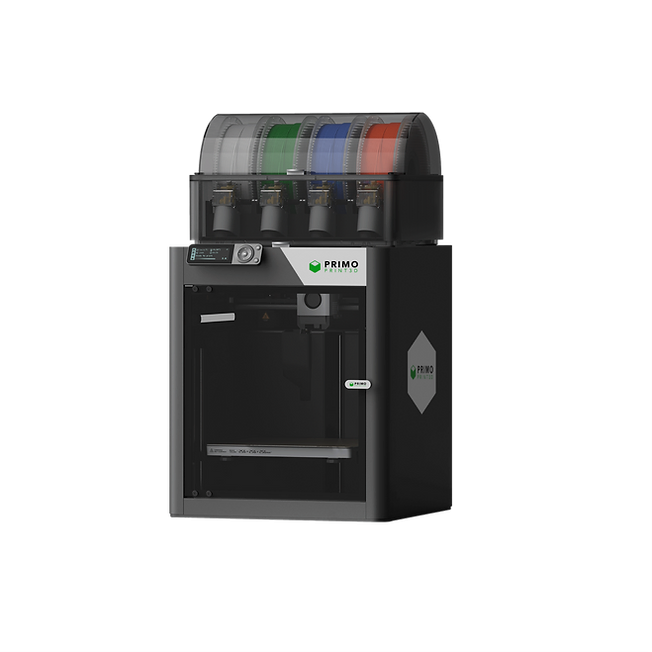
In a press release about Red Wolf Technology’s partnership with Motorola on a digital parts library for cell phone tooling, the founder and CEO of Red Wolf Technology, Brad Bacigalupi, said, “We are incredibly excited to partner with Motorola Mobility on this initiative. Digital manufacturing is making huge strides into the mainstream, and we are proud to be a leader at the forefront of this movement. Our expertise in 3D printing, combined with Motorola Mobility’s forward-thinking approach, uniquely aligns us to revolutionize the repair industry and the 3D printing industry.”
Darwin Garcia, Motorola Mobility’s Service Engineering Manager for Service Readiness & Product Engineering, said, “Accessing repair tools can be expensive, time-consuming and logistically challenging. 3D printing is a new and exciting approach to solve these problems. Red Wolf Technology has been incredibly supportive adding our repair tools to their 3D printing platform.”
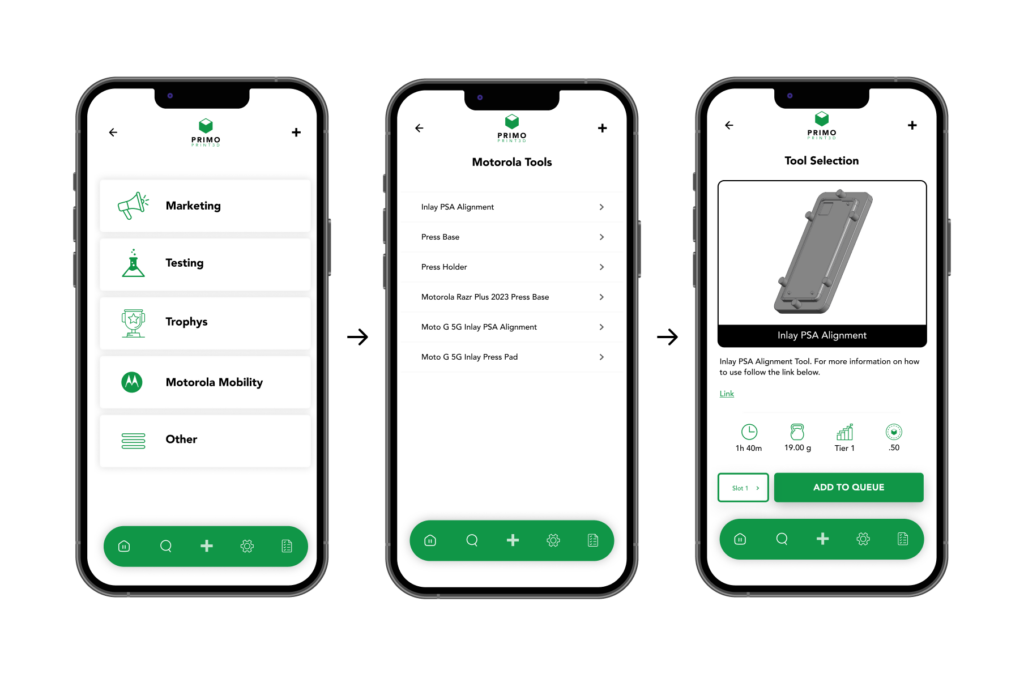
The whole concept behind Red Wolf Technology is pretty genius, specifically in terms of how cohesive the fit is between the technology and the industry served. Of course, given how important brands are to the cell phone industry, in particular, it will require some serious collaborating with major players to give the concept the reach it needs, which is what makes Red Wolf’s partnership with Motorola so exciting.
As I wrote in my summary article on RAPID + TCT 2024, the additive manufacturing (AM) industry still appears to be maturing most steadily in the realm of tooling for maintenance and repairs. That’s true not just concerning the largest components AM produces, but, as John Kawola from Boston Micro Fabrication explained to me, it’s equally true about the smallest components.
In this context, cell phones are an especially attractive market for the AM industry because of how the repair process generally takes place — it’s still the norm for customers to go into a brick-and-mortar location. Thus, by getting its machines into more repair shops thanks to the Motorola partnership, Red Wolf also gives itself the perfect foothold for attracting more businesses and individuals to its on-demand accessories offerings.
Subscribe to Our Email Newsletter
Stay up-to-date on all the latest news from the 3D printing industry and receive information and offers from third party vendors.
Print Services
Upload your 3D Models and get them printed quickly and efficiently.













You May Also Like
3D Printing News Briefs, October 10, 2026: Drones, WAAM, Ceramics, & More
We have a packed 3D Printing News Briefs for you this weekend! First, America Makes celebrated the recent National Manufacturing Day with 3D printed drones, and then it’s on to...
10 Years of Multi Jet Fusion: Onsite at HP’s Vancouver, Washington Facility
At this year’s RAPID event in Boston, HP Additive Manufacturing Solutions celebrated ten years in the additive manufacturing (AM) market. The company ushered in the milestone with several innovations, including...
PharmaTher Plans U.S. Network to 3D Print Medicines on Demand
3D printing medicines has often been tied to the idea of personalization, basically making a pill in the right dose, shape, or drug combination for a patient. PharmaTher is now...
3D Printing News Briefs, September 17, 2026: 3D Printed Boat, UAS Development, & More
We’ll start with maritime manufacturing in this week’s 3D Printing News Briefs, and continue on to defense 3D printing. We’ll end with funding for Tripo AI. Read on for all...