New 3D Printers from ELEGOO Debut at RAPID + TCT 2024

Chinese 3D printer manufacturer ELEGOO is growing fast. After gaining attention with the release of its flagship printer, the Mars 1, in 2019, the company has expanded its lineup to include the Neptune series for fused deposition modeling (FDM) printing and the Saturn series for large-format resin printing. ELEGOO has now introduced its first CoreXY flagship 3D printer, the Centauri Carbon, at RAPID + TCT 2024. This launch, alongside unveiling the latest additions to its popular Mars series, the Mars 5 and Mars 5 Ultra, marks the first time ELEGOO has introduced multiple printers at the event.
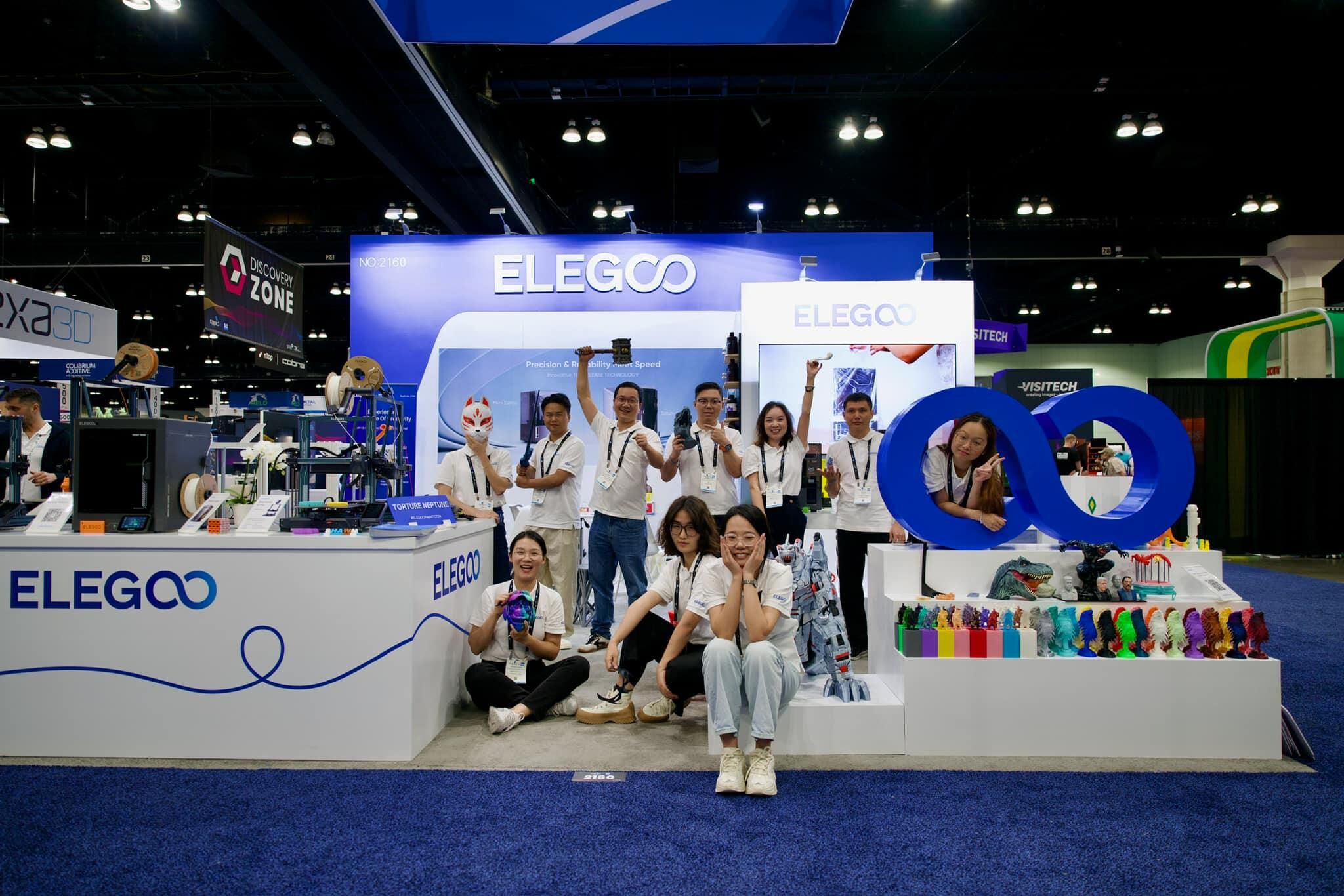
ELEGOO’s stand at RAPID+TCT 2024
Ideal for beginners, the Centauri Carbon features advanced technologies like smart AI camera capabilities and an aluminum die-cast construction. CoreXY, the technology used in the Centauri Carbon, employs a unique belt system for precise and fast movement along the X and Y axes, making it ideal for creating detailed and complex prints, from prototypes and artistic models to educational projects and small business products.
With its space-gray metal design and fully enclosed frame, Centauri Carbon was created to simplify 3D printing by addressing common barriers such as high costs and a steep learning curve. ELEGOO is promoting the machine as user-friendly and cost-effective, aiming to make 3D printing accessible to a broader audience beyond hobbyists. In fact, ELEGOO’s Founder and CEO, Chris Hong, the company’s target audience also includes artists, designers, students, and small businesses.
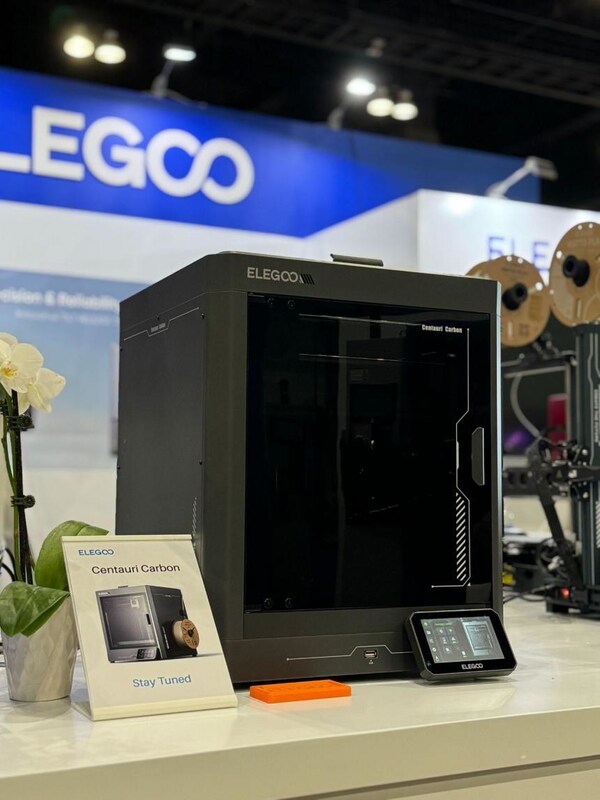
Centauri Carbon debuts at RAPID+TCT 2024 in Los Angeles.
Alongside the Centauri Carbon, ELEGOO introduced the Mars 5 and Mars 5 Ultra at RAPID. These new additions to the popular Mars series can print quickly. For example, the Mars 5 Ultra can print up to 150 millimeters per hour because it uses Tilt Release Technology. This feature makes it easy to remove printed models without damaging them, ensuring the process is fast while maintaining high-quality details and accuracy.

Priced at $269, the Mars 5 Ultra comes with a Resin Exposure Time Calibration that allows users to adjust how long the resin is exposed to light during printing. Users can fine-tune this exposure by selecting between 4, 6, or 8 segments for better curing of the resin. This precise control helps ensure that prints are high-quality and have accurate details.
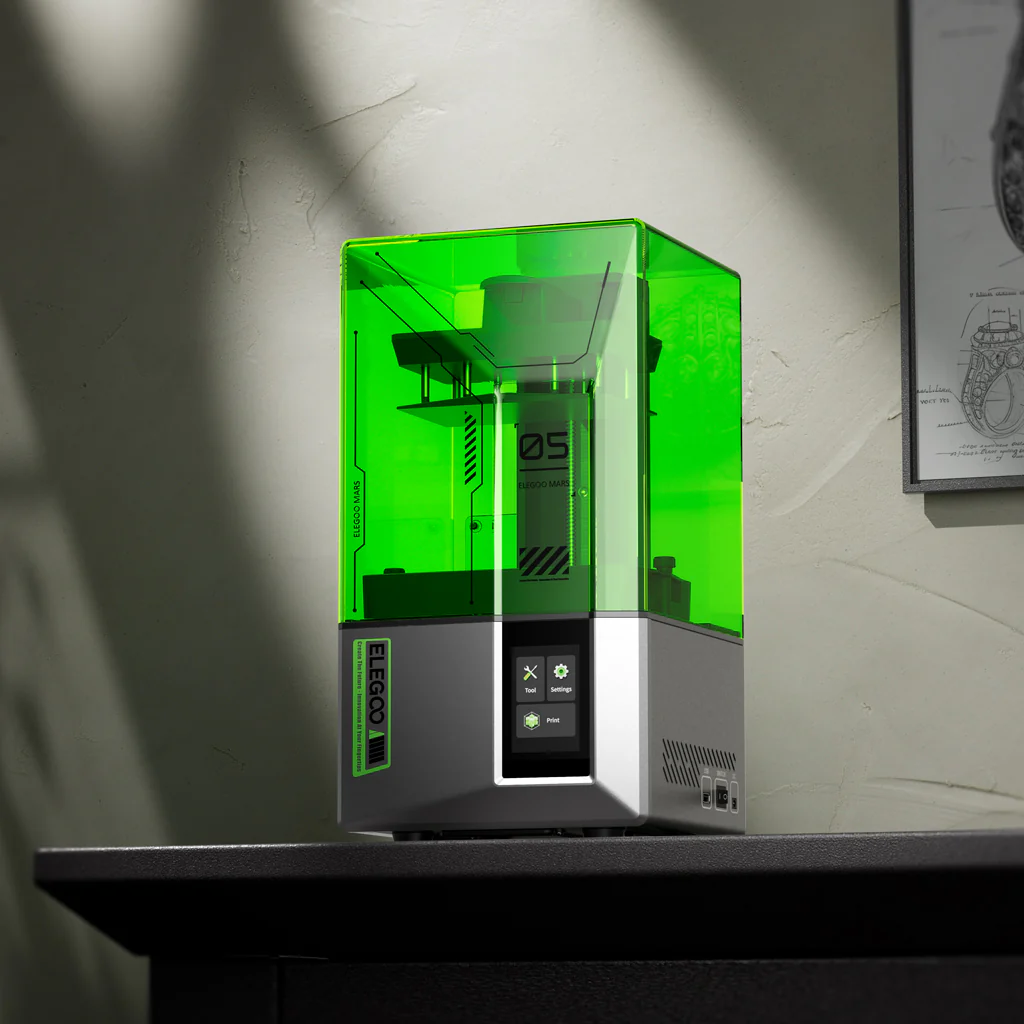
Mars 5 resin 3D printer.
Positioned as a more affordable version, the Mars 5, which costs $179, retains the quality and user-friendly features of the Mars 5 Ultra but prints at a slower speed of 70 millimeters per hour, only connects through USB and not Wi-Fi, has a smaller touchscreen and can print smaller dimensions.
All three printers are available for pre-order, but RAPID visitors could see them in action at the event. This marked ELEGOO’s first exhibition in the United States, an experience the company described as “warmly welcoming.” ELEGOO hosted workshops with top creators in the 3D printing community, including Frank Pillar, known for his Frankly Built channel, which showcases intricate prop-making skills using 3D printing, and Clayton Parker, who hosts Uncle Jessy, providing tutorials on making cosplay masks of superheroes and teaching about 3D printing. During each workshop, ELEGOO ensured there were giveaways for participants.
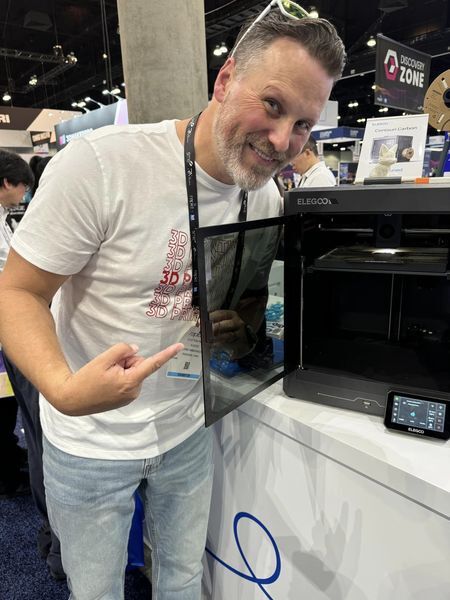
Clayton Parker from Uncle Jessy with ELEGOO printer at RAPID+TCT 2024.
With the introduction of the Centauri Carbon and the Mars 5 series, ELEGOO continues to cater to a diverse audience, making 3D printing more accessible and user-friendly, empowering creativity for a wide range of users.
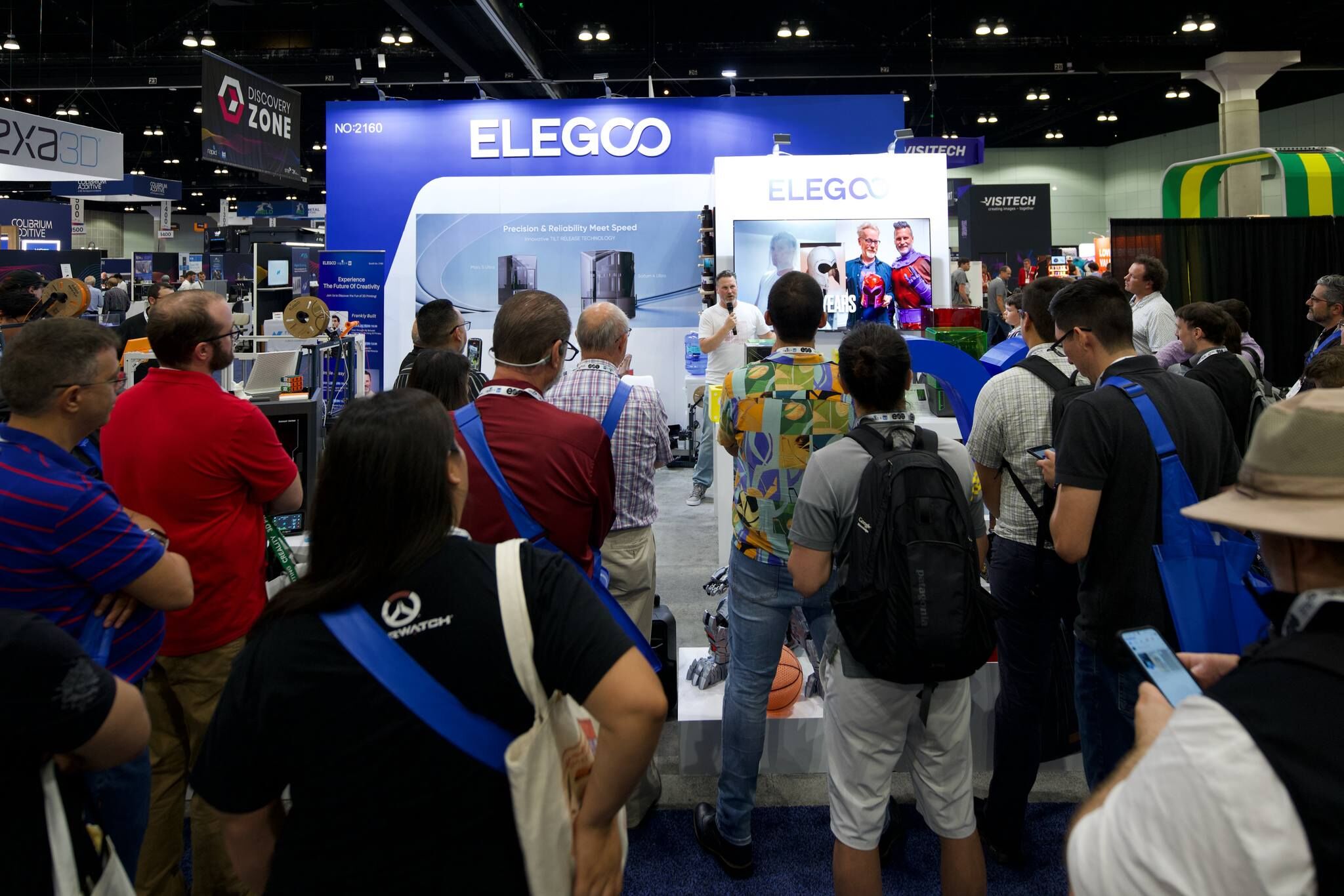
RAPID+TCT 2024 Visitors at ELEGOO’s stand.
All images courtesy of ELEGOO.
Subscribe to Our Email Newsletter
Stay up-to-date on all the latest news from the 3D printing industry and receive information and offers from third party vendors.
Print Services
Upload your 3D Models and get them printed quickly and efficiently.













You May Also Like
The Manufacturing Race Behind the Drone Revolution
We are in the middle of a major manufacturing shift focused on the production speed and payload capacity of uncrewed aerial systems (UAS), or drones. A recent Manufacturing Dive article...
ADDMAN to Buy Up to $10.8M in Nickel 718 Powder from 6K Additive Over 30 Months
After years of buildup, we’re finally starting to see what the US metal additive manufacturing (AM) market could look like at scale. To be sure, it’s still not quite there,...
Metal AM in a Multipolar World, Part 2: How PBF and DED Could Change by 2035
The first decades of PBF development were heavily shaped by machine capability: more power, more lasers, larger build volumes, better recoating, and improved process monitoring. These developments will continue, but...
Advanced Manufacturing at IMTS 2026: 3D Printing and AI and Drones, Oh My!
Last week’s International Manufacturing Technology Snow (IMTS) in Chicago welcomed over 90,000 attendees to the jungle that is McCormick Place. With over 1.17 million square feet of exhibit space, and...