3D Printing Financials: IperionX Aims for Mid-2024 Titanium Powder Production Amid Stock Downturn


IperionX (NasdaqCM: IPX), a company now headquartered in the United States and trading on both the Nasdaq and the Australian Securities Exchange (ASX), has released its first-quarter earnings report for 2024 amid a significant drop in its stock value on both exchanges. Despite the setbacks, IperionX continues to pursue ambitious projects, notably its Virginia Titanium Project. This initiative aims to strengthen the U.S.’s titanium supply chain and support advanced manufacturing, including 3D printing of high-performance titanium products.
Titanium Projects
Reports from IperionX indicate significant progress at its Virginia Titanium Manufacturing Campus, initially announced in October 2021. To advance its commercial-scale titanium metal production, IperionX installed a Hydrogen Assisted Metallothermic Reduction (HAMR) titanium furnace, an advanced technology that uses hydrogen to produce titanium metal more efficiently and sustainably.
Expected to start operating in the second quarter of the year, the furnace could produce the first highly anticipated titanium powders by mid-2024. Additionally, the Advanced Manufacturing Center is complete, and the core additive manufacturing, powder metallurgy, and HSPT (High-Strength Powder Technology) forging equipment are being prepared for operation.
The company is also scaling up its titanium production capacity in the state. According to IperionX’s March 2024 quarterly report, Phase I aims to reach a total run rate target capacity of 125 metric tons per year (TPA) by the end of 2024. Following this, Phase II plans to increase production capacity to 2,000 metric TPA by 2026. This increase in capacity is expected to lower production costs to around $30 per kilogram of angular titanium powder. Engineering studies are underway to explore further expansion beyond 2,000 metric TPA.
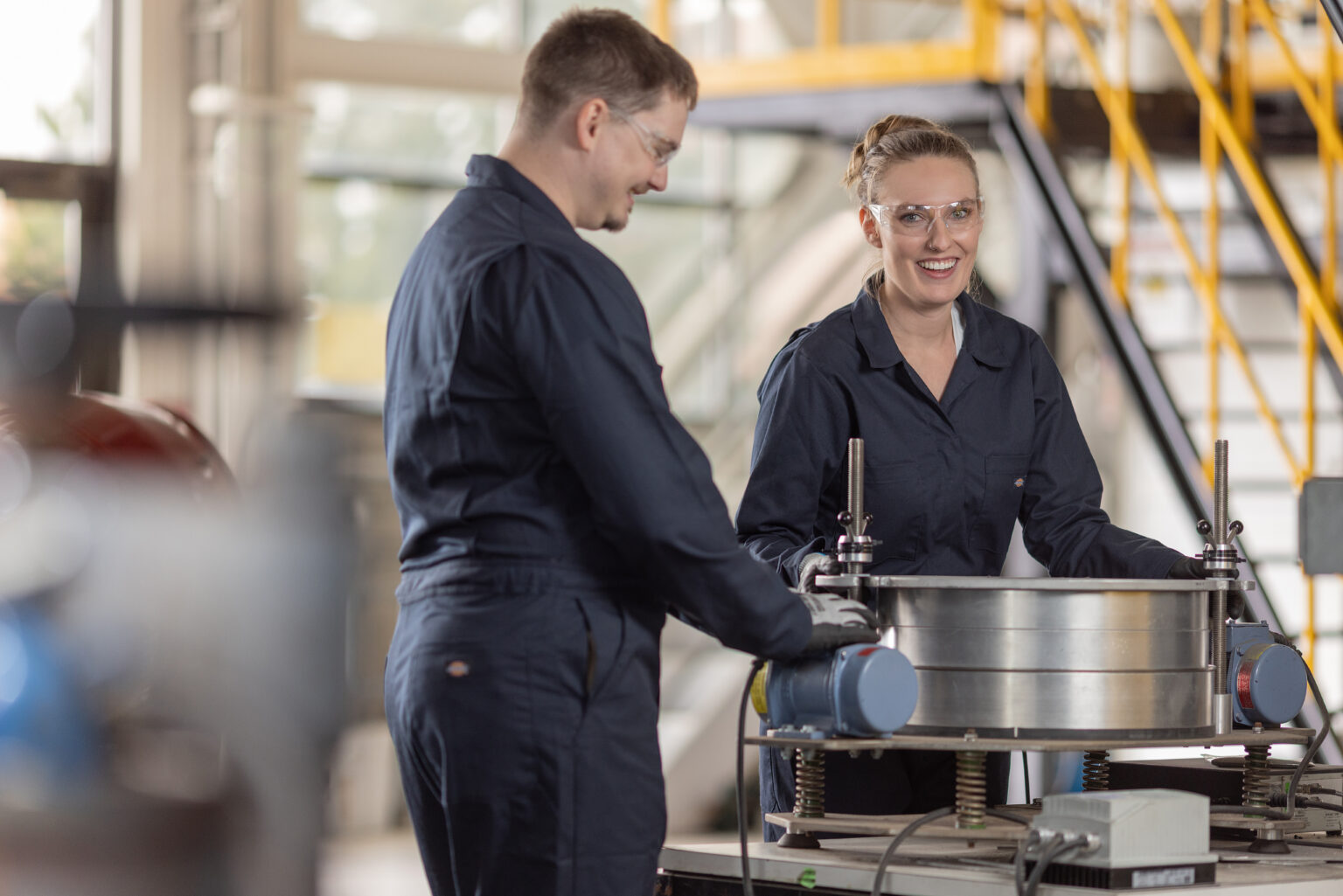
IperionX site in the United States. Image courtesy of IperionX.
In addition to its efforts in Virginia, IperionX has worked on its Titan Project in Tennessee. Last year, the company secured surface mining permits from the Tennessee Department of Environment & Conservation for this mining operation, which is part of the U.S. plan to reshore titanium production and aims to extract titanium, rare earth elements, and other critical minerals to strengthen the domestic supply of materials. The project has attracted commercial attention from an unnamed major Japanese conglomerate that has completed bulk sample test work, advancing potential sales offtake and development financing.
However, IperionX’s 2024 first-quarter report noted that no payments were made for actual mining development or production activities during the period for both the Tennessee and Virginia projects, raising questions about the immediate progress of these initiatives.
Global Titanium
Although IperionX has made significant strides and has plans to achieve an initial production capacity of 125 metric TPA by the end of the year, it is not yet producing titanium at a commercial scale. For comparison, China stands out as the largest producer in the global titanium industry, with an annual production of about 120,000 metric tons. This production is driven by major companies such as BaoTi Group in Baoji City, known as “China’s Titanium Valley,” and is supported by substantial government subsidies and initiatives.
Japan follows as the second-largest producer, generating around 35,000 metric tons annually. Japanese companies like Toho Titanium and Osaka Titanium Technologies focus on producing high-quality titanium alloys for advanced industries, with significant government backing for research and development.
Other producers include Russia and Kazakhstan, with 27,000 and 16,000 metric tons annually. Ukraine, which has significant titanium reserves, continues to produce and export titanium despite disruptions caused by the ongoing conflict. All of these figures highlight that while IperionX is making progress, it still has a long way to go to reach the levels of the world’s top producers.
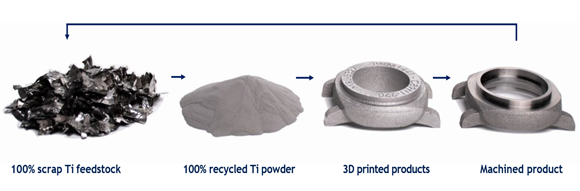
Scrap titanium is transformed into powder, then processed to a final part. Image courtesy of IperionX.
Strategy
According to the March 2024 quarterly report, IperionX partnered with United Stars to supply high-performance, low-cost, sustainable titanium products. A leading American supplier of industrial components, United Stars works with defense and other sectors that require lightweight, strong, and corrosion-resistant materials.
During the quarter, IperionX received $3.8 million in government funding to support Phase I of the Virginia Titanium Production Facility. This funding is part of the $12.7 million Defense Production Act (DPA) Title III initiative, which aims to strengthen domestic production capabilities critical to national defense. Also, the company says it is advancing in its efforts to secure financing for equipment through a loan application for a sum of $11.5 million with the Export-Import Bank of the United States (EXIM Bank), which will help finance the purchase of essential equipment for its operations.
These funds aim to build infrastructure and secure equipment necessary for future production. However, the company’s 2024 first-quarter report noted that no payments were made for actual mining development or production activities during the period, raising questions about the immediate progress of the Tennessee and Virginia projects.
Stock
Recently, IperionX’s stock has experienced a downturn in both the Nasdaq and ASX markets. ASX-listed shares of the company, which trade under the ticker symbol “IPX,” have been falling since April 2024. However, on May 15, following a discounted placement, where 26.2 million new shares were issued at AU$1.91 per share—a 10% discount to the last closing price of AU$2.12—the stock fell 5.9% to AU$2. The placement raised AU$50 million (roughly $33.5 million) to scale titanium manufacturing capacity at IperionX’s Virginia operations, including new equipment at the Advanced Manufacturing Center and final design and engineering studies to increase production capacity. On the Nasdaq—also trading under the ticker “IPX“—IperionX’s stock dropped from $15.27 on April 11, 2024, to $13.68 by May 17, 2024.
The company has seen both wins and misses in its efforts to boost the U.S. titanium supply chain. Aiming to advance its Virginia and Tennessee projects, IperionX has secured significant funding and partnerships. However, it has yet to reach its targeted commercial-scale production.
Subscribe to Our Email Newsletter
Stay up-to-date on all the latest news from the 3D printing industry and receive information and offers from third party vendors.
Print Services
Upload your 3D Models and get them printed quickly and efficiently.













You May Also Like
The SLS Market, Game of Trucks: Part 2
With the release of the new HP 1200 and the Formlabs X1, we can see real competition from very different segments. From several million dollars to just $20,000, the laser...
3D Printing News Briefs, May 2, 2026: Soft Robots, Agricultural Waste, & More
In this weekend’s 3D Printing News Briefs, we’ll start off with a multi-laser metal powder bed fusion 3D printer and post-processing news. We’ll end with research into soft robotics and...
3D Printing News Briefs, April 4, 2026: 3D Printed Food, Cocoa Press, & More
We’re starting off with 3D printed food in this weekend’s 3D Printing News Briefs, followed by some business news about Cocoa Press. Then we’ll move onto a metal additive manufacturing...
3D Printing News Briefs, March 28, 2026: TCT Asia, Distribution Agreement, FDA Clearance
We’re starting 3D Printing News Briefs this weekend with some news out of TCT Asia, and then moving on to a metal AM distribution agreement between MULTISTATION and WAAM3D. We’ll...