Nexa3D Welcomes 3D-Fuel Materials to Its Expanding Family

California-based Nexa3D is quickly expanding its product offerings, acquiring assets that both grow its overall additive manufacturing (AM) processes and materials. Complementing its November 2023 purchase of material extrusion firm Essentium, the company is now bringing sustainable filament maker 3D-Fuel into the fold.
Founded in 2014, 3D-Fuel established itself as one of the very few plastic-based filament makers focused on sustainable materials, opting for plant-based inputs and carbon captured from plants in its main product lines. Over the years, this has ranged from PLA made with disused coffee and beer to algae and landfill waste. Since exploring these exciting options earlier on in its existence, the company ultimately shifted toward more standard forms of PLA derived from NatureWorks PLA with high enough strength for a broader range of applications.
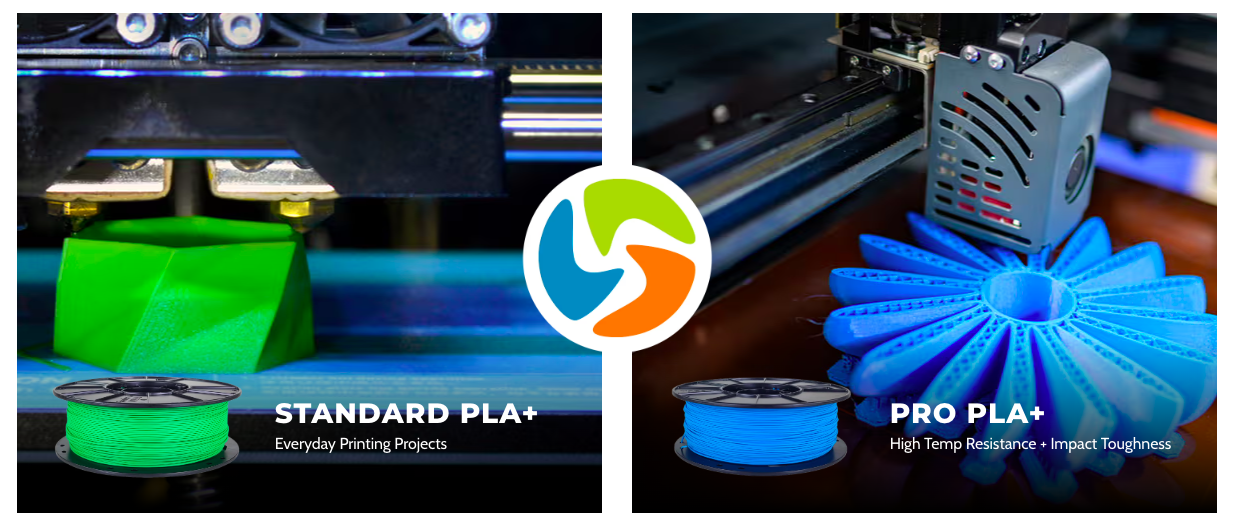
In 2023, 3D-Fuel formed a strategic partnership with Essentium aimed at simplifying the sourcing process for 3D printing filaments and meeting the burgeoning demand for sustainable, innovative materials. By consolidating production within Essentium’s certified facilities, the partnership was meant to ensure efficient scaling and providing customers with a comprehensive and streamlined filament procurement process. In a way, that deal seemed to be laying the groundwork for 3D-Fuel’s ultimate acquisition.
“Your continued trust and partnership have driven 3D-Fuel’s success, and we are grateful for your ongoing support. We are confident that this new chapter will bring you exciting opportunities and benefits,” said 3D-Fuel CEO and Founder John Schneider. “As we embark on this journey with Nexa3D, we look forward to continuing to serve you with the same level of dedication and passion that you expect from 3D-Fuel. We will do our best not only to ensure continuity but also to improve your customer experience.”
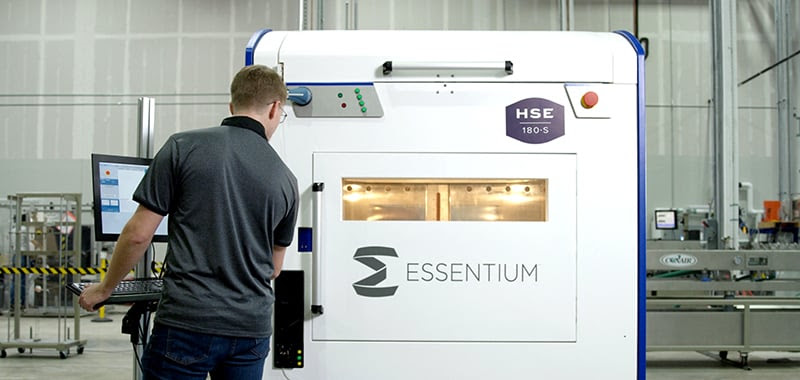
The collaboration between 3D-Fuel and Nexa3D is set to enhance the product offerings available to customers. By leveraging Nexa3D’s expertise and resources, 3D-Fuel aims to expand its product range, enhance operational efficiency, and drive forward research and development efforts. Customers of 3D-Fuel can now look forward to accessing Nexa3D’s portfolio of validated resins, metals, and thermoplastic materials.
The acquisition of 3D-Fuel by Nexa3D follows the latter’s purchase of Essentium, which synergized Nexa3D’s high-throughput stereolithography (SLA) and polymer powder bed fusion (PBF) platforms with Essentium’s High Speed Extrusion (HSE) technology. Hopefully, 3D-Fuel will be able to revisit some of its earlier work in waste recycling, which has a promising future for 3D printing materials.
Subscribe to Our Email Newsletter
Stay up-to-date on all the latest news from the 3D printing industry and receive information and offers from third party vendors.
Print Services
Upload your 3D Models and get them printed quickly and efficiently.











You May Also Like
3D Printing News Briefs, April 8, 2026: LiDAR Scanning, Vapor Smoothing, FDM Optimization, & More
We’ll kick off today’s 3D Printing News Briefs with some 3D scanning news from Artec 3D, and then move on to new America Makes Project Calls. Then, Raise3D and AMT...
3D Printing News Briefs, March 26, 2026: AMUK, IP Dispute, Asbestos, & More
We’re kicking off today’s 3D Printing News Briefs with an America Makes Project Call, and then moving on to additive manufacturing in the UK. Then we’ve got some legal news...
Everything is Connected: Cisco’s Samuel Pasquier Explains the Relevance of the IIoT Revolution to AM’s Growth Trajectory
On its own, additive manufacturing (AM) may not need a new round of record-setting investment in order to move to new heights of scalability (whether or not any investors would...
Getting Down to Business at AMS 2026: Desktop Revolution, Dental Market & More
At the recent Additive Manufacturing Strategies (AMS) 2026 in blizzard-stricken New York City, those who were able to make it through the wind and snow got right down to business....