Norsk Titanium’s Airbus Qualification Marks a Turning Point

Norsk Titanium (Euronext: NTI, OTCQX: NORSF), known for its patented Rapid Plasma Deposition (RPD) technology for titanium, has recently achieved a significant milestone. The company announced its qualification and initial production for Airbus, marking a potential turning point in its financial struggles.
A New Chapter in Norsk Titanium’s Journey
The qualification of Norsk Titanium’s Merke IV machine and RPD for Airbus production represents a new chapter in the company’s journey. Premium Aerotec, an Airbus subsidiary in Varel, Germany, has placed an order for an initial structural part, with Norsk Titanium currently completing the delivery of this first order. The successful qualification and installation of additively manufactured preforms into an A350 assembly signal a significant achievement for the firm.
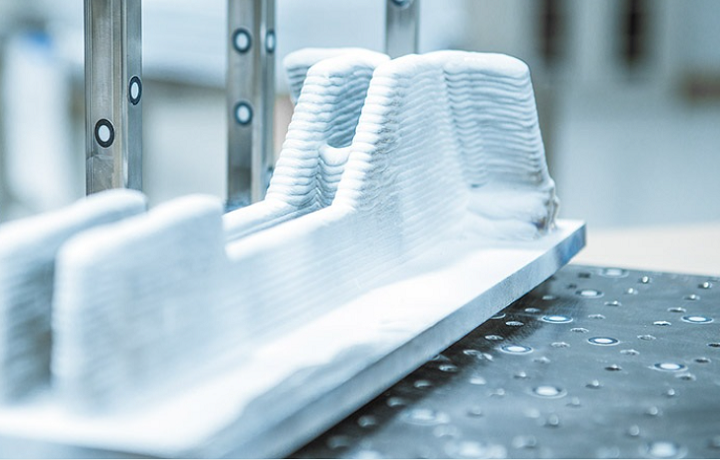 A titanium blank 3D printed with RPD. Image courtesy of Norsk Titanium.
Norsk Titanium’s journey to this point has not been without challenges. The company’s financial performance over the past few years was marked by significant revenue fluctuations and operational costs. The total revenue for the trailing twelve months (TTM) stands at $1.845 million, showing a gradual increase from $336,000 in 2019. However, the cost of revenue has consistently exceeded the revenue figures, resulting in negative gross profits, with the latest being -$2.264 million TTM.
Operating expenses have been substantial, totaling $20.497 million TTM, leading to an operating income of -$22.761 million. The company has also faced heavy interest expenses, contributing to a pretax income of -$16.691 million. The net income for common stockholders has remained in the negative, reaching -$16.728 million TTM.
The balance sheet shows total assets of $26.556 million as of December 31, 2022, but liabilities resulted in a net minority interest at $9.139 million. The company’s total equity has seen a negative trend, standing at $17.417 million. The cash flow statements reveal a negative operating cash flow of -$21.106 million TTM and a financing cash flow of $14.375 million, indicating the company’s reliance on external financing to sustain operations.
As a result, Norsk secured a bridge loan of NOK 21.9 million (approximately $2 million) from White Crystals, despite White Crystals being a shareholder in Norsk Titanium Cayman Ltd., which is the largest stakeholder in Norsk Titanium with a 34.9% share. This non-interest bearing loan aims to extend Norsk Titanium’s cash runway and support its search for long-term funding, ensuring the company can maintain operations until mid-December 2023. In return, Norsk Titanium agreed to pay a one-time facilitation fee of 250,000 common shares. If additional funding is not secured by January 1, 2024, an additional “Make Whole Fee” consisting of 125,000 common shares per month will be due until the loan is fully repaid. Alongside this, Norsk Titanium has been working on securing qualification approvals in commercial aerospace, anticipating it would lead to numerous parts transitioning into serial production and expanding their market penetration.
A Positive Outlook Amidst Challenges
Despite these challenges, Norsk Titanium has shown resilience and potential for recovery. The company recently delivered its 1,500th part to the Boeing supply chain and other industrial customers, highlighting its growing presence in the commercial aerospace and industrial markets. Additionally, the company’s collaboration with Hittech for the semiconductor industry and developments with General Atomics Aeronautical Systems, Inc. for the defense market demonstrate its expanding capabilities and market reach.
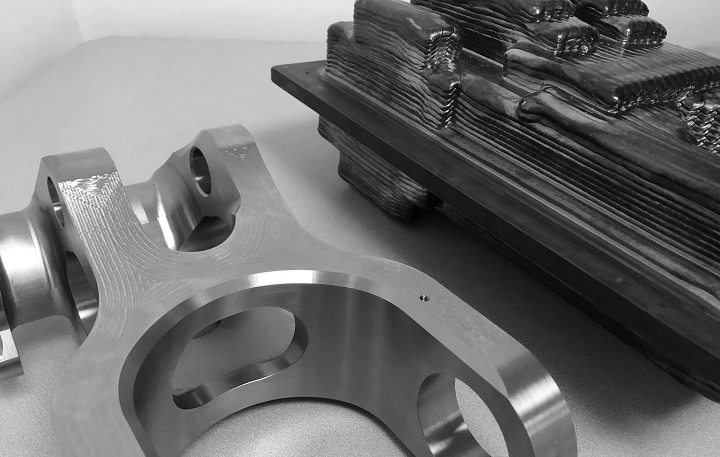 A 3D printed blank alongside a finished counterpart. Image courtesy of Norsk Titanium.
With the Airbus qualification, Norsk Titanium is poised to strengthen its position in the aerospace industry. This achievement, combined with ongoing efforts to secure financial stability and expand market penetration, suggests a brighter future for the company. The strategic involvement of financial advisors like BNP Paribas in exploring alternatives and the ongoing support from key stakeholders further indicate a positive outlook for Norsk Titanium.
Where the entire AM sector has faced a harsh macroeconomic climate, Norsk has been particularly hard hit. This is in large part due to the high cost of operating and manufacturing such high-tech equipment. Nevertheless, RPD has proven to be potentially very useful to the aerospace sector, especially as corporations and nations attempt to reshore their manufacturing. With titanium potentially set to boom in the U.S., the company could benefit heavily. To learn more, register for Additive Manufacturing Strategies 2024, where Norsk Titanium is the Silver Lunch Sponsor.
Subscribe to Our Email Newsletter
Stay up-to-date on all the latest news from the 3D printing industry and receive information and offers from third party vendors.
Print Services
Upload your 3D Models and get them printed quickly and efficiently.













You May Also Like
AI Design and Point-of-Care Integration Headline ADDITIV Medical 2026
Medical additive manufacturing is expanding rapidly inside major healthcare institutions. In 2026 alone, hospital systems including Indiana University Health and Sheffield Teaching Hospitals launched dedicated point-of-care 3D printing facilities to...
GKN Aerospace’s UAV Demonstrator with 3D Printed Engine Avoids ITAR Regulations
The US CIA director recently made an unannounced visit to Moscow that has naturally raised much speculation, while the EU and NATO have now officially accused Russia of being behind...
The Business Case for 3D Printed Stents
A new 3D printed stent developed at New York University (NYU) does not look like the devices doctors typically use today. Instead of a simple tube, the prototype resembles a...
3D Printing Financials: 3D Systems, Prodways, and Align Build on Positive Momentum
The latest earnings from 3D Systems (NYSE: DDD), Prodways (EPA: ALPWG), and Align Technology (Nasdaq: ALGN) show that the 3D printing market continues to move forward. Some businesses are growing...