New AI Software Drives Multi-material 3D Printing for Quantica


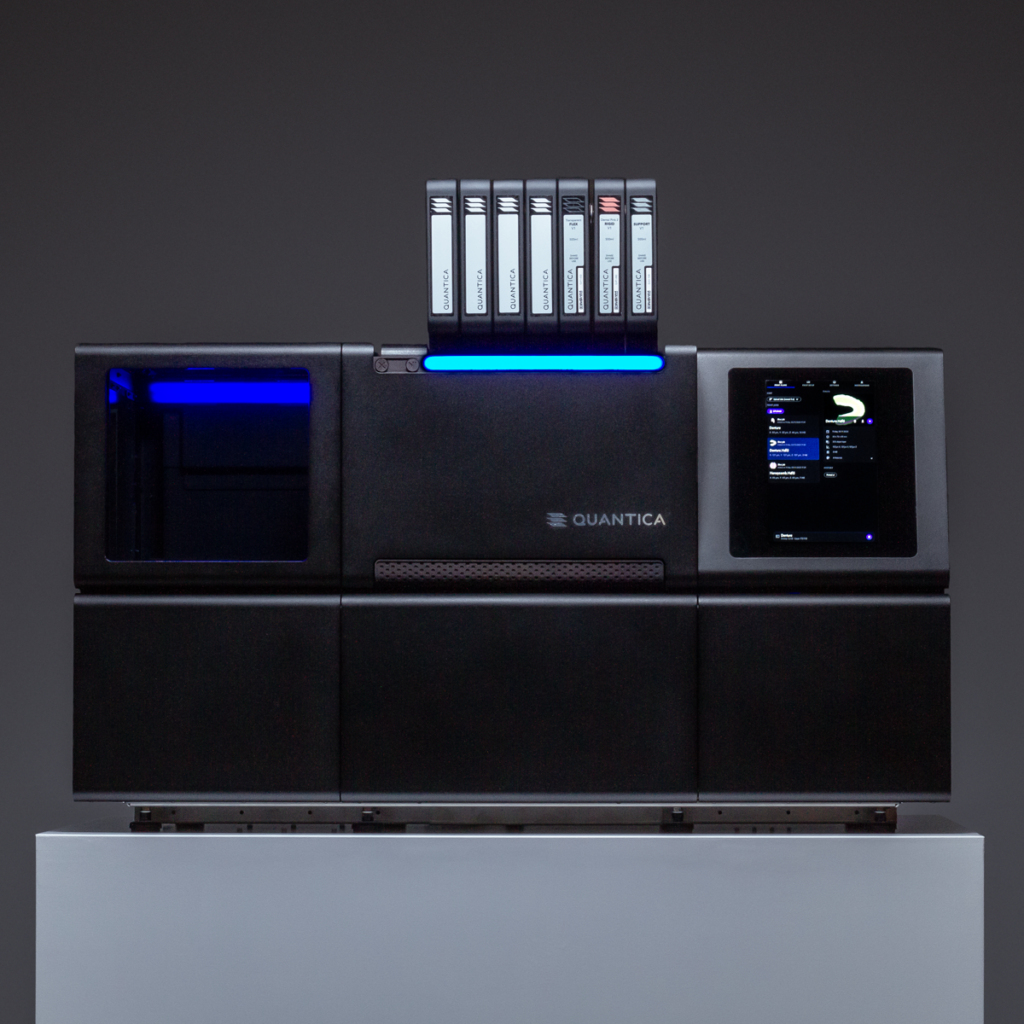
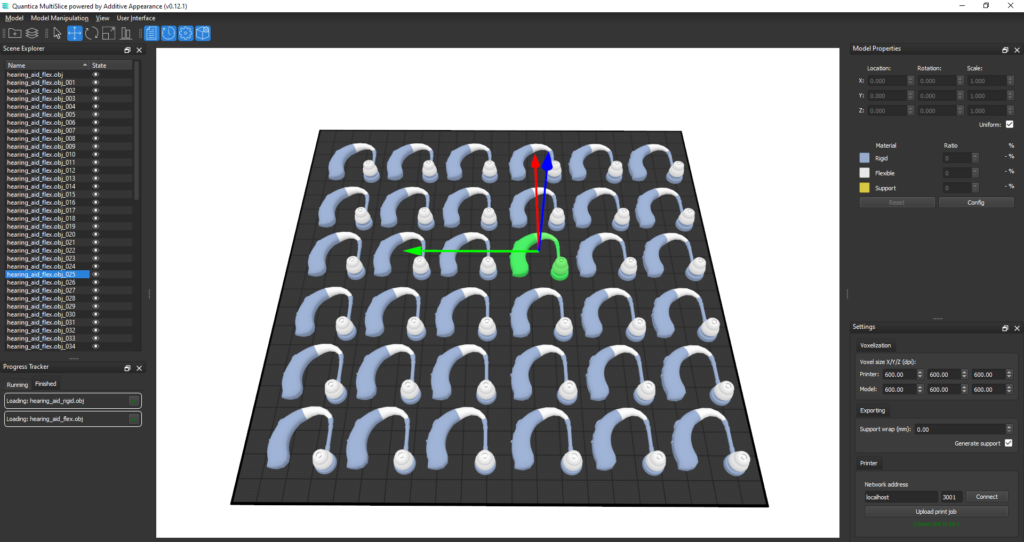
At Formnext 2023, Quantica, the Berlin-based original equipment manufacturer (OEM) of multi-material inkjet 3D printing platforms, unveiled the commercial version of its foundational printer, the NovoJet OPEN. Now, Quantica has announced MultiSlice, an AI-driven simulation software that enables users to predict the appearance and function of end-use parts before they’re printed.
Quantica collaborated with Additive Appearance, a spin-off of Prague’s Charles University, to develop MultiSlice. The experience of Additive Appearance’s team is based on years of R&D into the algorithms underlying the monumental advances in computer graphics over the last couple of decades.
When the first NovoJet OPEN systems are released in Q1 2024, they will come equipped with MultiSlice. NovoJet OPEN users will be able to see in advance not only the shape of the printed parts they’re designing, but also the appearance and functionality of those parts, as well.
In a press release about Quantica’s development of MultiSlice software with Additive Appearance, Quantica’s Head of Product Management, Grace Chang, said, “Both our companies, embodying the agility of startups, are uniting to redefine the potential of 3D material jetting. In a landscape where functional, multi-material 3D printing lacks adequate software, we are excited to collaborate with a team that is leveraging modern approaches to developing complex software. Our collaborative goal is to leverage these advancements, making functional, multi-material 3D printing more accessible, efficient, and adaptable.”
Tobias Rittig, Ph.D., the chief technology officer at Additive Appearance, said, “With the trend in 3D printing going to more and more printheads, existing software is starting to limit the hardware’s potential. The problem of which material to put in which voxel is getting increasingly difficult. This is why a radically new approach based on cutting-edge research and modern software technologies, such as differentiable computation and machine learning, is required to drive the printers of the future. We both share this realization and are looking to create a synergy of software and hardware that unlocks many new possibilities in the material-jetting domain.”
In April 2023, Quantica landed a €14 million (a little over $15 million) Series A round, which the company used to launch the prototype for the NovoJet OPEN (the C-7), as well as to commercialize the platform. The fact that Quantica is on schedule with both objectives and isn’t taking its foot off the gas pedal hints that it could see an additional, larger funding round in 2024.
Beyond the operational excellence displayed by its ability to execute on time, Quantica deserves serious kudos for such a bold embrace of AI. So, kudos, Quantica! These are the sorts of moves that 3D printing companies need to be making in order for the industry as a whole to stay at the forefront of industrial digitalization.
Above all, the inherent potential of combining AI and materials science should compel everyone in the advanced manufacturing world to make the constant effort to be up-to-date on what’s happening with machine learning, even if it’s not yet a direct component of one’s day-to-day activities. Because if it isn’t yet, it seems inevitable that it will be, very soon.
Subscribe to Our Email Newsletter
Stay up-to-date on all the latest news from the 3D printing industry and receive information and offers from third party vendors.
Print Services
Upload your 3D Models and get them printed quickly and efficiently.













You May Also Like
3D Printing News Briefs, September 12, 2026: Rebranding, Cybersecurity, Project Call, & More
We’ve got a lot of business news from ATLIX to start off this weekend’s 3D Printing News Briefs, with a new identify for its additive manufacturing (AM) portfolio and some...
Silencer Market Set to Test Metal Additive’s Readiness for Production Prime Time With Enormous Market Expansion
Throughout the history of additive manufacturing (AM) technologies, there are only a couple of really interesting case studies in which we see a market significantly disrupted and revolutionized by AM....
Beyond the Machines: What Stood Out at Formnext Shenzhen 2026
Coming away from Formnext Asia Shenzhen 2026, my biggest takeaway wasn’t “how many new printers were unveiled”; after all, quite a few established traditional 3D printing brands didn’t show up....
3D Printing Financials: New Money Flows Into Medical, Industrial and AI 3D
Money continued to move into 3D printing in the second half of August. Hike Medical raised $22.5 million as it grows its 3D printed custom medical device business. Swiss additive...