PyroGenesis Receives First By-the-Ton Order for Titanium 3D Printing Powder


PyroGenesis Canada Inc., a Montreal-based advanced materials company specializing in metal powders for additive manufacturing (AM), announced that it received its first by-the-ton order, from an unnamed American customer. The customer ordered 5,000 kg — five metric tons — of PyroGenesis’s titanium powder, as well as a provisional order for six additional tons, dependent on the customer’s demand projections.
PyroGenesis expects to deliver most of the order during Q2 2023 (sometime in the next month), with the remainder of the shipment to be completed in Q3. Alongside, and intertwined with, its plasma-based AM operations, PyroGenesis also has longstanding experience in waste management, suggesting the company’s potential to consolidate a position in North America’s emerging EV battery circular economy.
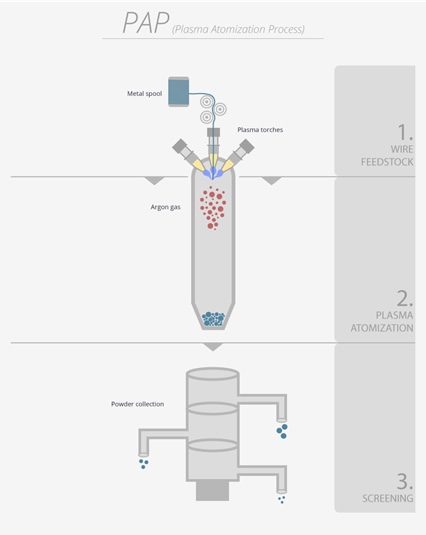
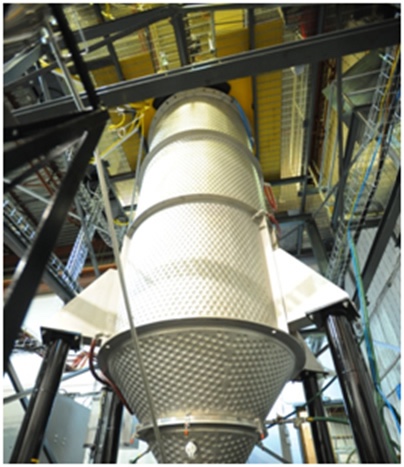
In a press release about the five metric ton order for titanium powder, PyroGenesis Additive’s VP, Massimo Dattilo, explained, “This represents our full entrance into the titanium metal powders marketplace. With a goal to produce the highest quality metal powders in the [AM] industry, PyroGenesis has taken a cautious, methodical approach towards commercialization of its powders as we designed, then readied, our new NexGen plasma atomization process. As mentioned in our previous releases, we started with sample batches for key customers measured in dozens of grams, then progressed to small commercial orders of 100kg each, with the stated goal to then move up to commercial production and sales “By-the-Tonne”.”
As the company also notes in the press release, “Titanium has been identified as a critical mineral by the Canadian government.” The significance of that lies in the critical minerals strategy rolled out last year by Natural Resources Canada, which is essentially the equivalent of the Department of Energy (DOE) and Department of the Interior (DOI) in the US.
Through the strategy, Canada’s federal government is providing billions of dollars of support for industries mostly related to EV and semiconductor production, as well as streamlining the administrative processes related to garnering such assistance. Moreover, this strategy is also deliberately aligned with multiple moves that the Biden administration has made to integrate the critical minerals industries in the US and Canada, revolving around the idea of a North American chip corridor in the northeastern US and southeastern Canada.
Thus, Montreal is an ideal location for a company in this space, and it seems notable, along these same lines, that PyroGenesis’s customer for the multi-ton powder order is based in the US. Additionally, since scale-ups are inherently related to the broader macro environment, the company’s precision in successfully executing its expansion strategy hints that similar things are likely happening at other, similar companies.
Again, that is particularly important to keep an eye on because of all the general themes already mentioned: above all, the concept of a North American circular economy for metal powders. The full emergence of that will necessarily demand a massive buildup of productive capacity in a very short time, and one prerequisite is that orders of metal AM powders by the ton — in a variety of locations and industries — will need to be commonplace first.
Images courtesy of PyroGenesis
Subscribe to Our Email Newsletter
Stay up-to-date on all the latest news from the 3D printing industry and receive information and offers from third party vendors.
Print Services
Upload your 3D Models and get them printed quickly and efficiently.













You May Also Like
50,000 Orders and Counting: EPlus3D & Chinese AM Services Provider Are Scaling Liquid Cooling Solutions for AI Servers
An under-appreciated story driving the additive manufacturing (AM) industry this year has been the divergence between what’s driving the market in China and what’s driving it everywhere else. Let’s start...
Seven Trends Reveal What’s Next for 3D Printing at TCT Shenzhen 2026
TCT Shenzhen 2026 opened on October 14 in Hall 15 of the Shenzhen World Exhibition & Convention Center in Bao’an, and ran through October 16. The event brought together equipment...
With Increased Aerospace & Defense Focus, CORE Industrial Partners Buys More Manufacturing Firms
Private equity’s march into manufacturing continues with CORE Industrial Partners’ latest acquisitions. CORE purchased Fathom a few years ago, and later bought 3DXTECH LLC, Triton 3D LLC, and Gearbox3D. It...
Can India’s AM Push Help Make it a Viable Supplement to China?
Diversifying manufacturing supply chains to locales outside of China has nothing to do with actually cultivating “substitutes” to the Chinese economy. The real stakes are these: China is an irreplaceable...