Stratasys Receives Order for Four High-Speed Industrial 3D Printers

Stratasys, the additive manufacturing (AM) pioneer based in Israel, announced that the company has received an order for four H350 industrial platforms from German service bureau Götz Maschinenbau, an existing Stratasys customer. Once the installation of all the units is completed over the next 18 months, it will bring the number of H350s at Götz Maschinenbau to six, which would make it the leading user of those systems amongst service bureaus in the crucial European, Middle Eastern and African (EMEA) market.
In particular, Götz Maschinenbau’s competencies lie in working with two of Stratasys’ nylon materials: the bio-based PA11, and crude oil-based PA12. Even as the general tide in the AM industry has started to turn towards metal, polymers nonetheless of course remain much farther ahead on AM’s multifaceted path to widespread use in serial production. Moreover, the increasing adoption of metal AM should drive up polymer-based orders for service bureaus like Götz Maschinenbau, as manufacturers expand rapid prototyping activities for parts that may ultimately be printed in metal once they permanently enter the supply chain.
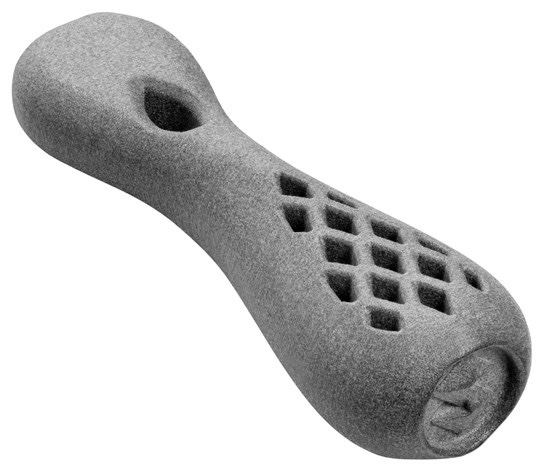
In a press release about the order for four new Stratasys H350’s, Philipp Götz, the owner of Götz Maschinenbau, commented, “Since the installation of our initial H350 printers, we’ve actually won significant new business because of the quality and cost-effectiveness of parts printed on [Stratasys’ Selective Absorption Fusion] technology. Our existing Stratasys 3D printers are operating at full capacity 24/7 and provide us with an extremely reliable manufacturing solution for high volume, as well as small to medium series production, at a lower price and with shorter lead times than injection molding or CNC.”
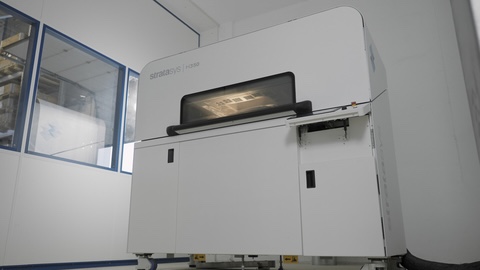
That last point is especially important, because, no matter how much promise AM shows for the future, the ability to achieve lower costs and shorter lead times over CNC and injection molding, specifically, is for some time still going to be the primary way that original equipment manufacturers (OEMs) and service bureaus drive new adopters towards AM. And, along those lines, Stratasys is one of the handful of companies that can be most trusted to deliver immediate results.
In a nutshell, that is precisely the sort of thing that sets Stratasys apart from, say, Nano Dimension (the company trying to acquire it). Whether or not Nano Dimension’s most recent offer to Stratasys to buy the company for $19.55 a share is a “good deal”, or not, there would be big question marks, no matter the sale price, concerning just how qualified Nano Dimension actually is to take over Stratasys’ operations.
Concerning all the Stratasys machines operating in the field, is Nano Dimension going to provide the same quality of service that Stratasys has evolved into being able to provide, over the course of decades? It wouldn’t be impossible, but why should the risk be taken? Right now, everyone is in a macro environment where — unless you’re in a sector in which being a giant means you’ve more or less maxed out your long-term growth potential — established companies with proven track records have the best chance of thriving. It’s no longer going to be enough to simply own a good idea for a business.
Images courtesy of Stratasys
Subscribe to Our Email Newsletter
Stay up-to-date on all the latest news from the 3D printing industry and receive information and offers from third party vendors.
Print Services
Upload your 3D Models and get them printed quickly and efficiently.











You May Also Like
U.S. Congress Holds Hearing on Cutting Healthcare Costs and Points to 3D Printing
A U.S. House subcommittee held a hearing this week on how technology can help lower the rising cost of healthcare for Americans. Lawmakers pointed to 3D printing as a key...
3D Printing News Briefs, December 13, 2025: 3D Imaging, Living Lung Cells, & More
We’re covering medical and dental news in this weekend’s 3D Printing News Briefs, starting with a new innovation at Boston Children’s Hospital that could become standard practice in orthopedics: 3D...
New 3D Printed Hydrogen Cell Factory Just Switched On in Catalonia
The Catalonia Institute for Energy Research (IREC) has opened a pilot plant that 3D prints advanced ceramic devices for renewable hydrogen systems. It’s described as the first facility on the...
Boston’s Additive Edge: Harvard’s MEDscience Takes High Schoolers Into the Future of Medicine
Forget chalkboards and worksheets. At Harvard Medical School’s MEDscienceTECH Program, students learn medicine by building, coding, and experimenting – whether it’s navigating a LEGO robot through a 3D printed spine,...