HP’s HyperX Announces HX3D Full-Color 3D Printed Gaming Peripherals


HyperX, HP Inc’s gaming subsidiary, announced a new personalized gaming accessories and peripherals brand powered by HP’s additive manufacturing (AM) division, at Consumer Electronics Show (CES) 2023 in Las Vegas (January 5-8). HyperX is pitching the brand, called HX3D, as the next generation of gaming hardware customization.
In a press release announcing HX3D, HyperX’s global head of marketing, Daniel Kelly, commented, “We know gamers love customization, spending a lot of time and effort to update all kinds of in-game items, from characters to skins to weapons and beyond. HX3D is taking this love of personalizing a gaming experience to the physical world and enabling a wide range of fun ways to update and customize our award-winning HyperX gear.”

The first HX3D product — the limited edition HyperX “Cozy Cat Keycap” — will be available in the US through HyperX’s website sometime later this month, for an expected initial price of $19.99. Although, HyperX’s press release also explicitly specifies that the price “is subject to change without notice” and that the pricing at other retailers “may vary.” This, combined with the fact that the keycap is a limited edition, certainly seems to suggest that HyperX is aiming to establish a collector’s market.
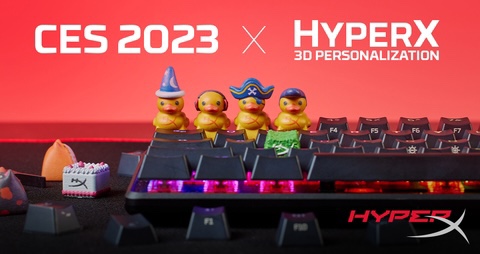
Of course, for the AM sector, the most notable angle to the release is HyperX’s synergy with its corporate mothership’s AM division. Lane Babuder, writer for online tech publication HotHardware, points out that the Cozy Cat Keycap, as well as other concept keycaps on display at CES 2023, are made possible by “the help of parent company HP’s color 3D printing”.
Relevantly, in December, 2022, 3DPrint.com published an editorial by Brent Wright, a 3D printing orthotics and prosthetics professional, entitled, “Why Did HP Kill off its Full-Color 3D Printer?” This may very well be an answer to that question: color 3D printing has more value to HP, at least currently, as a tool in its in-house arsenal, than it does as a commercial offering.
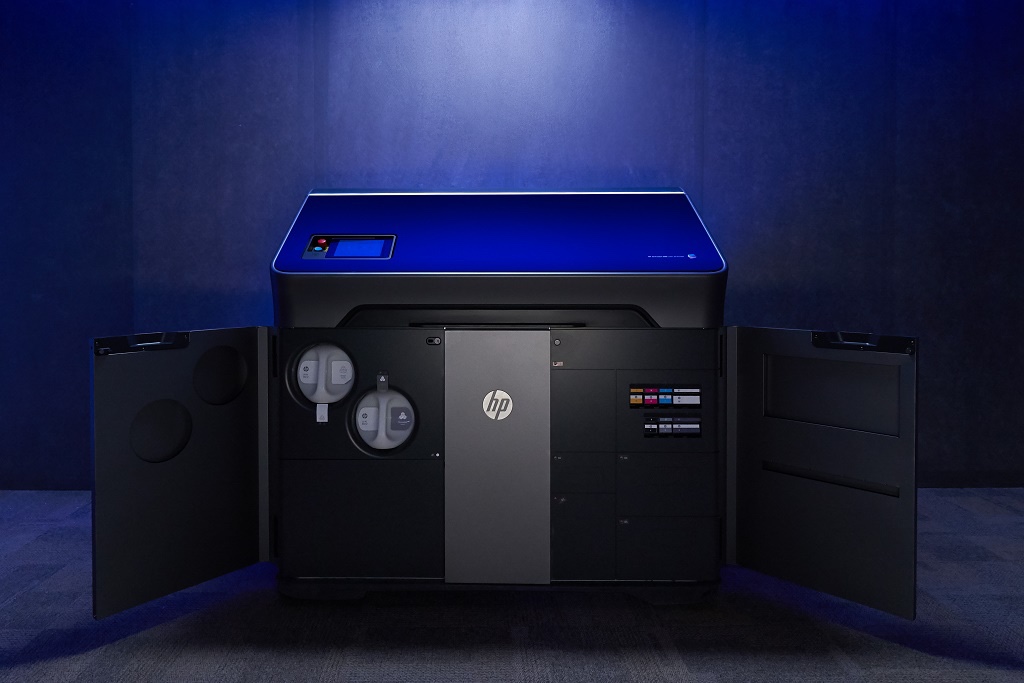
The likelihood of that idea is arguably supported by a quote from Francois Minec, the Global Head of Polymers for 3DP at HP, in Wright’s article: “We continue to support our customers using the Jet Fusion 580 printers to design, develop and iterate amazing applications. Whilst we have discontinued the 580 series, we are taking full advantage of the technology and knowledge…We have made the commitment to prioritize helping our partners and customers scale to production.”
This isn’t to say, finally, that HP will never take another crack at the commercial market for full-color 3D printing. If anything, in fact, the success of applications like customized gaming peripherals for HX3D might only increase the chances that HP will entertain a return to that market. If it does happen, though, the most lucrative area for HP to explore would be cornering the market on the polymers, themselves.
Subscribe to Our Email Newsletter
Stay up-to-date on all the latest news from the 3D printing industry and receive information and offers from third party vendors.
Print Services
Upload your 3D Models and get them printed quickly and efficiently.













You May Also Like
AM Asia Watch: Chinese Company Claims Advances in Titanium Powder Beyond 700C
They’re a familiar sight at trade shows: Chinese powder companies with barren stands lacking parts. There’s maybe some glass vessel with powder in it and a semi-complete data sheet, but...
Aires Tide Designed with AI, Supercomputers, and 3D Printing
The Department of Energy‘s National Nuclear Security Administration (DOE/NNSA) is part of the US government that manages the US nuclear stockpile, helping to upgrade, improve, and maintain nuclear weapons, and...
Largest Publicly Announced, Single Order in EOS History: Beehive Industries Spends $50M on M4 ONYX 3D Printers
Earlier this year, Beehive Industries received a $29.7 million contract to produce its Frenzy 6 and Frenzy 8 engines for the US Air Force. The metal additive manufacturing (AM) user...
Blue Origin’s New Glenn Explosion Comes During Major Manufacturing Push
Blue Origin‘s orbital New Glenn rocket exploded during a hot-fire test at Launch Complex 36 in Cape Canaveral on May 29, setting back the company’s launch ambitions at a time...