HP Metal Jet S100 3D Printer Kicks off Metal Binder Jetting Battle


HP (NYSE: HP) first revealed its metal binder jetting technology in 2018, and two manufacturing customers, GKN Aerospace and Parmatech, a medical equipment supplier, were using the HP binder jetting platforms in 2018 and 2019. In 2020, HP started selling its metal AM hardware exclusively to service bureaus. In a significant milestone for the global metal additive manufacturing (AM) market, HP announced today the release of its Metal Jet S100 printer to the commercial market. The S100 marks the first time that HP has made its binder jetting technology available to the commercial AM market.
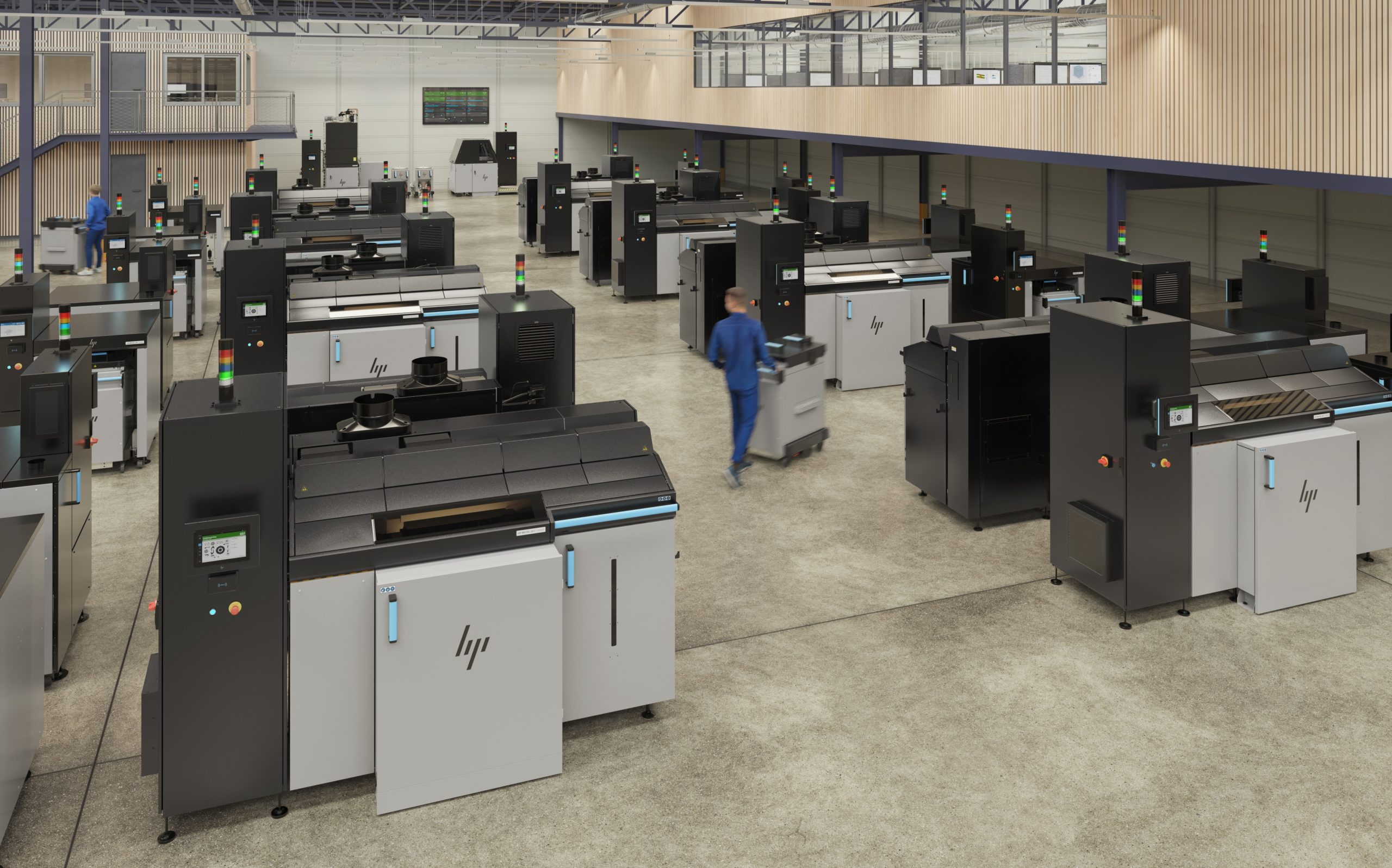
A fleet of Metal Jet S100 3D printers with auxiliary equipment in the background. Image courtesy of HP.
HP formally announced the S100’s rollout at this year’s International Manufacturing Technology Show (IMTS), going on all throughout this week in Chicago. Additionally, in a virtual press briefing last Friday (September 9), HP’s global head & general manager of 3D Metals, Ramon Pastor, led a presentation on the S100 for journalists. A sizable portion of the presentation focused on a use-case example of HP’s Metal Jet technology, involving filters printed by GKN for the NSX circuit breaker, produced by French multinational energy conglomerate, Schneider Electric.
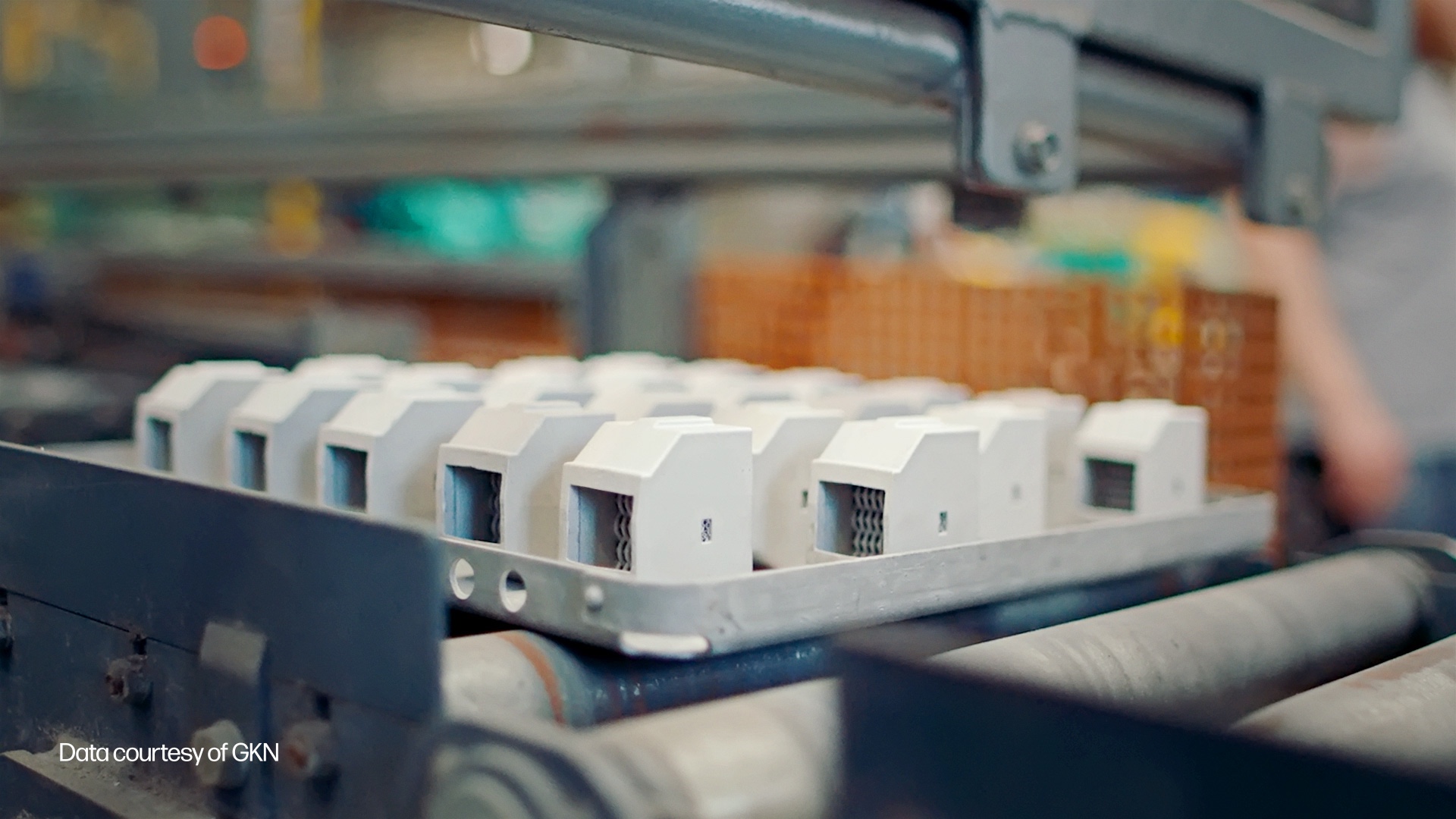
With GKN, HP and Schneider Electric were able to redesign 690V power filters that couldn’t be made with traditional forms of manufacturing. As a result, the new filters were able to reduce gas, pressure, and heat impact in a smaller space, while also introducing productivity
gains and economic benefits. Image courtesy of GKN.
In an HP press release about the S100’s commercial availability, Pastor commented, “Since announcing the breakthrough Metal Jet technology in 2018, we have been working to develop the industry’s most advanced commercial solution for 3D metals mass production.” Didier Deltort, president of HP’s Personalization and 3D Printing business, added, “We are witnessing entire industries…looking to digitally transform their manufacturing processes and supply chains in a world where volatility is the new normal. …The introduction of our new Metal Jet commercial solution, along with innovative collaboration with market leaders like Schneider Electric, is delivering the blueprint for more sustainable, reliable, and efficient manufacturing.”
Pastor will also be making a keynote address at the IMTS Additive Manufacturing Conference, September 15, at 8:15 US central time. He will be joined by Michael Lotfy, Schneider Electric’s senior VP of Power Products & Systems, North America, and Meaghan Ferris, HP’s global head of 3D Metals Go-to-Market.
Metal Jet in the Larger Binder Jetting Space
The point made about volatility being “the new normal” was also a centerpiece of the presentation made by Pastor, and something along those lines is perhaps the main central theme lately, in terms of how the industry pitches itself. Further, then, the fact that HP has made a European energy conglomerate the focus of its commercial rollout for Metal Jet seems particularly deliberate, given the current state of European energy markets.

The Metal Jet process begins with the HP Metal Jet S100 Powder Management Station, which “automatically blends, sieves, and loads metal powder into the HP Metal Jet S100 Build Unit according to the user-defined print job and customized parameters.” Fabrication is performed within the printer itself before the transportable Build Unit is moved to the Curing Station and then the Powder Removal Station. The final green part, which is more durable due to the use of a specialty binder, is sintered in a furnace. Image courtesy of HP.
HP has a long-standing interest in energy sectors, and this interest could take on new meaning given that money from Berkshire Hathaway is pouring into both HP and the oil and gas sector. I asked Pastor if he thinks that Berkshire’s increasing interest in HP is related to an interest in additive. Although he didn’t comment on Berkshire directly, he confirmed that HP places a strong emphasis on additive in its pitch to potential shareholders.
Berkshire isn’t the only company with an interest in energy that is looking to additive. Koch Ventures also invested in Desktop Metal, which is the leading competitor in the metal binder jetting space, ahead of Markforged and GE Additive. While Desktop has the market share, thanks to its acquisition of ExOne, Markforged has about 20 percent of the metal binder jetting market due to its purchase of Digital Metal. Relative newcomer GE has been slowly rolling out its technology customer by customer, likely announcing widespread commercial release this year.
Though it is later to the market than its competitors, HP could very well catch up quickly. After all, it was late to polymer powder bed fusion, but has seen its technology quickly come to be a leader in the sector. This is in part due to the legacy of manufacturing that tech giant has, but also to the ability of its Multi Jet Fusion technology to print production quality end parts with a high throughput, such that it challenges traditional manufacturing processes. Since it has applied the same goal to Metal Jet, we could see the same thing happen in metal 3D printing, as well.
In a sector where, especially nowadays, there is a seemingly endless supply of press releases, it can be difficult sometimes to know how newsworthy a certain announcement is. This is clearly not one of those times, and the S100 should set the tone for news in the sector well into next year. The first few rounds of earnings reports following the S100’s release will likely be the most highly anticipated, and closely watched, in the sector’s still quite brief history.
The data will be significant not solely for investors, but, just as importantly, for the planning of operations for companies across the metal sector. Many developments this year have signaled that this is the case, but with the S100’s release it’s undeniable that 3D printing has entered a new phase in its commercialization.
Subscribe to Our Email Newsletter
Stay up-to-date on all the latest news from the 3D printing industry and receive information and offers from third party vendors.
Print Services
Upload your 3D Models and get them printed quickly and efficiently.













You May Also Like
SWISSto12 Closes $70 Million Series C Round
Swiss satellite manufacturer SWISSto12 has closed a $70 million Series C round. This follows $84.8 million that the company received from ESA and ESA member states, and previous rounds that...
Rocket Lab Buys Iridium in $8 Billion Deal, Creating a New SpaceX Rival
Rocket Lab is buying Iridium for $8 billion in a cash-and-stock deal worth $54 per share. Shareholders will receive $27 in cash plus additional Rocket Lab common stock. The company...
SWISSto12 and HPS/LSS Build Unfurling Antenna for Next-Gen Satellite
SWISSto12 is to work with HPS/LSS. High Performance Space Structure Systems and Large Space Structures are two separate firms that work together on large antenna reflectors. The two will work...
Japan’s Space Compass Corporation Buys a SWISSto12 Satellite
Japanese firm Space Compass Corporation has agreed to buy a SWISSTo12 GEO optical data relay satellite. The compact Hummingsat will be used for Space Compass’ optical data relay service. Space...