SpaceX Aiming for a $137B Valuation with New Potential Funding Round

According to an exclusive report by CNBC, SpaceX is raising $750 million in a new funding round led by venture capital giant Andreessen Horowitz, also known as a16z, which values the company at $137 billion. The space transportation manufacturer has already received more than $10 billion from 32 financing rounds, including more than $2 billion in 2022 alone.
Andreessen Horowitz, whose latest fund size was $4.5 billion, had previously invested in SpaceX alongside over 80 backers, including Google, Fidelity Investments, and Kinetic Partners. In addition, as one of the most renowned VC firms in Silicon Valley, Andreesen Horowitz has invested in plenty of next-gen tech companies, including pure-play 3D printing firms like Shapeways.
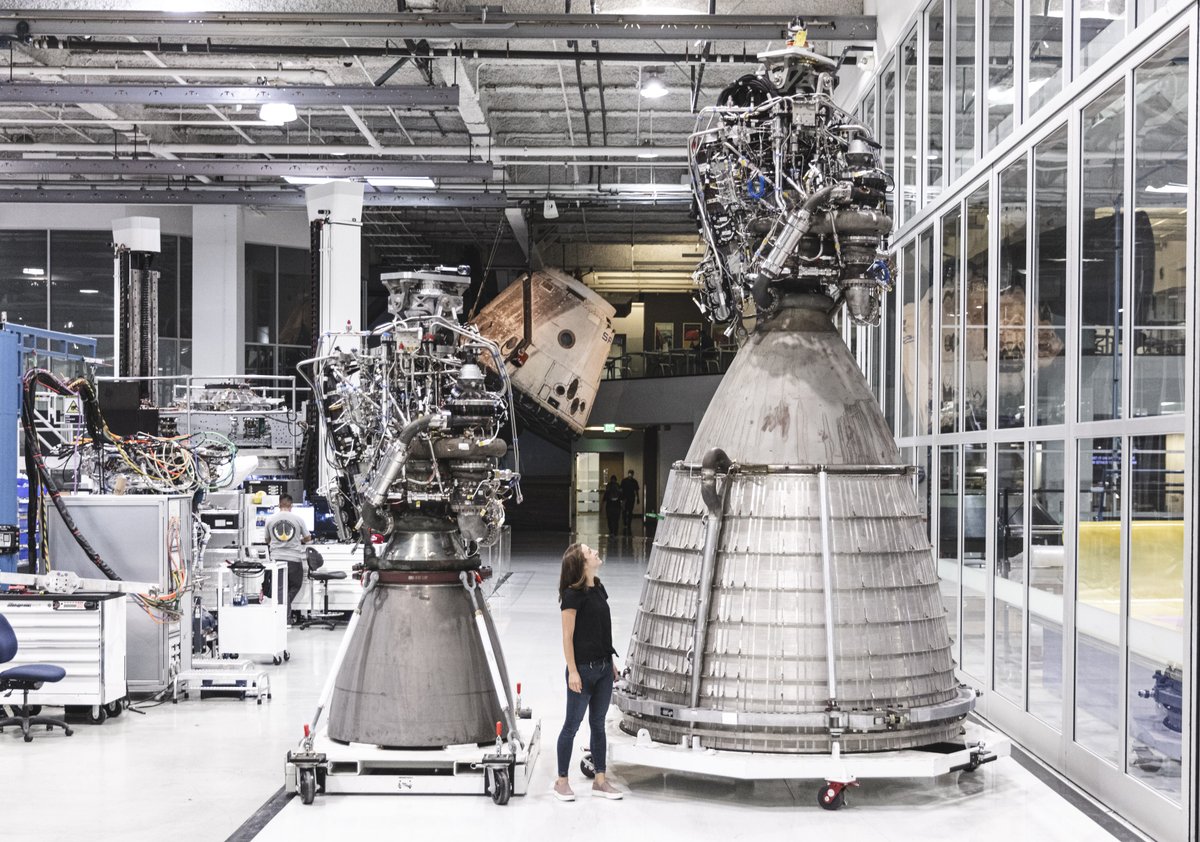 The first Raptor Vacuum engine (RVac) for Starship shipped from SpaceX’s rocket factory in California to SpaceX’s development facility in Texas. Image courtesy of SpaceX via Twitter.
This is not the first news of a potential new multi-million funding round at SpaceX that has been leaked. On November 2022, Bloomberg News suggested that Elon Musk’s space giant was in talks to raise money to drive the company’s valuation to more than $150 billion. Although Musk blatantly dismissed the story in a tweet without elaborating, it now appears that Bloomberg journalists might have been right on track.
As CNBC suggests, the new transaction being discussed would mean a jump from the July 2022 valuation of $127 billion. Although the company has become one of the most valuable U.S. startups, quadrupling its market value in three years and surpassing aerospace leading forces like Airbus ($97.34 billion), Boeing ($121.36 billion), and Northrop Grumman ($81.02 billion), the company has been bleeding money.
Just last month, Musk admitted Starlink is losing as much as $20 million a month to SpaceX due to unpaid service. Other well-known facts include SpaceX losing $260 million in 2015 when one of its Falcon 9 rockets, carrying two tons of cargo to the ISS, exploded shortly after liftoff. Then last year, the SpaceX Starship, slated to land astronauts on the Moon in 2025 and 2027, faced several delays.
As the rocket manufacturer tries to follow a record-breaking 2022 with the launch of 61 orbital missions that doubled its previous record of 31, it is also continuing to spend tens of millions on spacecraft to colonize Mars. While much of the spacecraft’s funding came from NASA’s $2.6 billion award from 2014, the SpaceX founder expressed that the company has also poured money into building and testing the spacecraft.
However, Musk believes that the full reusability and thrifty use of propellant will help drop the cost of launches, even for Starship, once it starts going to Mars. With so many contracts in the works, with both public and private entities, SpaceX is moving forward with developing its Starship and Super Heavy launch vehicles at its Starbase spaceport, production, and development facility in Boca Chica, Texas, no matter the financial toll.
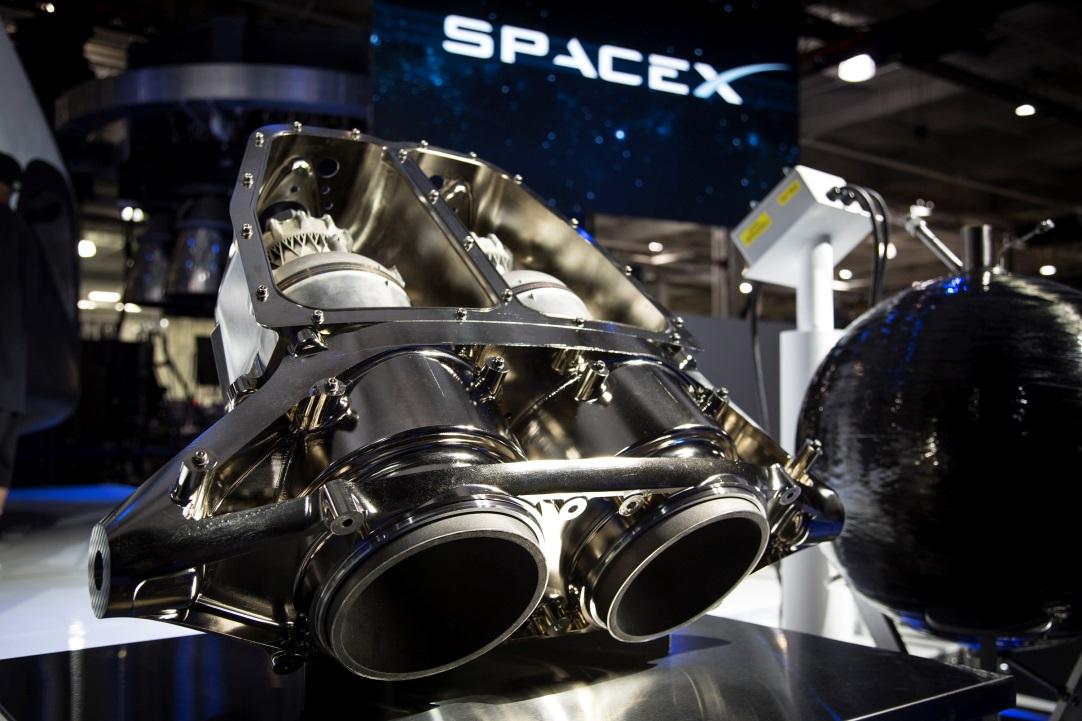 Elon Musk discussed the importance of 3D printing in space at the ISS Research and Development Conference in Boston, MA. Image courtesy of Elon Musk via Twitter.
As one of the original pioneers in the commercial space industry to leverage 3D printing for creating spaceship components, SpaceX has spearheaded many of the disruptive designs available today for spacecraft. For example, its next-generation Raptor engines – which will help power the Super Heavy rocket that will launch the Starship spacecraft to the Moon – include quite a few 3D printed parts, enabling cost reductions and the production of the lightest components possible. A few printed components include propellant valves, turbopumps, and many of the injectors’ critical pieces for initial engine development testing, which increases the speed of design and evaluation.
Aside from the historic milestones SpaceX made in 2022 and this latest revelation about an upcoming funding round, SpaceX is also getting plenty of attention as the new year unfolds. On January 3, 2023, the company launched a Falcon 9 carrying 114 satellites to orbit, the second-most spacecraft ever lofted on a single mission, which marks not only the company’s first launch of the year but also its 200th flight and 161st successful rocket landing.
Additionally, NASA is now consulting SpaceX about using one of its Dragon capsules to bring back stranded astronauts at the International Space Station (ISS) following a recent coolant leak from the Russian Soyuz capsule that is docked at the station and was expected to bring them home in March 2023. Following the scary episode, NASA immediately contacted its commercial partner to determine rescue options. Considering the demand for space services, it seems a new funding round for the company is just around the corner.
Subscribe to Our Email Newsletter
Stay up-to-date on all the latest news from the 3D printing industry and receive information and offers from third party vendors.
Print Services
Upload your 3D Models and get them printed quickly and efficiently.











You May Also Like
Reuniting ExOne and voxeljet: An Investor’s View on Building a Global Industrial Sand Printing Leader
Authored by Whitney Haring-Smith, Chair of the Board, ExOne Global Holdings & Managing Partner, Anzu Partners At Anzu Partners, we invest with conviction in industrial technologies that create categories—and then...
Adoption of Advanced Powder Metal Manufacturing in the Global Small Arms Space – SHOT Show 2026 Additive Manufacturing Analysis
Back in 2013, I remember being completely blown away when a company called Solid Concepts reportedly additively manufactured nearly a complete firearm as a proof of concept. Although desktop polymer...
AM-Europe, operated by CECIMO: Positioning Additive Manufacturing at the Core of Europe’s Industrial Competitiveness
As European industries face growing pressure to strengthen resilience, reduce supply chain risks, and meet sustainability objectives, additive manufacturing (AM) is emerging as a practical and strategic solution. Closely align...
Five Imperatives for CAD and PDM In The Additive Era
Additive manufacturing has reached an inflection point. Hardware capabilities continue to advance, materials portfolios are expanding rapidly, and automation is reshaping post‑processing and production workflows. Yet many additive programs still...