New Scan Head Enables In-Process Quality Control for L-PBF Metal 3D Printers


Essential for the next stage of additive manufacturing’s (AM) industrialization is the development in-process, closed-loop quality assurance (QA). As one of the few firms solely dedicated to this trend, Sigma Additive Solutions (NASDAQ: SASI) is primed to be in the driver’s seat with its QA software and hardware solutions. Now, thanks to a partnership with vision and motion control manufacturer Novanta, Sigma is making progress toward the goal of closed-loop QA with the Novanta’s Firefly 3D scan head.
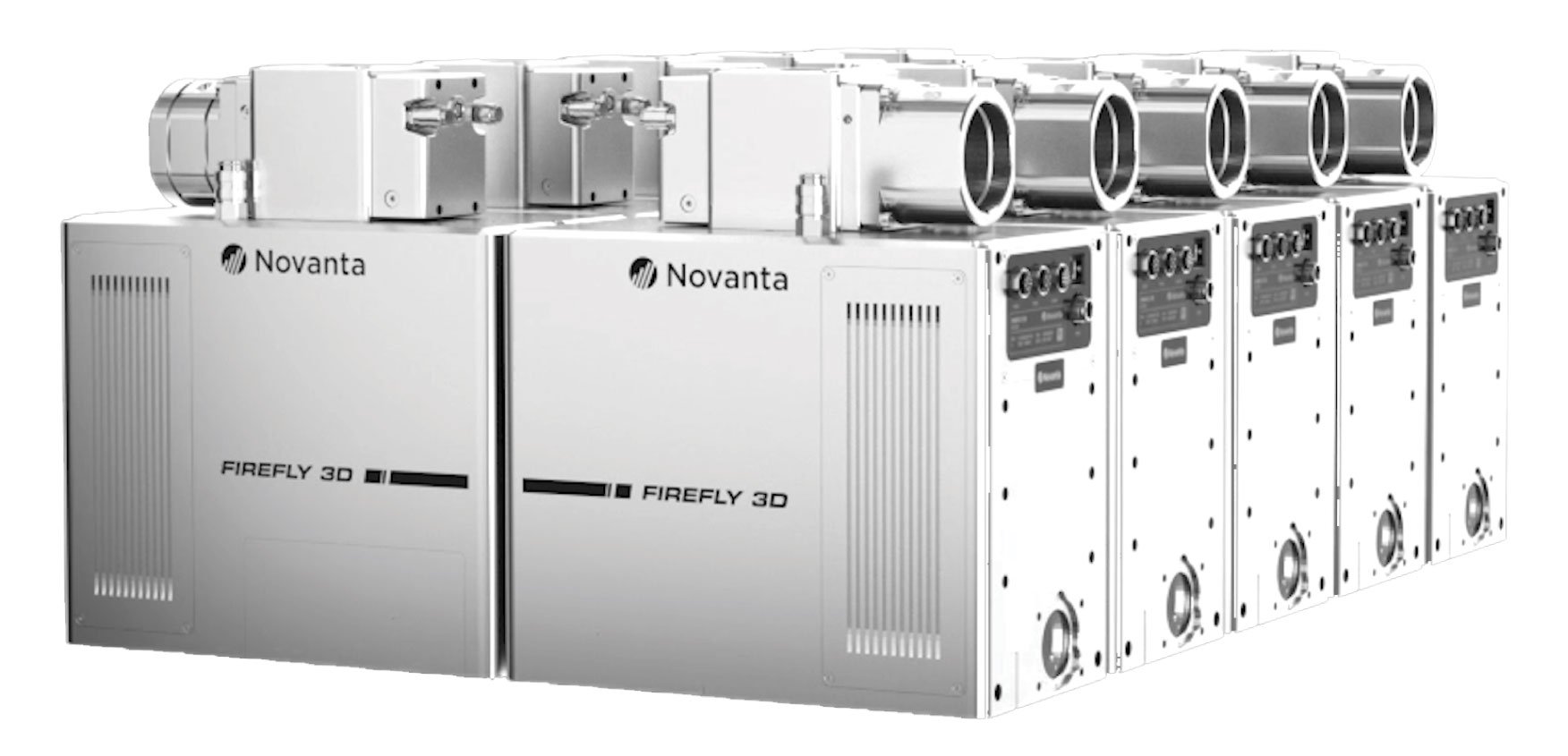
The Firefly scan head from Novanta. Image courtesy of Sigma Additive Solutions.
Traditionally, integrating Sigma’s PrintRite3D technology into a metal 3D printer has necessitated opening up the machine and installing sensor hardware. The three-axis Firefly scan head attaches to laser powder bed fusion (LPBF) machines and feeds into Sigma’s analytics suite in a way that doesn’t require complex retrofits to optical trains. Multiple scan heads can be added for 100% coverage of the entire print bead, while Sigma suggests that “[s]ingle, dual, quad, and multi-row setups can boost machines’ productivity to mass produce high fidelity parts with the benefit of Sigma’s quality assurance solutions’ support.
Simon Matthias, Product Manager for Novanta, said, “We are very pleased to show the world the work we have done with Sigma Additive Solutions. Adding real-time monitoring to our scan head sets a new standard for the industry and enables increased quality control of our high-performance laser beam steering solutions.”
Sigma explains that this setup, combined with its 200kHz data acquisition rate, “enable[es] the potential for closed-loop control and laser correction that Sigma’s technology has already demonstrated.” Therefore, closed-loop control doesn’t seem to be part-and-parcel of the product, but something that is feasible. The company has demonstrated the possibility of closed-loop control in the past with Materialise, pairing PrintRite3D with the Materialise Control Platform (webinar on the topic embedded below).
Sigma Additive Solutions Chief Executive Officer Jacob Brunsberg said of the new product, “This is an exciting moment for the additive manufacturing industry. Quality, and corresponding cost of quality, is one of the greatest barriers to industrialized scale of this technology. Today we have taken a big stride in breaking down this wall, providing access to an agnostic analytics and monitoring solution integrated with scan head technology. This value-add is expected to speed up OEM implementation, while providing solid benefit to additive producers. We are focused on decreasing the cost of quality by shortening development and qualification time, increasing production quality, and decreasing the need for post process inspection for end users.”
While Sigma is one of the few and oldest companies in the AM QA space, it is not the only one. Newer startups, like Additive Assurance, Araqev, and Additive Monitoring Systems are tackling the segment. Surely the original equipment manufacturers are advancing their own QA solutions and, as Nikon enters the space with its likely acquisition of SLM Solutions, we can bet that the company will contribute significantly to the QA of SLM 3D printers.
To learn more about the Firefly 3D scan head and Sigma package, visit the product page. The product will be presented at Formnext in Frankfurt Germany, November 15-18 at the Sigma booth Hall 12.0 Booth C139.
Subscribe to Our Email Newsletter
Stay up-to-date on all the latest news from the 3D printing industry and receive information and offers from third party vendors.
Print Services
Upload your 3D Models and get them printed quickly and efficiently.













You May Also Like
3D Printing Financials: Xometry Sets New Record in Q2
Xometry (Nasdaq: XMTR) has reported its best-ever quarterly results, with strong growth across its online manufacturing marketplace. The company saw gains in revenue, profit margins, and customer activity, pointing to...
South Korean 3D Printing Industry Sounds Alarm Over Data Leakage
An article recently published in BusinessKorea has highlighted that small and medium-sized enterprises (SMEs) utilizing additive manufacturing (AM) in South Korea are increasingly worried about the threat of leaking intellectual...
3D Printing News Briefs, May 31, 2025: Project Call, Consortium, Certification, & More
We’re starting with the latest America Makes Project Call in today’s 3D Printing News Briefs, and a consortium to promote the adoption of additive manufacturing has been founded in Spain....
Burloak and MDA Space: 8 Years of Transforming Aerospace with Metal 3D Printing
Burloak Technologies, Canada’s largest contract manufacturer specializing in metal 3D printing and post-processing for flight applications, recently celebrated 8 years of partnership with MDA Space, Canada’s largest space technology company....