Carbon Acquires 3D Printing Software Startup ParaMatters

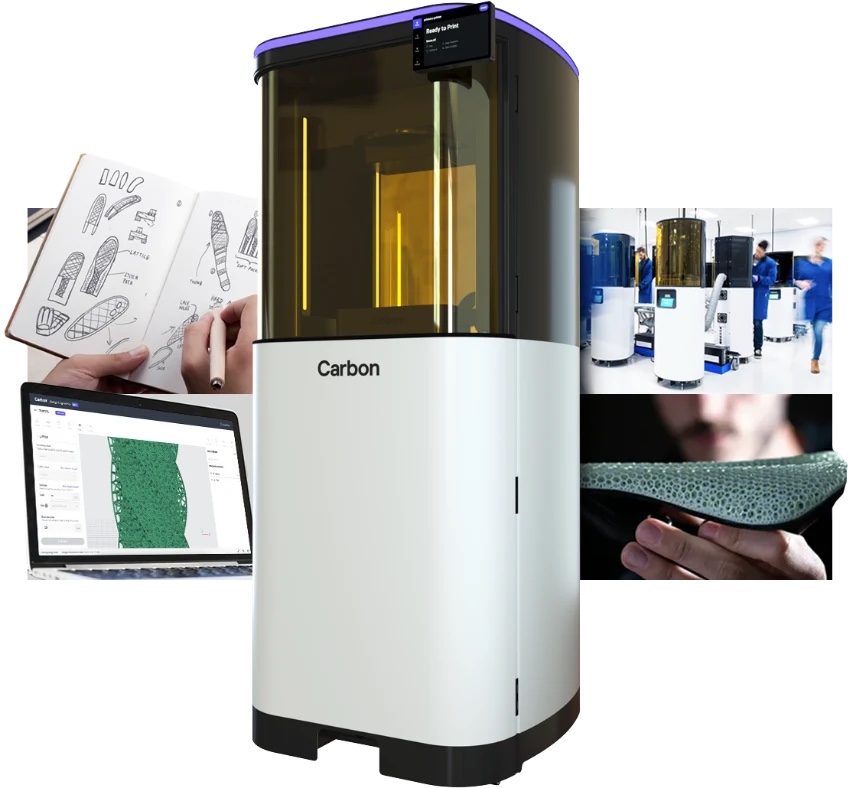
Carbon, the Silicon Valley-based manufacturer of additive manufacturing (AM) platforms, announced its acquisition of ParaMatters, a software as a services (SaaS) company providing solutions for the 3d printing sector. Carbon makes a full range of products — including software — for its line of Digital Light Synthesis (DLS) polymer printers.
ParaMatters and 3D Printing Design
ParaMatters, also based in Silicon Valley, is known for creating CogniCAD, one of the first widely available generative design and topology optimization programs for AM. Increasingly, generative design and topology optimization have been seen as indispensable tools in the effort to achieve true end-to-end automation in the AM sector.
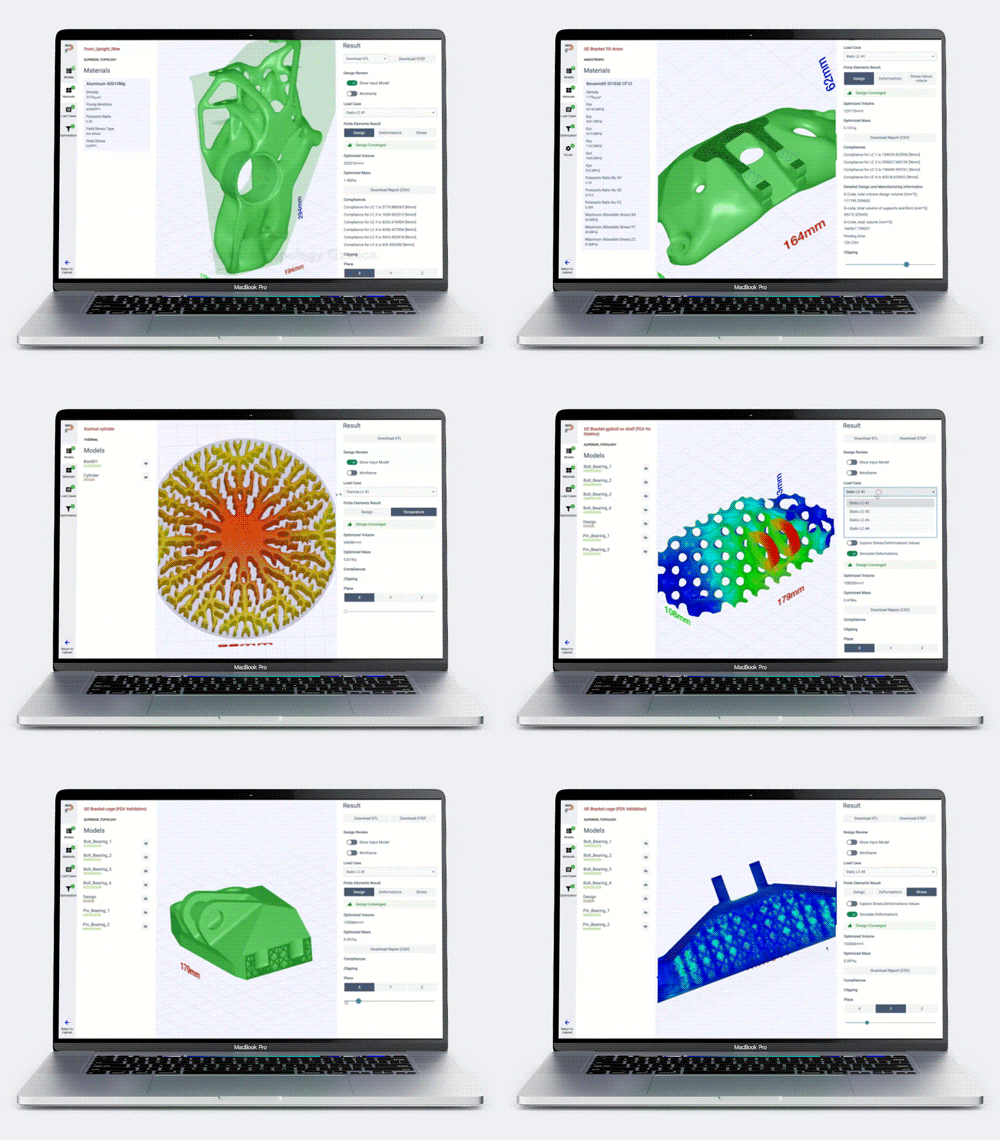
In a press release announcing the acquisition, co-founder of Carbon, Phil DeSimone, commented, “Many design tools of yesterday are not optimized to take advantage of industry innovations, including advanced 3D printing materials and manufacturing processes. Both Carbon and ParaMatters have shared the same vision to provide modern tools to ensure product development teams can create better products in less time.” Robert Yusin, ParaMatters’ chairman and CEO, added, “The ability to expand our offering as a part of Carbon’s idea-to-production platform will enable our customers to design and produce better products.”
Software is Carbon’s Backbone
As Craig Carlson, the company’s chief technology officer (CTO), also noted in the press release, Carbon sees software as its “backbone”. Last year, the company made its Design Engine software available to the general public.
Given that adidas uses Carbon platforms for its printed midsoles, the latter company is arguably one of the parties most responsible for popularizing the lattice-structure designs characteristic of advanced manufacturing techniques. Beyond aesthetic reasons, the complex geometries involved are necessary for reducing material usage and light-weighting parts. Generative design essentially means that AI is used to achieve those designs as quickly as possible, sometimes cutting the time required for design from weeks to hours.
The increased significance, to the sector as a whole, of using design software specifically designed for AM, means this will be a particularly interesting acquisition to keep track of, once the two companies have had some time to mesh. Whether or not Carbon turns out to be one of them, there does seem to be a certain amount of logic to the idea of OEMs that place an emphasis on software seeing lasting success. If nothing else, Carbon can be seen as a good bellwether for gauging how valid a business strategy this truly currently is.
Subscribe to Our Email Newsletter
Stay up-to-date on all the latest news from the 3D printing industry and receive information and offers from third party vendors.
Print Services
Upload your 3D Models and get them printed quickly and efficiently.













You May Also Like
Creality K3 Opens for Pre-Order at $849, Advancing Multi-Color 3D Printing
Creality has officially opened pre-orders for the Creality K3, its latest flagship K Series 3D printer, starting at $849 in the United States. Recognized as an IFA Innovation Awards 2026...
Beyond the Printer: HP and DyeMansion Tackle the Future of Prosthetics
Making a custom orthotic or prosthetic device involves much more than producing the final part. Patients need to be measured, devices must be designed to fit their bodies, and finished...
3D Printing News Briefs, October 14, 2026: Bolus, Aerospace Tooling, Water Filter, & More
In today’s 3D Printing News Briefs, we’re starting with medical news, as Myrava has received FDA 510(k) clearance for its 3D printed bolus. Moving on to aerospace and metals, AML3D...
Can India’s AM Push Help Make it a Viable Supplement to China?
Diversifying manufacturing supply chains to locales outside of China has nothing to do with actually cultivating “substitutes” to the Chinese economy. The real stakes are these: China is an irreplaceable...