Glidewell Launches 3D Printed Surgical Guides for Dental Procedures


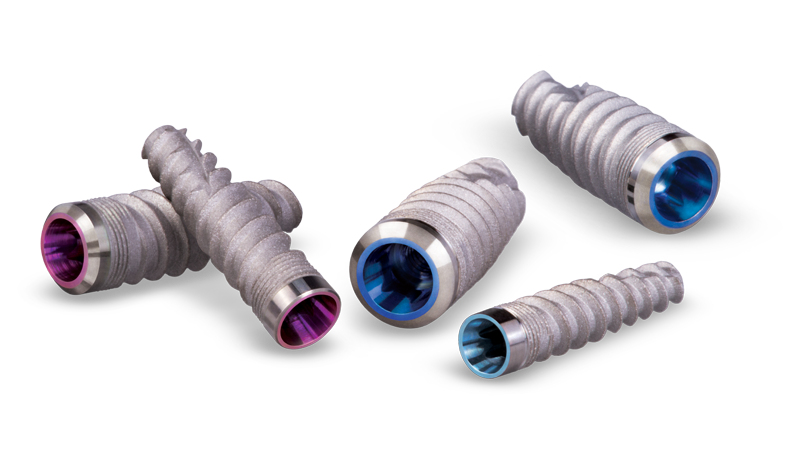
Dental 3D printing is one of the unsung heroes of our industry, with tens of millions of crowns and bridges now made with additive manufacturing (AM). 3D printers are making their way into local labs and even dentists offices. We’re seeing companies come out with complete dental solutions, as well offering software, materials and printers that work in concert. Among the sector’s AM power users is U.S. dental company Glidewell, which operates over 400 3D printers. Now, the company has launched a service for tissue- and bone-supported surgical guides.
This Digital Treatment Planning (DTP) product is a part of Glidewell Implant Solutions, complementing existing implant offerings such as crowns, abutments, prostheses, and dentures. The new service is available for all major guided implant systems, as well as for tooth-supported guides and provisional crowns.
“With our new service for fully edentulous cases, we use advanced 3D treatment planning software to produce surgical guides that position implants in the optimal location needed to support the desired restoration, be that an implant-supported overdenture or the BruxZir Implant Prosthesis,” said Ilan Sapir, manager of the Digital Treatment Planning department.
“Our goal has always been to make high-quality dental care available to as many patients as possible. Many dentists who choose to place implants for their patients follow this same philosophy, and we support them through education and innovative but cost-effective surgical and restorative solutions. The fully edentulous have the most to gain from implant treatment, and our new full-arch surgical guides will help more dentists place implants with the confidence they need to provide care for this important patient population,” stated Glidewell Founder and President Jim Glidewell.
Glidewell aims to be the 3D printing partner for many labs by making the process of obtaining 3D printed items derived from patient scans easy and affordable. By expanding its offering, the business makes it more compelling overall and also positions Glidewell as a one-stop-shop for the 3D printing needs of all dental labs.
When we spoke to Glidewell´s Ankush Venkatesh, we were already very impressed with the firm’s offering and capabilities. Ankush explained that Glidewell had essentially built its very own software toolchain to handle its own orders, file management, and customization. From a company that made only devices, it has developed into a software-heavy offering that converts unique files into 3D prints that go directly into patients’ mouths.
By owning the entire toolchain, it can reap rewards from automation. Additionally, developing software that is focused on the necessary design constraints and workflows for the dental industry allows Glidewell to become more efficient overall. It will be interesting to see if Glidewell leverages its vertical integration and in-house software to further dental 3D printing success.
Often we think of software firms making software, with 3D printing services then deploying this software to conduct business. That’s not always the case, however. At Materialise, for example, software and manufacturing have always cross-fertilized one another. Similarly, Glidewell is “eating its own dog food” in the extreme by making and deploying its own tools to execute its own orders.
In the future, Glidewell may very well deploy a lot of its software to partner labs as well to make these workflows easier. At the same time, it interacts with the common software packages in the industry, such as those from of intraoral scanner firms. I wonder if it will be this specialized firm that will develop the ideal software solution for laboratories just to make its service more seamless. What do you think?
Subscribe to Our Email Newsletter
Stay up-to-date on all the latest news from the 3D printing industry and receive information and offers from third party vendors.
Print Services
Upload your 3D Models and get them printed quickly and efficiently.













You May Also Like
Hi3D V3.0 Launches Industry’s First Commercial 2048³ Ultra-High-Precision AI 3D Model, Free for 48 Hours
Hi3D, the all-in-one AI 3D creation platform, has launched Hi3D V3.0, the industry’s first commercially available AI 3D model with 2048³ voxel resolution. The new version is designed to dramatically...
3D Printing News Briefs, August 8, 2026: Seawall Funding, Defense Capabilities, Supports, & More
We’re starting with business in this weekend’s 3D Printing News Briefs, then moving on to defense. We’ll move on to young 3D printing entrepreneurs, and finish with some research out...
How the World’s Most Advanced Tech Companies Are Using 3D Printing
3D printing has been around for decades. For most of that time, it was a prototyping tool. Engineers used it to check if a design looked right before spending money...
Why Elegoo Chose Emoji® to Introduce More People to 3D Printing
When Elegoo unveiled the world’s first officially licensed emoji®-themed 3D printer, it wasn’t just launching another version of an existing machine. The company was testing a much bigger idea by...