US Army to 3D Print New Barracks in Texas with ICON

Last year, 3D printing construction company ICON partnered with the Texas Military Department to design and print a 3,800 square feet training barracks at the Camp Swift Training Center in Bastrop, Texas. Constructed using ICON’s Vulcan system, the structure fits 72 soldiers and is the largest 3D printed building in North America.
It won’t be the largest for much longer, however. ICON is now collaborating with the U.S. Army’s Installation Management Command (IMCOM) to build three structures at Texas’s Fort Bliss, each of which will be 5,700 square feet upon completion. The new build is a continuation of the Defense Innovation Unit’s (DIU’s) Constructive Scale Additive Manufacturing (CSAM) project, which had its first demonstration in 2020 in a joint effort by ICON and the U.S. Marines to build a vehicle hide structure at California’s Camp Pendleton.
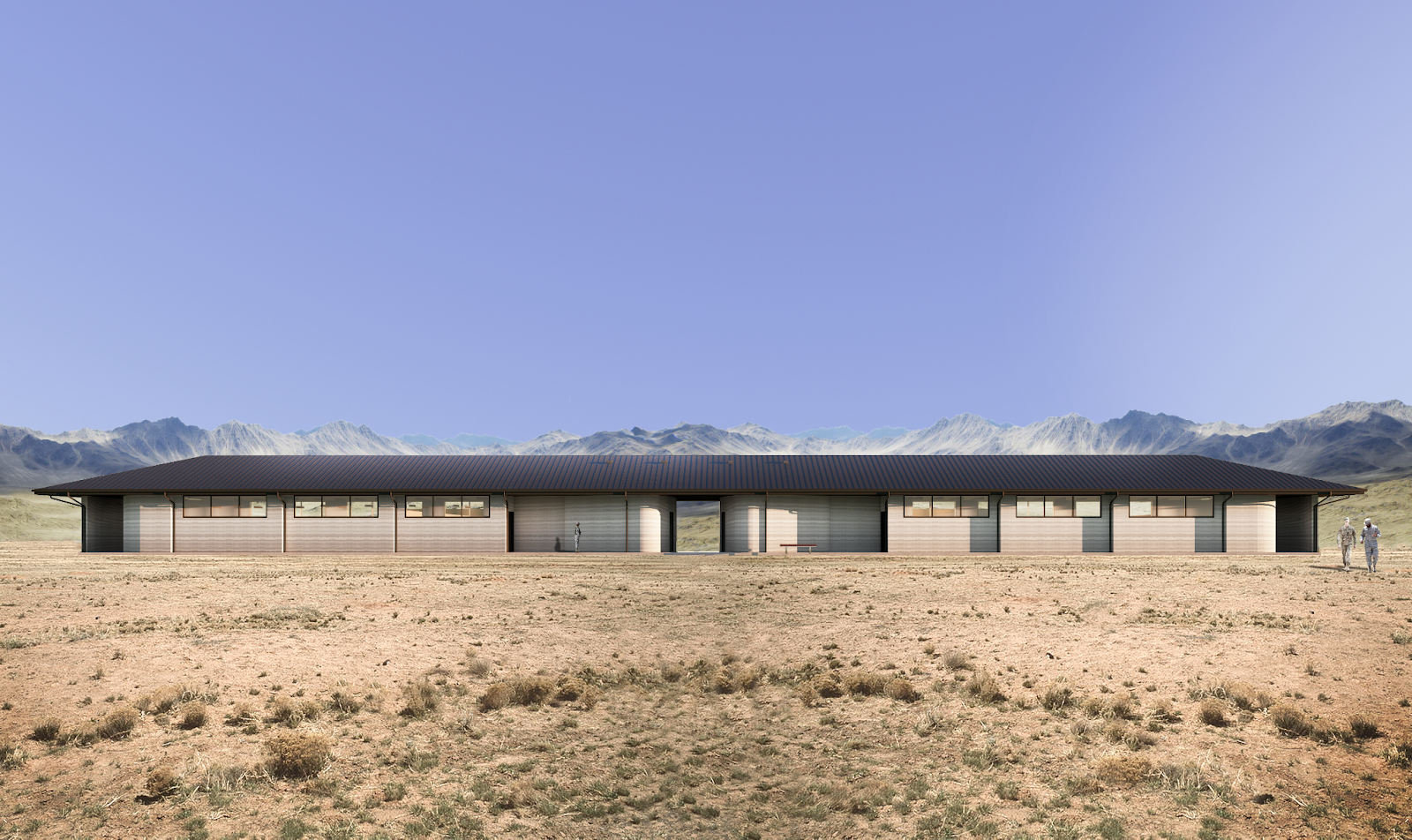
Serving as commanding general of IMCOM, U.S. Army lieutenant general Doug Gabram explained that “this project supports all three Army priorities: people, readiness and modernization…We are looking at other ways to use this innovative technique for rapid construction of other types of facilities beyond barracks.”
ICON’s VP of public sector, Brendan O’ Donoghue, also added that there is currently a multi-billion dollar backlog of housing that directly impacts the nation’s military personnel.
“We are proud to collaborate with the U.S. Army and continue our partnership with DIU to see diverse use cases for ICON’s technology and to deliver resilient, comfortable 3D-printed barracks for enlisted soldiers at Ft. Bliss,” noted O’ Donoghue.
Aside from setting the new record for North America’s largest 3D printed buildings, the barracks at Fort Bliss will also be the first structures printed in compliance with the Pentagon’s Unified Facilities Criteria (UFC) for the design and construction of 3D printed concrete structures (which the document refers to as “additive construction”). Notably, the guidelines were established last September 30th, about a month after ICON completed the barracks at Camp Swift. This timing provides valuable insight into the direct relationship between these projects and the development of regulatory apparatuses related to the industries involved.
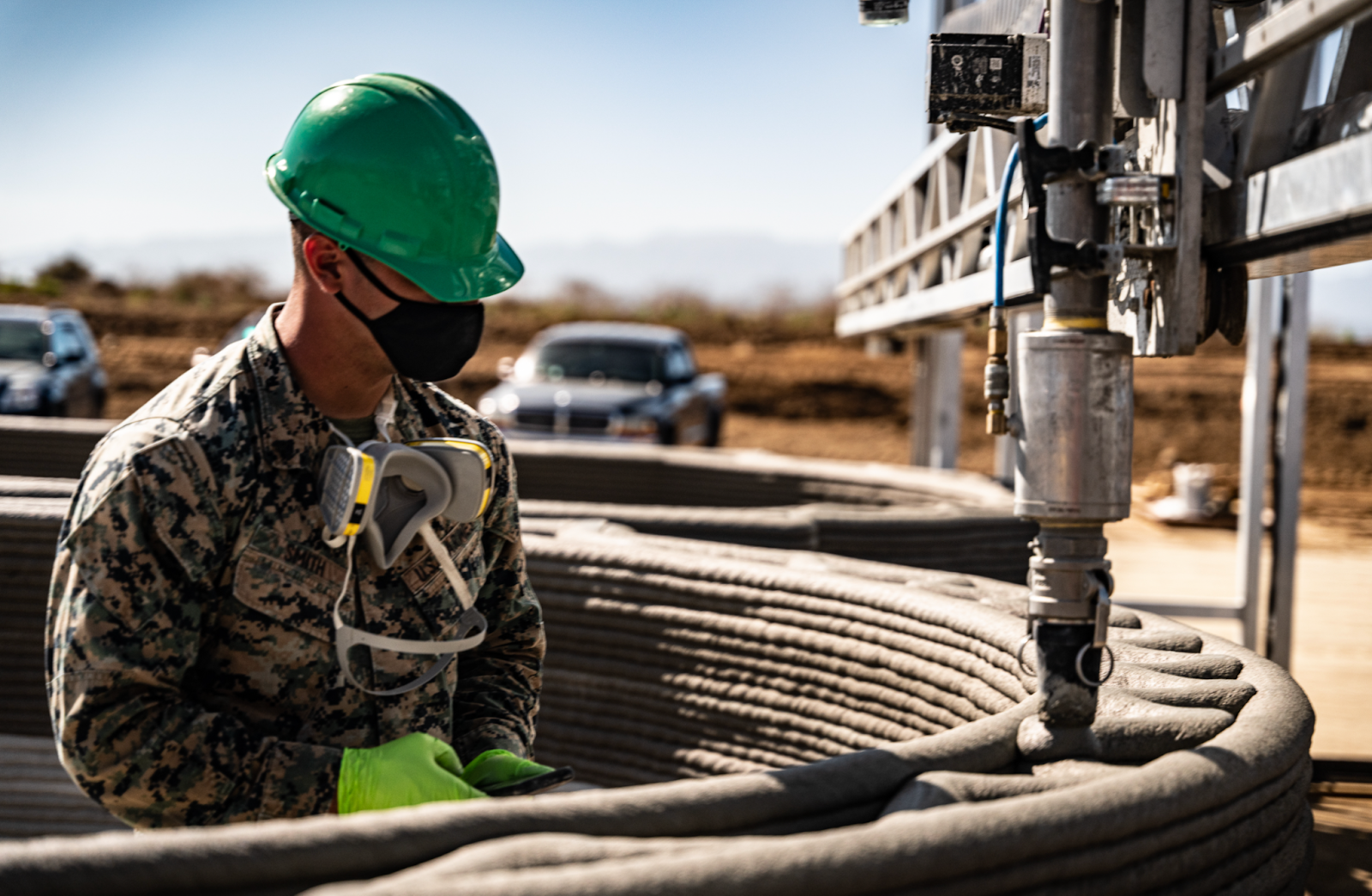
ICON’s Vulcan system used for additive construction. Image courtesy of ICON.
As the UFC document states, “Currently, there are no comprehensive industry codes, guidance or criteria [for additive construction]…The current state of the industry is a group of independent companies that have proprietary materials, processes and procedures. Academic research is accessible but is limited in scale and materials and construction methods varies between research institutions.”
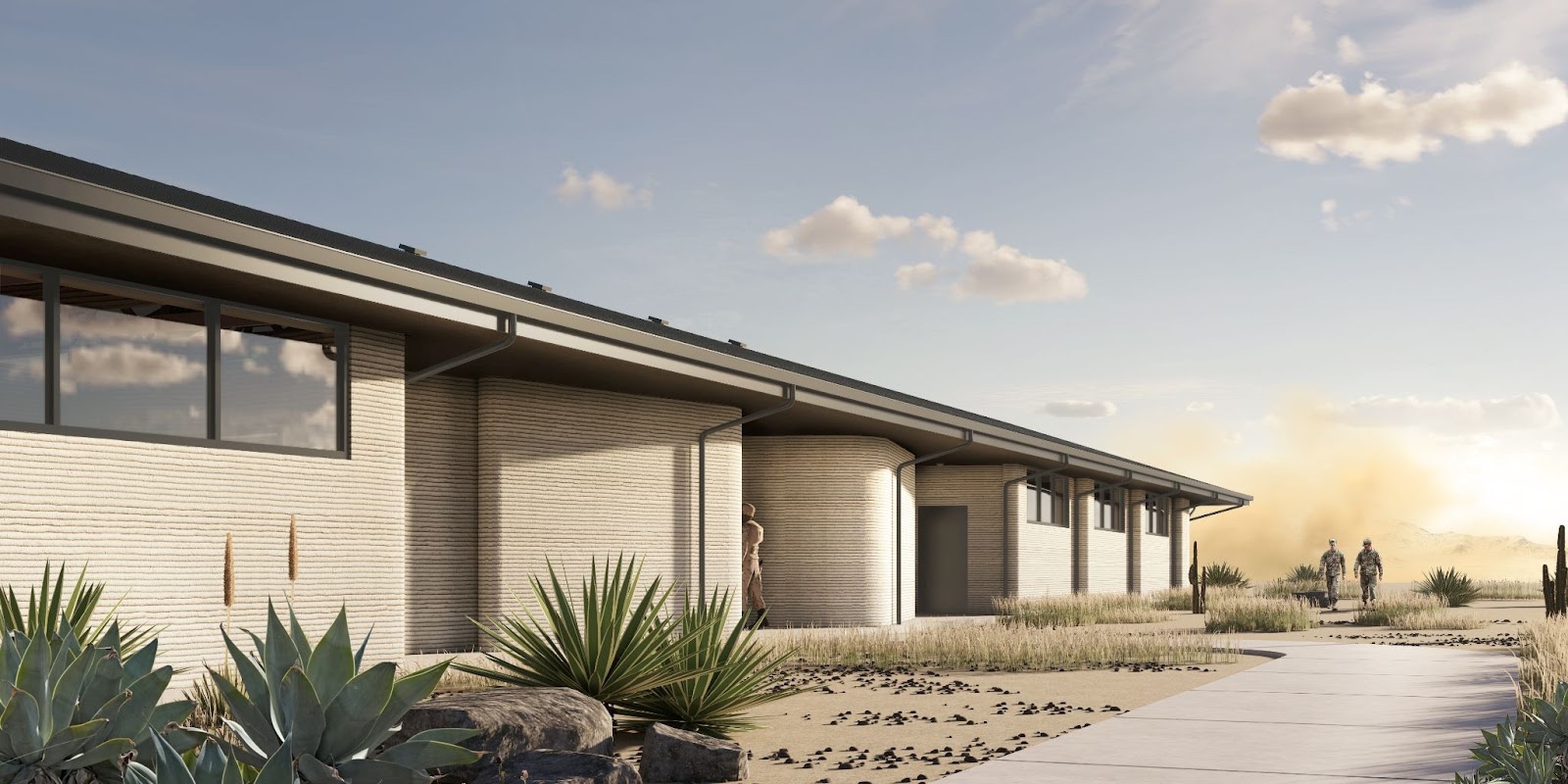
3D printed housing. Image courtesy of Logan Architecture
Interestingly, precisely this U.S. Army Corp of Engineers document and any future updated versions of it, along with the series of DIU/ICON projects, will be primarily responsible for solving the problems it just stated. With little else being out there at present in terms of additive construction regulatory regimes, the rest of the industry will likely yield to the regulations created by the military. This is especially true considering the size of the projects it’s able to undertake, which among other things, serve as helpful trial balloons for the regulations the military enacts.
In effect, to whatever extent that additive construction solidifies as the future of the homebuilding industry, the U.S. military will more or less be the entity creating the nation’s next set of building codes. And to give a rough estimate of the industry’s current state, it’s worth noting that, at least in the United States, there have been various examples representing significant forward momentum, even just since the UFC document was published last September.
Subscribe to Our Email Newsletter
Stay up-to-date on all the latest news from the 3D printing industry and receive information and offers from third party vendors.
Print Services
Upload your 3D Models and get them printed quickly and efficiently.











You May Also Like
Axtra3D Brings Full “Axtra Workflow” and New Materials to Formnext 2025
Axtra3D hits Formnext 2025 with a big shift in strategy. The company isn’t just selling printers anymore; it’s selling a complete workflow. At the show, Axtra3D unveiled its new Axtra...
From Hobby to Hustle: How the Prosumer 3D Printing Market Is Rewriting the Industry
When many hear 3D printing, they still think of hobbyists tinkering in garages, making figurines, models, or toys. But that image has changed. A new wave of users exists between...
Bambu Lab Launches P2S: Expanding the P1 Legacy with Smarter, Faster Printing
See the addendum to this article for an update from 11/25/2025. Just two years after shaking up desktop 3D printing with the P1 Series, Bambu Lab is back with the...
Trust Bambu
Bambu Lab‘s relentless rise has galvanized the industry into a furious response, making desktop 3D printers much faster and more reliable. Other competitors are in denial and, like deer in...