DLP 3D Printing Gets Major Upgrade with Native 4K Capabilities from IN-VISION

IN-VISION Technologies AG has announced a step change in digital light processing (DLP). The Austrian optics specialist has developed what it is calling “the first” native 4K light engine for industrial applications. Dubbed AVATAR, the ultraviolet (UV) projection system will introduce new size and resolution implications for 3D printing and lithography applications.
In 2021, IN-VISION released a 4K UV projector called PHOENIX. Like all other 4K light engines on the market, PHOENIX had a resolution of 2560×1600 pixels. To achieve the effect of 4K, these systems use a specific trick that shifts pixels to increase image resolution. Though the surface quality of DLP prints may be improved, the size of the image size is still limited to 2560×1600 pixels.
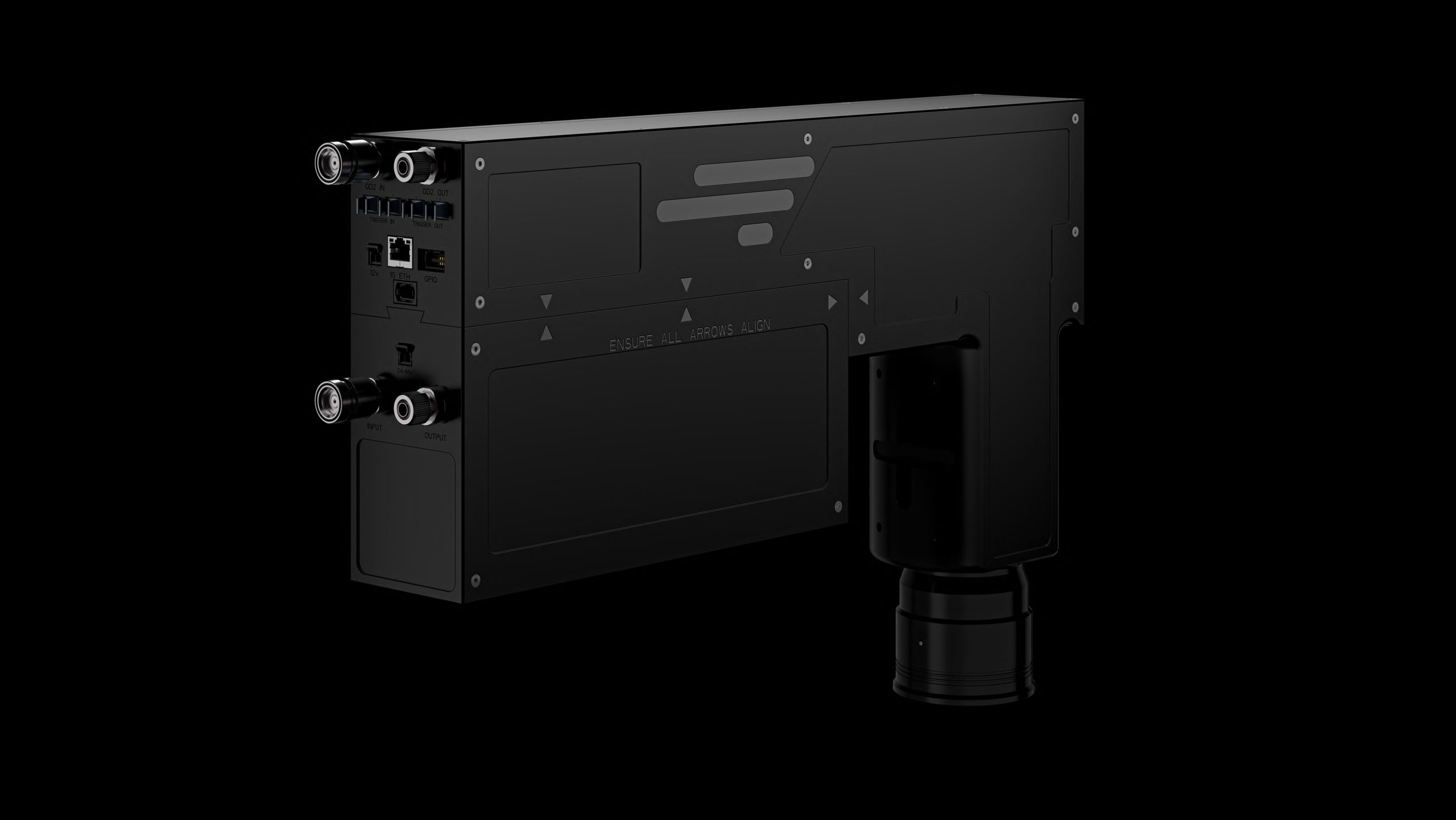 The AVATAR native 4K DLP light engine from IN-VISION. Image courtesy of IN-VISION.
To overcome this, Texas Instruments (TI) has developed a new chipset with a native resolution of 4096×2176. The chipset will be released mid-2022, with IN-VISION developing AVATAR as TI’s Design House partner. The new UV projector makes it possible to expose, at high resolution, a larger area than previously possible.
Other features include an easily swappable LED module that doesn’t require calibration or setup. Built-in Xilinx Zynq UltraScale software makes it possible to customize the projector for a user’s given applications or prepared software. The illumination and DMD units feature separate connectors for water cooling.
Additionally, AVATAR is designed for moving exposure, which could be similar to what Prodways uses in its MOVINGLight DLP technology. To achieve this, the system includes optical PCIe-Interface, Optical Trigger IN/OUT and a one gigabyte ethernet connection for high scrolling speeds. These features also mean that it can handle the large amounts of data contained in a 4K image. The small width of the system means that multiple projectors can be stacked. Scrolling and stackability mean that it’s possible to design a 3D printer with an even larger print area.
“AVATAR is an exciting development,” says Christof Hieger, In-Vision CTO, “the new projection system redefines the boundaries of DLP technology in Additive Manufacturing and lithography.”
IN-VISION CEO Florian Zangerl said in a press release, “First Pre-Series- Models of the next-generation Light Engine will be available for Lead Customers in the fourth quarter of 2022.”
The company aims to begin serial production of AVATAR in 2023. IN-VISION’s Lead Customer Program is ending, but interested parties may be able to still work with the company regarding the acquisition of an AVATAR print engine.
Subscribe to Our Email Newsletter
Stay up-to-date on all the latest news from the 3D printing industry and receive information and offers from third party vendors.
Print Services
Upload your 3D Models and get them printed quickly and efficiently.













You May Also Like
AM Demand Signals: Reshoring the Robotics Supply Chain
The Federal Communications Commission (FCC) recently banned the sale in the US of “almost all” new mobile robots sourced from foreign countries. IEEE Spectrum (the link in the first sentence)...
3D Printing Market Hits $4.48B After Six Straight Quarters of Growth
The additive manufacturing market continued to grow in the second quarter of 2026, adding another quarter to what is becoming a much more consistent expansion for the industry. Worldwide revenue...
Application Focus Promises Success but Demands Risk
This is Part II of a five-part series by AMPOWER, Gold Sponsor of Additive Manufacturing Strategies (AMS) 2027. For most of this industry’s history, the commercial task was to sell...
Formnext Asia Shenzhen 2026: China Has Built the AM Stack. What Comes Next?
In Hall 15 at Formnext Asia Shenzhen 2026, consumer 3D printing was everywhere, from toys, figurines, and character models to thousand-machine production farms. Green-laser companies displayed copper cold plates for...