AddUp Partners with German Tooling Center for Metal 3D Printed Tools

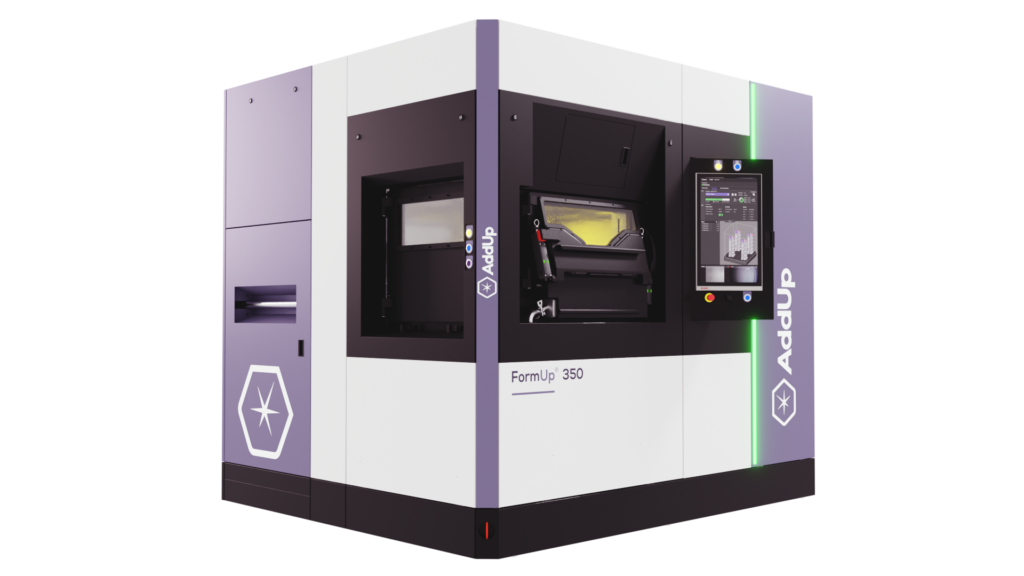
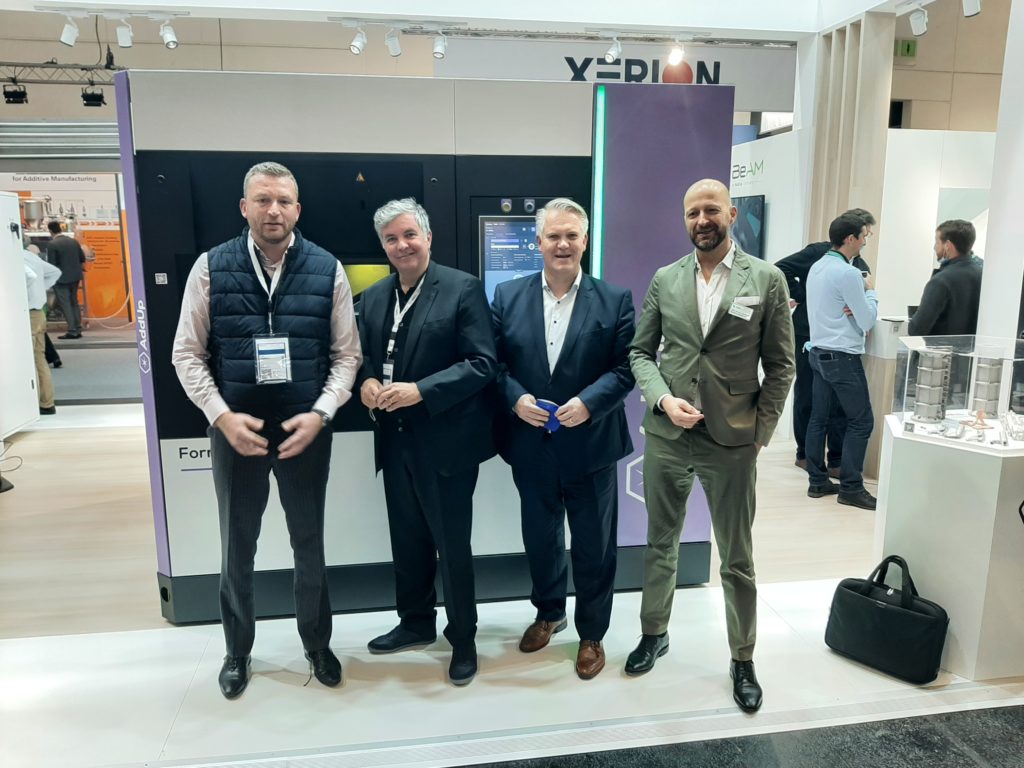
WBA Aachener Werkzeugbau Akademie is a competence center for the production of tooling on the RWTH campus in Aachen. The centre is partnering with French laser powder bed fusion (LPBF) system manufacturer AddUp to install a FormUP 350 New Generation machine at its Demonstration Tool Shop. The center then hopes to train member companies and visitors to use the printer. The quad-laser AddUp system will be loaded with tool steel and is specifically meant to help tool makers make AM tools. The WBA will also be available to make medical tools and perform the post-processing.
“The future of tool making is not bound to the traditional manufacturing technologies. Additive Manufacturing sees growing demand from tool makers. Especially, in Germany tool makers are looking for solutions to drive innovation and digitalization in their tool shops. At WBA, we strive to represent all capabilities of German tool making in our Demonstration Tool Shop. AddUp shares our passion for innovation and we look forward to creating new solutions for a sustainable toolmaking industry,” said Prof. Dr.-Ing Wolfgang Boos, Managing Partner of WBA.

“We are proud of this partnership with WBA. It is a great opportunity for AddUp to introduce its FormUp 350 machine and its know-how in the birthplace of Additive Manufacturing. Thanks to this partnership, companies of the tooling industry will take advantage of this disruptive technology,” Julien Marcilly, Deputy CEO of AddUp.
Tool making has long been an application with a lot of promise in 3D printing. Mold tooling especially has been produced with our technology for some time. In many cases, we can manufacture tooling faster than traditional processes. In some cases, it can be cheaper as well, or it can allow firms to bid on contracts they would otherwise be unable to get. It could also lead to faster cycle times or optimized geometries that would lead to tools that could otherwise not be produced. Conformal cooling has long been a feature that could enable wider adoption of AM in the tooling market. Dies, inserts, molds and more represent a big potential market for AM and can really make these companies much more flexible and efficient. So, the focus by AddUp is a good one. Also, as a French company, targeting a German institute is a piquant choice, of course.
There’s another reason why the WBA is a good decision as well. Michelin—who started AddUp together with Fives—is probably one of the world’s most extensive users of AM tooling in production. The company has created an AM solution to make a great many tread molds and other key tooling components for its tire making process. Furthermore, it has done this at scale. So, in tooling, they have a deep expertise, as well as a very prestigious reference client and case.
AddUp’s machines have been specifically made to produce a great many tooling components at an industrial firm and, so, the case, culture and machine design would tend to really appeal to similar people working in tooling. This is a great deployment that could see a lot of individuals get to know AddUp as a solution, as well as get to be trained up on the system.
Previously, I’ve spoken very positively about AddUp’s 350 and its architecture. It is a production system that has been iteratively improved to perform production tasks well. I like that the powder handling and operation seem to be perfectly made to manufacture parts. The down-to-earth tooling market may just be the perfect place for AddUp to deploy itself to find more customers.
Subscribe to Our Email Newsletter
Stay up-to-date on all the latest news from the 3D printing industry and receive information and offers from third party vendors.
Print Services
Upload your 3D Models and get them printed quickly and efficiently.













You May Also Like
Solukon Goes Big with New SFM-AT850 Depowdering System
Solukon has released the SFM-AT850 depowdering system. The German depowdering specialist has updated its product line, and this machine replaces the SFM-AT800-S and SFM-AT1000-S. Rather than many small parts, this...
The Hidden Economics of Powder Bed 3D Printing: Closing the Loop in Powder Management
Automation is a very topical thing in additive manufacturing at the moment. With renewed scale, some clients are fervently looking to automate production. Other business cases only make sense with...
Oerlikon Adds ATLIX’s xBUILD 5000, Plans More for 2027
Oerlikon has installed a new ATLIX xBUILD 5000 metal 3D printer at its facility in Huntersville, North Carolina, marking the first production deployment of the system worldwide. The machine will...
The Science Lab You Can 3D Print
Researchers at Sweden’s Umeå University have shown how desktop 3D printers can be used to make lab equipment, giving scientists a cheaper way to build tools for their research. The...