Materialise Releases Software Module for Dental 3D Printing


Materialise (Nasdaq: MTLS) is already the established leader in 3D printing software. Now, it’s taking the interesting course of developing software for select industries. The latest is the newly announced Dental Module for Magics, meant to optimize and automate print prep for dental applications.
The Dental Module is an add-on for the widely used Magics software platform, a tool that makes it possible to repair and edit 3D models before printing. Now, dental users can access automatic print prep for commonly printed dental models, such as crowns, bridges, and partial bases.
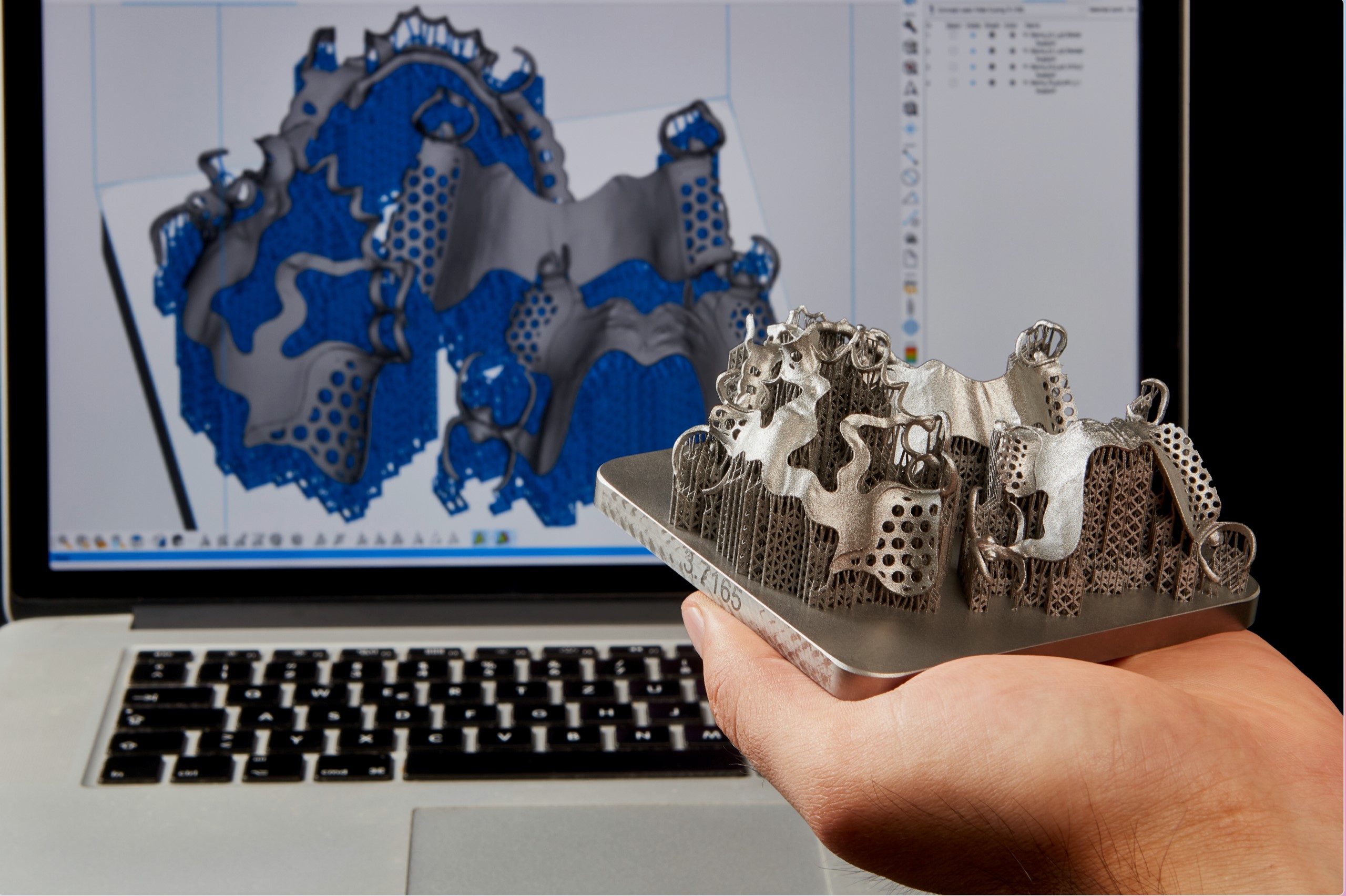
The Dental Module for Magics. Image courtesy of Materialise.
Once they upload a CAD file, they can click a button and the tool will perform all of the necessary print preparation steps automatically. This includes labeling, nesting and support structure generation. The company claims that these tasks would typically take hours to perform manually, but can now be conducted in just a couple of minutes. Additionally, it’s possible to execute more advanced functions on processing steps via customizable processing profiles. This means that users can modify automatically generated results or save manually created parameters when necessary.
“3D printing has become well established within dentistry,” says Volker Schillen, Market Innovation Manager at Materialise. “Today, many dental labs have their own printers and create custom parts for dental restoration daily. Their next goal is optimizing the workflow so dental specialists can reduce the amount of time spent manually preparing designs to be printed. With automated tools, specialists can instead use this time on other valuable responsibilities, such as meeting with patients.”
This is an interesting way to get a new technology into the hands of customers already familiar with some digital dentistry techniques. It may be a way to gain some market penetration, perhaps directing dental labs towards other Materialise products, including its service bureau offerings.
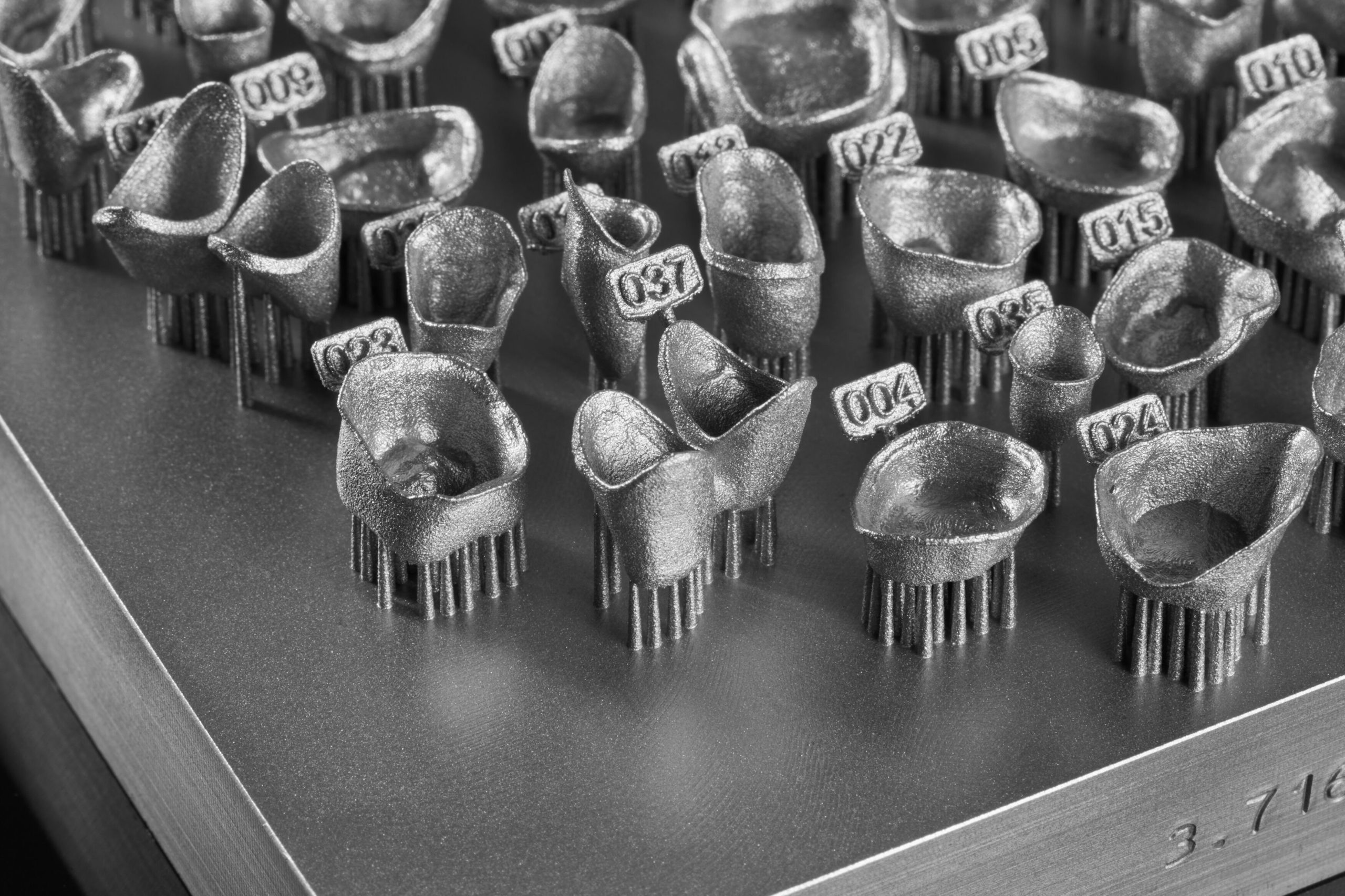
Dental 3D printed parts. Image courtesy of Materialise.
It’s also worth noting that multiple firms are attempting to introduce greater automation to dental 3D printing. 3D Systems, for instance, has added automated nesting and stacking to its dental software, while Prodways is creating a complete workflow for automatic aligner manufacturing.
Dental labs are becoming more advanced and prominent, making for an interesting market opportunity. Meanwhile, 3D printing firms have been targeting specific verticals for their products and tailoring them in that manner. For instance, Stratasys has developed PolyJet machines for just about every segment, such as medical, dental, and industrial engineering. Formlabs and EnvisionTEC have also packaged their 3D printers for each sector. So, it’s no surprise that Materialise would do so with its own software.
Subscribe to Our Email Newsletter
Stay up-to-date on all the latest news from the 3D printing industry and receive information and offers from third party vendors.
Print Services
Upload your 3D Models and get them printed quickly and efficiently.













You May Also Like
3D Printing News Briefs, September 3, 2026: Acquisition, Trade Secrets, Ankle Implants, & More
In today’s 3D Printing News Briefs, we’re starting with a partnership regarding additive manufacturing quality software. Then we’ll move on to a defense acquisition and a trade secrets misappropriation case....
3D Printing News Briefs, August 29, 2026: Prosthetics, Pelvic Implants, Capillaries, & More
In this weekend’s 3D Printing News Briefs, America Makes announced the winner of its GOTHAAM Project Call. Then it’s all about healthcare 3D printing news, with Stratasys and Limbitless Solutions...
Deakin Researchers 3D Print Rotary Kirigami Cylinders
We’ve long had a passion at 3DPrint.com for Kirigami shapes, be it in the form of bandages, nano fabrication, or sensors. We also wrote a lot about metamaterials and, more...
3D Printing News Briefs, August 26, 2026: Meshy 7, 4D Printed Implants, & More
We’re kicking things off today with software news, as the new Meshy 7 is now live. Then we’ll move on to business, with ExOne and voxeljet now operating as a...