SPEE3D’s Supersonic Cold Spray Metal 3D Printing Adopted by Elementum 3D

Australian company SPEE3D develops, assembles, and distributes machines and other integrated system solutions based on its own patented metal cold spray-based Supersonic 3D Deposition additive manufacturing technology (SP3D). Now, additive manufacturing R&D company Elementum 3D will get to benefit from this award-winning, large-format, extremely high-speed technology, as it has now adopted SPEE3D’s SP3D and added the technology to its existing list of available services and capabilities.
“We are very excited about partnering with such a pioneering company such as Elementum 3D,” said Byron Kennedy, the CEO of SPEE3D. “Their additive manufacturing and material expertise will help to bring cold spray additive manufacturing to the forefront and quite literally change the way parts are manufactured in several industries.”
The ISO 9001 certified Elementum 3D is focused on developing advanced materials, specifically ceramics, composites, and metals; in fact, the Colorado-based company was granted patents in the United States, Canada, and Australia last year for its Reactive Additive Manufacturing (RAM) process. By investing in SPEE3D’s cold spray metal 3D printing, Elementum 3D can offer a faster additive solution to its customers that need high-quality metal parts for tough, exacting industries, like aerospace, automotive, defense, and oil and gas.
“Our revolutionary RAM technology and AM expertise is helping meet the 3D printing industry’s ever-growing demand for a greater selection of printable materials,” said Elementum 3D’s CEO Dr. Jacob Nuechterlein. “We are confident the acquisition of SPEE3D’s technology will be an excellent addition to our current capabilities. Developing and applying Elementum 3D materials to SPEE3D’s cold spray printers is a major step forward towards our goal to offer customers a comprehensive range of AM solutions.”
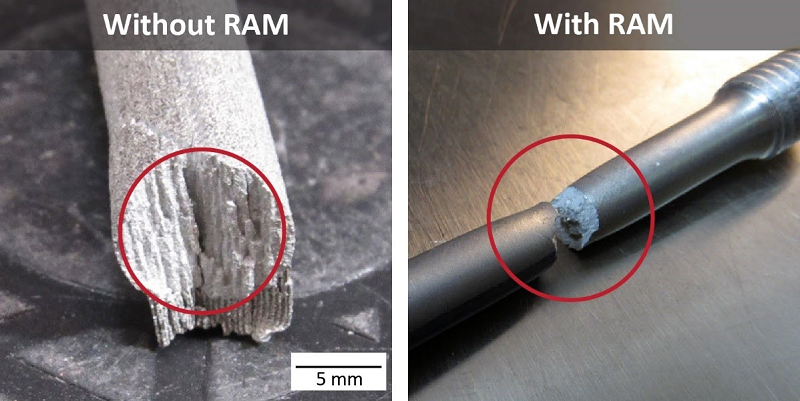
(L) Unmodified “standard” 2024 aluminum alloy without RAM addition exhibits columnar grain growth. (R) Elementum 3D’s A6061-RAM2 aluminum alloy with RAM addition exhibits ductal behavior.
Elementum 3D specifically acquired the WarpSPEE3D metal 3D printer, which has proven itself capable of being deployed in the field multiple times and can simultaneously print multiple industrial components at up to 1,000 x 700 mm in diameter. According to SPEE3D, its majorly large-format system actually has the capacity to print 30 tons of metal parts per year, and with print times of 100 to 1,000 times faster than other traditional metal AM processes, the WarpSPEE3D printer looks to be a more cost-effective solution as well.
“SPEE3D is honoured to be involved in Elementum 3D’s advanced materials research and development,” stated SPEE3D’s CTO Steven Camilleri. “SPEE3D’s cold spray fabrication technology provides a significantly increased scope for advanced materials development as the material is not melted during the print process. With our WarpSPEE3D technology, we look forward to how Elementum 3D spearheads material enhancement in cold spray processes for the future 3D printing market.”
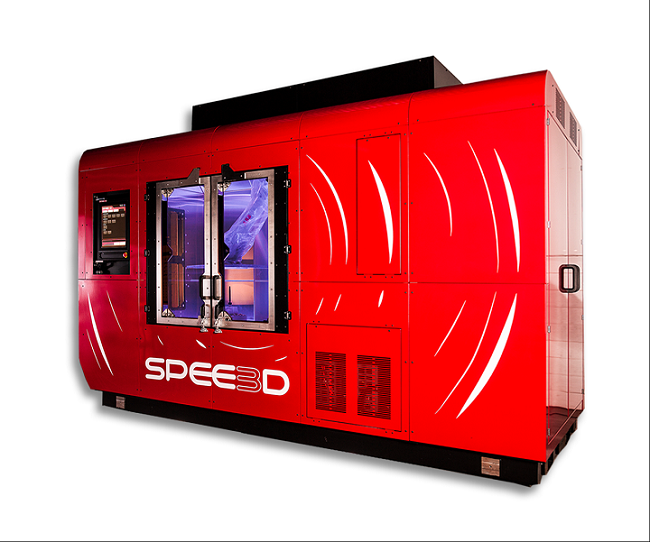
WarpSPEE3D – SPEE3D’s large-format metal 3D printing machine to be installed at Elementum 3D.
Subscribe to Our Email Newsletter
Stay up-to-date on all the latest news from the 3D printing industry and receive information and offers from third party vendors.
Print Services
Upload your 3D Models and get them printed quickly and efficiently.











You May Also Like
Bambu Lab A1 Used to Directly 3D Print Copper Electroplated Parts
Maker Dzingof was doing tonnes of electroplating of desktop and other 3D prints years ago with his Metalizzr project. I’ve been playing, a lot less successfully, with electroplated 3D prints...
3D Printing Financials: Materialise Reports Strong Finish to 2025, Led by Medical Growth
Materialise (Nasdaq: MTLS) closed out 2025 with a solid fourth quarter, showing stronger profitability, steady revenue growth, and continued momentum in its medical business. While some parts of the company...
Takeaways From MILAM 2026: Defense’s Growing Role in Driving 3D Printing – Part II
At the recent Military Additive Manufacturing Summit & Technology Showcase (MILAM 2026), additive manufacturing wasn’t just being discussed as a production strategy; it was being packaged for deployment. A big...
From Vision to Volume: The Next Chapter for Additive Manufacturing
Additive manufacturing has spent years navigating skepticism, hype cycles, and industrial validation. Now, the industry finds itself at a decisive turning point. The conversation has shifted away from futuristic possibilities...