Digital Metal Announces Automated Depowdering for Metal Binder Jet 3D Printing


Automation is pretty important in terms of mass producing 3D printed components, and one AM company that’s all about automation is Sweden-based Digital Metal, a subsidiary of the Höganäs Group—the largest producer of metal powders in the world. The company’s proprietary binder jet 3D printing makes it possible to produce complex objects, with superior surface finish and accuracy, for industrial use, and ever since Digital Metal introduced its high-precision DM P2500 metal binder jetting system a few years ago, it’s been working to evolve automation of the technology. Now, the company has announced an automated depowdering station for metal binder jet printing; even more exciting, one of the first customers for this hardware is a world-renowned German Research Institute,
We’ve seen depowdering for metal SLM and metal powder bed fusion, but Digital Metal say it’s developed the world’s first commercial automated depowdering station for metal binder jetting in its new DPS 1000.
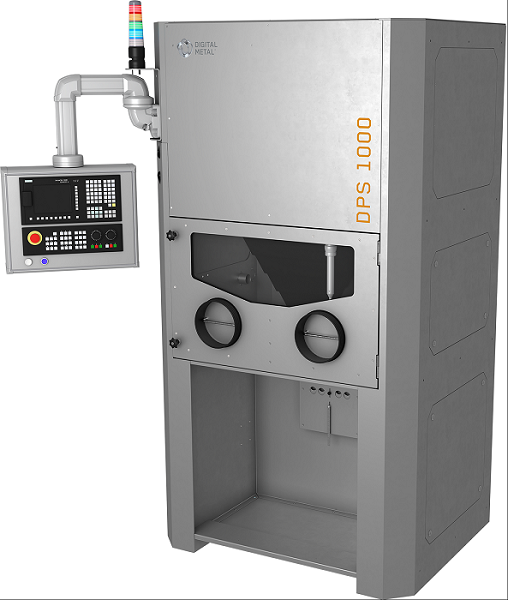
Alexander Sakratidis, Sales and Marketing Manager at Digital Metal, said in a press release, “A key benefit of the DPS 1000 for Digital Metal customers is that it will free up time, and also bring consistency by removing the human factor from the equation.”
Depowdering is an important cost-saving measure in powder 3D printing, but it also makes the machine safer, so channels aren’t blocked during heat treatment. When the process is automated, it also frees up human operators to complete other tasks, which in the long run speeds up the overall production process. Some even say that automated depowdering is a crucial part of industrializing additive manufacturing, as the manual task can take up a lot of hours otherwise.
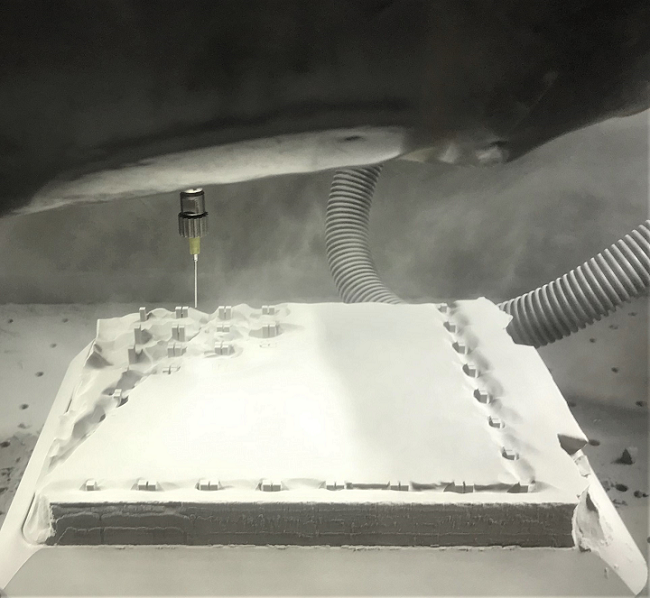
The specific focus of Digital Metal’s first commercial automated depowdering station customer is industrializing AM technologies in order to develop more resource-efficient products. This institute was impressed with, and decided to invest in, Digital Metal’s DPS 1000, in addition to a complete 3D printing system, because of its impressive capacity for precise metal powder removal from most geometries of 3D printed parts.
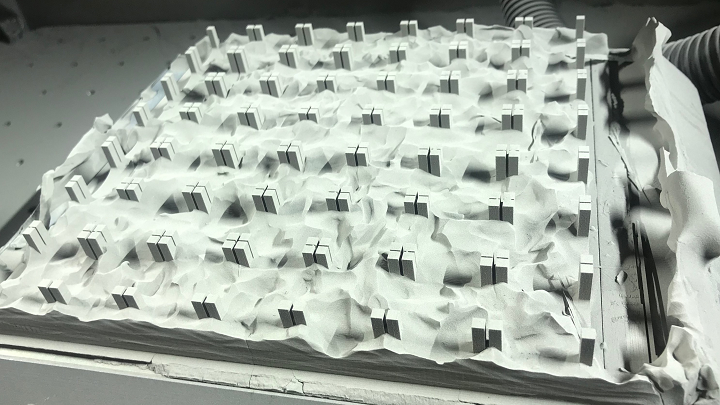
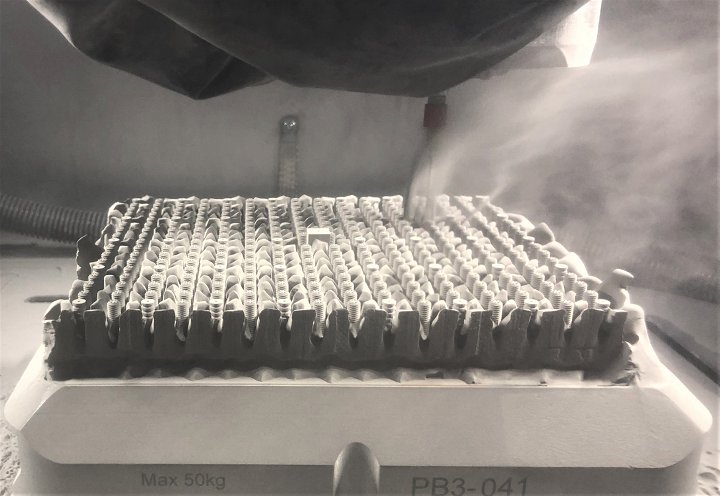
Parts depowdered in DPS 1000
The DPS 1000, which can be used with Digital Metal’s DM P2500 metal binder jet printer in addition to other systems, has an additional manual cleaning option that can be used after the initial program has removed most of the metal powder. The company says this secondary process can clean powder out of even the most complex geometries.
The research institute appreciates how well the Digital Metal 3D printer, and the new automated depowdering system, fits its overall mission to industrialize metal 3D printing.
(Source/Images: Digital Metal)
Subscribe to Our Email Newsletter
Stay up-to-date on all the latest news from the 3D printing industry and receive information and offers from third party vendors.
Print Services
Upload your 3D Models and get them printed quickly and efficiently.













You May Also Like
Advanced Manufacturing at IMTS 2026: 3D Printing and AI and Drones, Oh My!
Last week’s International Manufacturing Technology Snow (IMTS) in Chicago welcomed over 90,000 attendees to the jungle that is McCormick Place. With over 1.17 million square feet of exhibit space, and...
Caracol to Build Large-Format 3D Printing Hub in Milan With Designtech & LAMÁQUINA
In the 1990 classic in economic strategy, The Competitive Advantage of Nations, business theorist Michael Porter wrote, “Most commentators on the Italian economy have persistently underestimated Italy, because they have...
ETH Students 3D Print Experimental Rocket Engine
Students at the Swiss University ETH have built a Rotating Detonation Rocket Engine (RDRE). An RDRE burns propellant in a ring-shaped combustion chamber where a continuous supersonic wave detonation is...
Printing Money Episode 35: Notable VC and M&A Deals, with Arno Held and Alex Kingsbury
Welcome to Printing Money Episode 35 and let us be the last to wish you a happy new year. For this episode Danny is joined by Arno Held (Managing Partner,...