Shapeways Adds Six Traditional Manufacturing Methods to Digital Platform

Less than a month ago, global digital manufacturing platform Shapeways became the latest AM industry company to announce that it was going public through an Agreement and Plan of Merger and Reorganization with special purpose acquisition company (SPAC) Galileo Acquisition Corp. (NYSE: GLEO), which will be renamed SHPW, for Shapeways Holdings, Inc., on the New York Stock Exchange. This partnership puts Shapeways at a $410 million pro forma enterprise value, and is expected to offer more than $195 million in net proceeds to the company, including a $75 million fully committed common stock PIPE.
I’m betting the company will become even more valuable after its latest announcement: Shapeways is adding six new verified traditional manufacturing capabilities to help scale the production demands of its many customers.
When our Executive Editor Joris Peels spoke to Shapeways CEO Greg Kress about the company’s SPAC merger earlier this month, he said that Shapeways was “positioned for scale” and “becoming a critical component supply chain, complimenting other manufacturers with low-volume, high-mix and serial applications.” With this expansion of its end-to-end digital manufacturing platform, it seems that the company is well on its way.
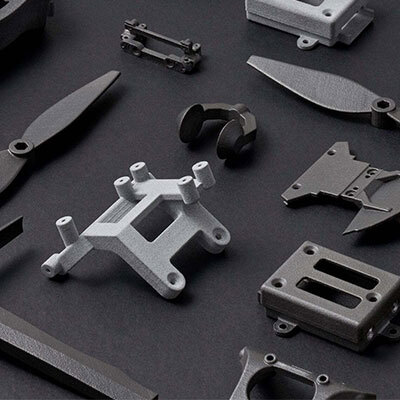
“Shapeways’ goal is to give our customers around the world the flexibility to scale on-demand production seamlessly while maintaining the highest levels of quality. By offering more options for production, customized fulfillment and improved supply chain agility for distributing end-use parts, we provide the manufacturing support and continuity needed to skyrocket business success,” Miko Levy, CRO at Shapeways, said in a press release.
Founded in 2008, Shapeways is headquartered in NYC, with ISO 9001-compliant manufacturing facilities in Long Island City and the Netherlands, in addition to a global network of partners that are able to deliver a wide range of manufacturing and service delivery options to customers. As volume demands continue to grow, these six new conventional methods of manufacturing will help Shapeways expand its reach and offer customers even more ways to make high-quality parts than just 3D printing.
These new capabilities are:
- CNC machining, a subtractive process that uses computerized controls to remove materials to create parts
- Injection molding, which pours molten liquid into a mold that later solidifies into the part
- Machine tooling, which is the engineering of tools and jigs to make parts
- Sheet metal, often used to make very industrial-grade parts for applications in industries like aerospace and automotive
- Vacuum casting, which draws liquid into a mold, where the part is formed, using a vacuum
- Urethane casting, or silicone molds filled with polyurethane
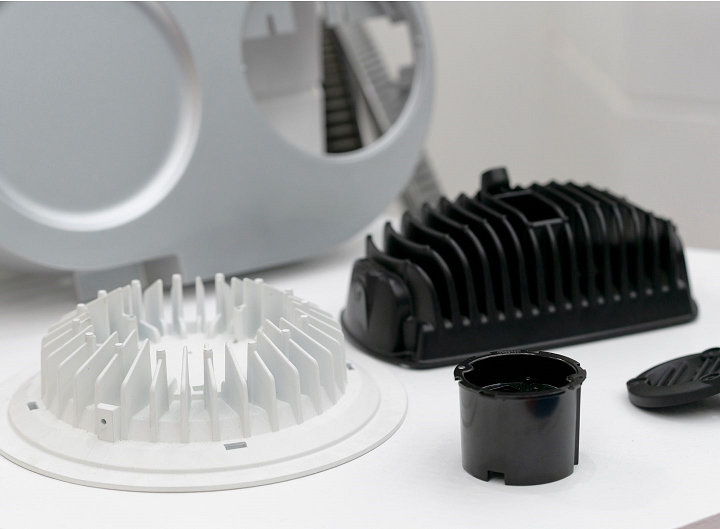
Shapeways offers full traceability across all its traditional and digital manufacturing methods, so customers who need quality parts at scale for applications in a wide array of industries, including aerospace, automotive, industrial, medical, and more, need not worry. Even with these additional manufacturing methods, Shapeways is continuing its vendor-agnostic approach to material and hardware providers in its partner network.
Even we can admit that 3D printing, while definitely a flexible option, is not always the best process for some manufacturing jobs. There are advantages and disadvantages to additive manufacturing, just like there are with technologies like CNC machining and injection molding, the latter of which is often used by companies on the verge of mass production. In addition, often 3D printing is combined with another subtractive manufacturing process to achieve the best possible outcome. The fact that Shapeways caters to both digital and traditional manufacturing technologies means that it can reach even more customers.
(Source/Images: Shapeways)
Subscribe to Our Email Newsletter
Stay up-to-date on all the latest news from the 3D printing industry and receive information and offers from third party vendors.
Print Services
Upload your 3D Models and get them printed quickly and efficiently.













You May Also Like
The Manufacturing Race Behind the Drone Revolution
We are in the middle of a major manufacturing shift focused on the production speed and payload capacity of uncrewed aerial systems (UAS), or drones. A recent Manufacturing Dive article...
ADDMAN to Buy Up to $10.8M in Nickel 718 Powder from 6K Additive Over 30 Months
After years of buildup, we’re finally starting to see what the US metal additive manufacturing (AM) market could look like at scale. To be sure, it’s still not quite there,...
Metal AM in a Multipolar World, Part 2: How PBF and DED Could Change by 2035
The first decades of PBF development were heavily shaped by machine capability: more power, more lasers, larger build volumes, better recoating, and improved process monitoring. These developments will continue, but...
Advanced Manufacturing at IMTS 2026: 3D Printing and AI and Drones, Oh My!
Last week’s International Manufacturing Technology Snow (IMTS) in Chicago welcomed over 90,000 attendees to the jungle that is McCormick Place. With over 1.17 million square feet of exhibit space, and...