Meta Additive Receives £1.2M Grant to Scale Binder Jet 3D Printing


Innovate UK, which is part of UK Research and Innovation, invests up to £25 million in breakthrough, commercially viable ideas through its open grant funding SMART program. Meta Additive, a 3D printing spinout company from the University of Liverpool, was just awarded a £1.2 million SMART grant from the organization, which will be used to continue growing its next generation AM technology; the university is also supporting the company through its Enterprise Investment Fund.

Dr. Kate Black (Image via LinkedIn)
Dr. Kate Black, a 3D printing research PhD from the University’s School of Engineering, and an expert in the development of functional materials for inkjet printing, serves as Meta Additive’s Chief Technology Officer. She founded the company in 2019 along with CEO Simon Scott and Professor Chris Sutcliffe, an international leader in the AM field. In order to ensure that additive manufacturing can fabricate low-cost, optimized parts parts that are sustainable and multifunctional, the company uses a chemical approach to 3D printing. With its multiple patented technologies, including a binder jet 3D printer that is said to create components with low shrinkage rates and high densities, Meta Additive is printing metal and ceramic parts for mass manufacturing.
“Meta Additive is a new University of Liverpool spin out company at the forefront of developing the next generation additive manufacturing technologies to extend 3D printing to a 4D future,” Dr. Black said in a press release. “We are delighted to be awarded this Innovate UK Smart grant which in collaboration with our partners will support us to take forward our BJP technology and help progress this transformative technology.”
The company, which has set up its headquarters in an old ceramics factory in Stoke-on-Trent, secured this grant from Innovate UK together with its industrial partners EpiValence and Xaar, as well as The Manufacturing Technology Centre (MTC), which recently invested in XJet’s NanoParticle Jetting technology. The SMART grant will be used to support Meta Additive during a two-year project to develop its binder jet 3D printing at scale. In order to succeed at metal multimaterial 3D printing, the company with create new binder formulations with raw materials from EpiValence that feature high solid loading, which means “the amount of suspended solids in a substance.”
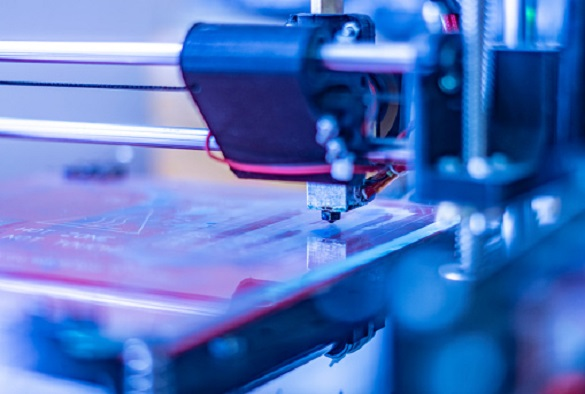
Image courtesy of University of Liverpool
In binder jet technology, a layer of fine powder is jetted together using a binder material, and the resulting layers are then sintered together. 3DPrint.com’s Executive Editor Joris Peels explained some of the many potential issues in sintering, in that the part results can vary a lot depending on the geometry, part size, and wall thickness, so it’s a tricky technique to master.
Meta Additive and its three partners will be using, according to the press release, “multiscale computational modelling of hierarchical binder systems to inform novel formulations and industrial process modelling of sintering profiles to inform Binder Jet Printing design and development” using inkjet heads, presumably from Xaar, that are commercially available, to do so.
“Meta Additive is the latest example of University of Liverpool ground-breaking technology being translated into a new business opportunity to create positive economic impact,” stated Professor Anthony Hollander, Pro-Vice-Chancellor for Research & Impact at the University of Liverpool. “We are proud to have supported Meta Additive, via the University’s IP Commercialisation Team and University Enterprise Fund investment and we wish the Meta team great success in the future.”
Emma Nolan, the Head of the University’s IP Commercialisation team, will now take a position on the Meta Additive Board of Directors.
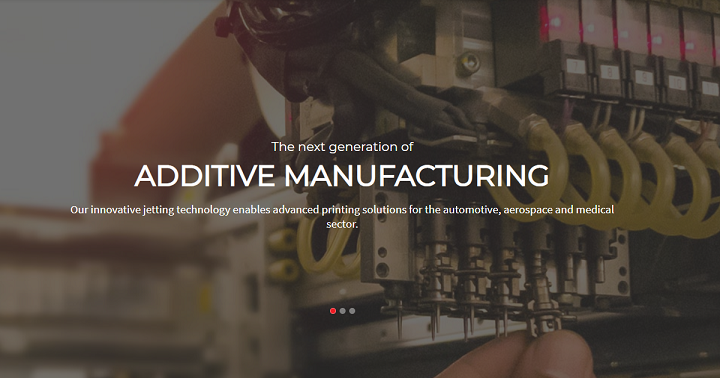
Image courtesy of Meta Additive
(Source: University of Liverpool)
Subscribe to Our Email Newsletter
Stay up-to-date on all the latest news from the 3D printing industry and receive information and offers from third party vendors.
Print Services
Upload your 3D Models and get them printed quickly and efficiently.













You May Also Like
Australian OEM AML3D Closes Record Year, Eyes $54M Global Sales Pipeline
The US Department of Defense (DoD) finally seems to be implementing a strategy it has spent years refining, centered on bringing its international allies and partners more into the fold...
3D Printing News Briefs, July 30, 2026: Orthodontics, Digital Implants, & More
We’re starting with business news in today’s 3D Printing News Briefs, followed by news about an in-house center for engineering digital implants. We’ll end with research about thermal cloaking. Read...
IMDEA Materials & Lawrence Berkeley National Laboratory Work on Making 3D Printers Print in Unison
Spain’s IMDEA Materials Institute has worked with Lawrence Berkeley National Laboratory to detect and identify differences in different 3D printers. This could be important in eliminating run-to-run differences in prints and...
PanOptimization Gets Attaboy from AFRL for PanX Software
Published in the International Journal of Advanced Manufacturing Technology, a paper titled “Part scale prediction of residual stress through thermomechanical modeling of additively manufactured Ti-6Al-4V” seems to point to the...