Authentise Integrating nebumind’s Digital Twin Visualization into AMES 3D Printing Software


Authentise, which offers data-driven process automation software and workflow tools for AM, announced that it is partnering with German software startup nebumind for the purposes of integrating the digital twin into its software. nebumind was just founded last year, and provides visualization and analytics tools for manufacturing data, specializing in digital twin visualizations that combine sensor data and machine parameters with the geometry of the original part. The digital twin concept is the idea that by combining software with mass customization in the digital manufacturing world, all products in a company’s inventory will have a unique file containing all its specific settings and production information. nebumind’s tools will be integrated into the Authentise Manufacturing Execution System (AMES), a workflow management engine that automates using machine data.
“We’re excited to be welcoming nebumind to the Authentise platform. To date all they are given is long and complex tables of sensor data that are difficult to make head or tail of. Thanks to the integration with AMES, we can get this data automatically and fuse it with the shape being produced,” Andre Wegner, CEO of Authentise, said in a press release. “For years they have had to put up with sub-optimal data analysis, in several different software tools. Now it’s all in one place, instantly accessible, and cutting edge. This partnership proves once again how much we can move this industry forward if industry leaders work together, and not against one another.”
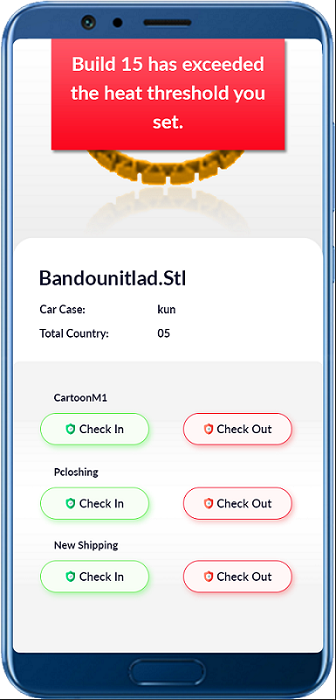
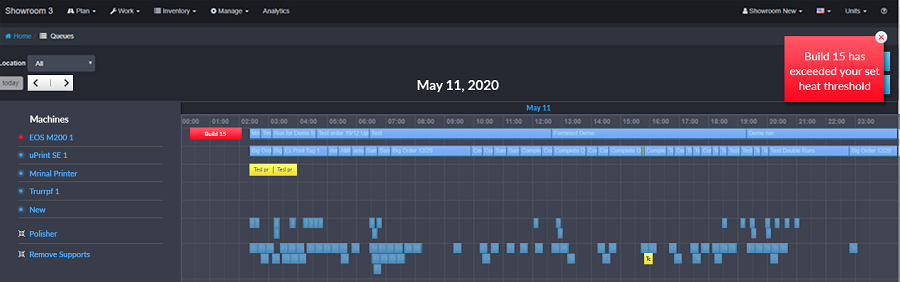
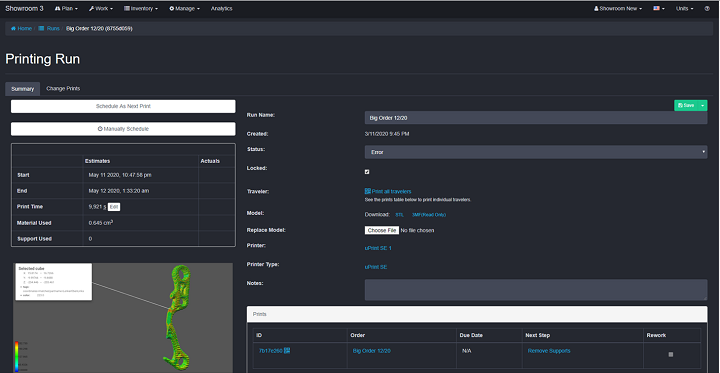
By merging nebumind’s digital twin visualizations and data capture capabilities with the AMES software, users will get an informative look at part data so they can best make decisions on the process. This is a great feature: the nebumind system inside AMES will actually generate real-time alerts during printing, so the user knows if anything is going wrong and can address the problem quickly. Users will be able to more easily spot any problem areas in a part with this combined solution, which will really help save time because they can fix mistakes before it gets too far in the process; this can also reduce the amount of waste generated. This integration of digital twin visualizations should also enable shorter but more accurate inspections as well.
“Additive users need to be able to review data at a single glance. To date all they are given is long and complex tables of sensor data that are difficult to make head or tail of. Thanks to the integration with AMES, we can get this data automatically and fuse it with the shape being produced. That way the user can see an instant heatmap of potential problem areas, and deep dive into every voxel to understand the underlying data if necessary. This view can help customers identify rework needs up to 10 times faster and reduce production rejects by up to 90%. Integrating this view with AMES makes sense, since that’s where production is managed, and data is held,” said nebumind’s co-CEO Franz Engel. “We’re excited to be collaborating with Authentise to make the additive process more seamless and reliable for users.”

Because the AMES software captures machine data already and uses it to manage a part’s 3D printable geometry, the gathered information will be automatically passed to nebumind through the integration of the two. The data will be, according to the release, “appended to the existing AMES part report” for traceability from start to finish, and users won’t have to worry about finding and uploading the data themselves.
(Source/Images: Authentise)
Subscribe to Our Email Newsletter
Stay up-to-date on all the latest news from the 3D printing industry and receive information and offers from third party vendors.
Print Services
Upload your 3D Models and get them printed quickly and efficiently.












You May Also Like
3DPOD 302: Digital Inventory for AM with Mikhail Gladkikh, Würth Additive Group
Mikhail Gladkikh has worked in oil and gas for many years. With this background, we obviously talk about energy market turbulence and the adoption of AM in oil and gas....
Spectrum Filaments Gets Investment: How They Could Win in Filament
Spectrum Filaments is a long-time high-quality filament supplier based in Poland. With good tolerances, roundness, and consistency coupled with affordable pricing, the firm has been a mainstay for makers, industrial...
NX Atomics and Sciaky Collaborating to 3D Print Nuclear Components
For decades, the nuclear industry has quietly experimented with and implemented additive. Bouyed by the likes of ORNL, companies such as Westinghouse have 3D printed components serially. We have an...
Incodema3D Buys 14 Metal EOS Systems, Now One of the World’s Largest Metal 3D Printer Operators
Recently, a majority stake of 3D printing service bureau Incodema3D was purchased by AFM Capital. Under new ownership, the Freeville, New York company is now using its cash-rich parent for...