Mondragon Group Bets on 3D Printing, Invests in BCN3D with Spanish Government

Spanish manufacturer of desktop 3D printers BCN3D announced a new funding round totaling €2.8 million. The round was led by Spain’s national innovation agency, CDTI, and the Mondragon Group, one of the country’s leading industrial business conglomerates. Though one Mondragon company was involved in manufacturing filament at one point, this is the first time that the company has invested in a 3D printer manufacturer.
BCN3D is known for its unique IDEX technology, which makes it possible to 3D print with two print heads independently. Its newest system, the Epsilon, was announced at Formnext 2019 as the largest in the company’s line of 3D printers. In addition to IDEX printheads, which makes it possible to 3D print multiple parts at once and more quickly than possible with a traditional dual printhead, the Epsilon has a heated build chamber, improving print quality, repeatability and increasing the number of materials printable with BCN3D machines.
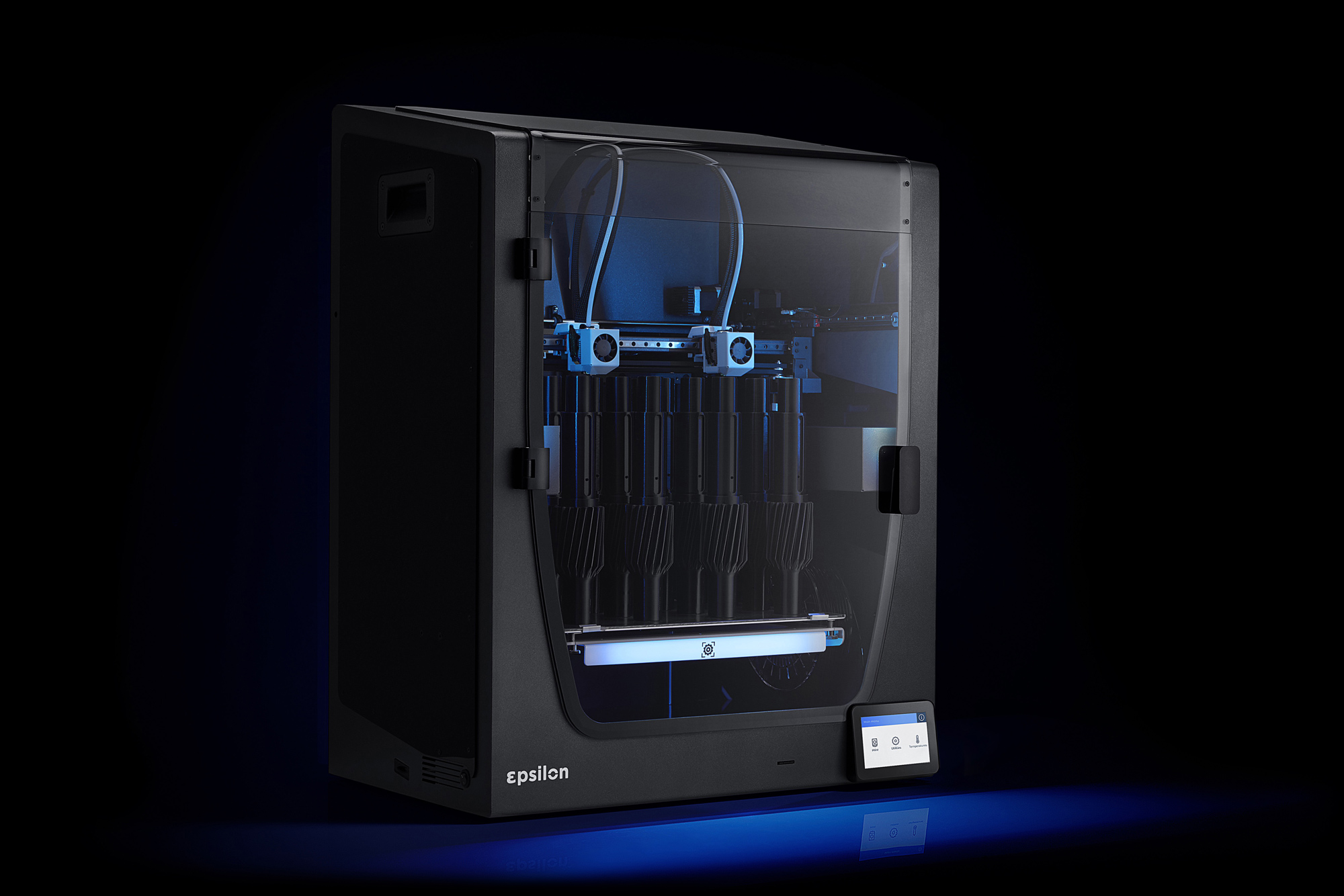
The Epsilon 3D printer from BCN3D. Image courtesy of BCN3D.
With its new investment funds, BCN3D now totals €5.5 million in start-up funds since it spun off from the Technical University of Catalonia’s tech center, CIM-UPC, into a standalone company. In addition to receiving generally good feedback from the community, the firm continues to pull in big industrial names, working with BASF and Mitsubishi Chemical on industrial grade filaments. The latest is the Mondragon Group, which is the world’s largest worker-owned cooperative.
While Mondragon has faced some criticism from proponents of worker-owned businesses, being a co-op gives the group some enormous benefits. One of the largest is its resilience and flexibility during times of crisis, including the 2008 financial downturn. For instance, rather than lay-off employees, the group is able to relocate workers across its 147 businesses.
When the group’s largest manufacturing company went bankrupt in 2013, employee-owners voted for small pay cuts and the relocation of 2,000 workers across the larger Mondragon Group, rather than see those employees let go. It may be for reasons like these that Mondragon was actually able to invest money into new technology during the COVID-19 pandemic, which has resulted in other firms like GE, Boeing and Stratasys, laying off workers.
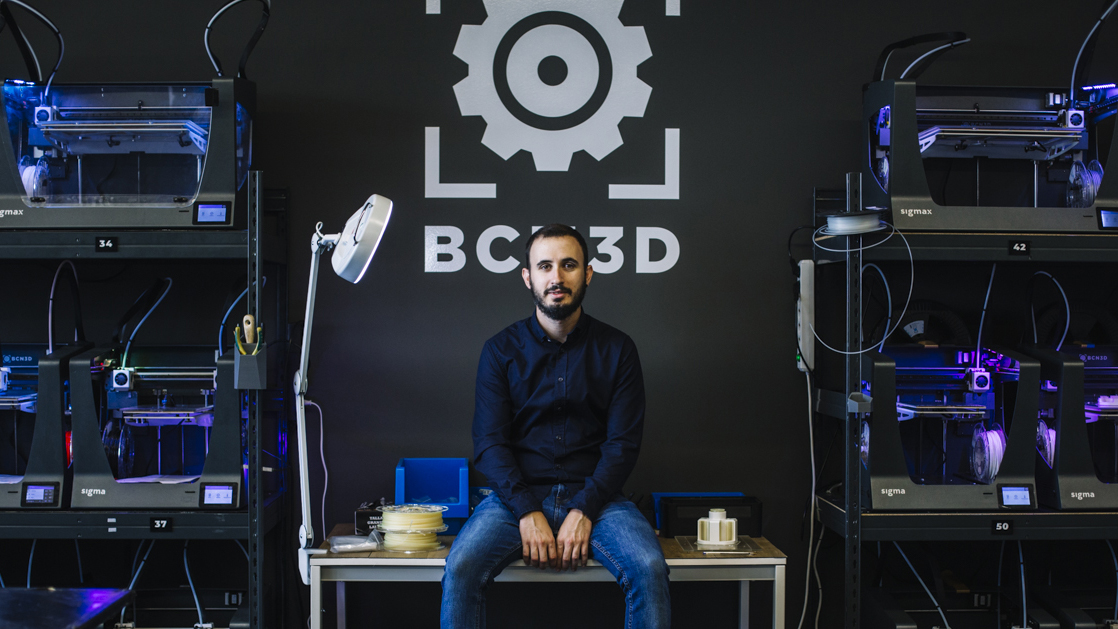
BCN3D CEO Xavier Martinez Faneca.
Also involved in the investment was the Danobatgroup, a maker of solutions for making composite structural parts, which lend its expertise to BCN3D for future developments. The investment capital will fuel the innovation of new hardware features and materials. To learn more about the company, read our interview with CTO Eric Pallarés.
Subscribe to Our Email Newsletter
Stay up-to-date on all the latest news from the 3D printing industry and receive information and offers from third party vendors.
Print Services
Upload your 3D Models and get them printed quickly and efficiently.













You May Also Like
Why the AM Industry Should Pay Attention to Schneider Electric’s $22.6B PTC Acquisition
By late 2024, there was already enough signaling of the additive manufacturing (AM) industry opportunity in the data center infrastructure market for AM Research to write a report on the...
How Does Nike’s 3D Printing Approach Fit Into Its Restructuring Plan?
Shares of Nike stock hit all-time highs in late 2021 but have cratered in the years following, with the company losing nearly 80 percent of its market cap since peaking....
3D Printing News Briefs, October 1, 2026: Defense, Enclosures, & More
In today’s 3D Printing News Briefs, we’re starting with defense news, first from Massivit and then from AML3D. Then we’ll move on to U.S. manufacturing of a new large-format LPBF...
South Korea’s Lincsolution Lands Hanwha Defense Deal as Hanwha Invests Billions in US
I recently wrote about how the South Korean additive manufacturing (AM) firm Lincsolution is building an aerospace and defense hub, part of the company’s construction of “the largest AM facility in...