Sex Toys Debut with 3D Printing at CES 2020

Las Vegas is already known as Sin City, in part for the gambling and sex work that takes place there (though it turns out that, while legal in Nevada, prostitution is actually illegal in Vegas), and for its history of ties to the mafia. But it was only in 2020 that sex toys were allowed at CES, the largest consumer electronics show in the world.
After a ban was lifted this year, a swarm of devices designed for sexual health and wellness are descending on the CES showroom floor, including the 3D-printed variety. But why were sex toys banned and why are they not banned anymore?
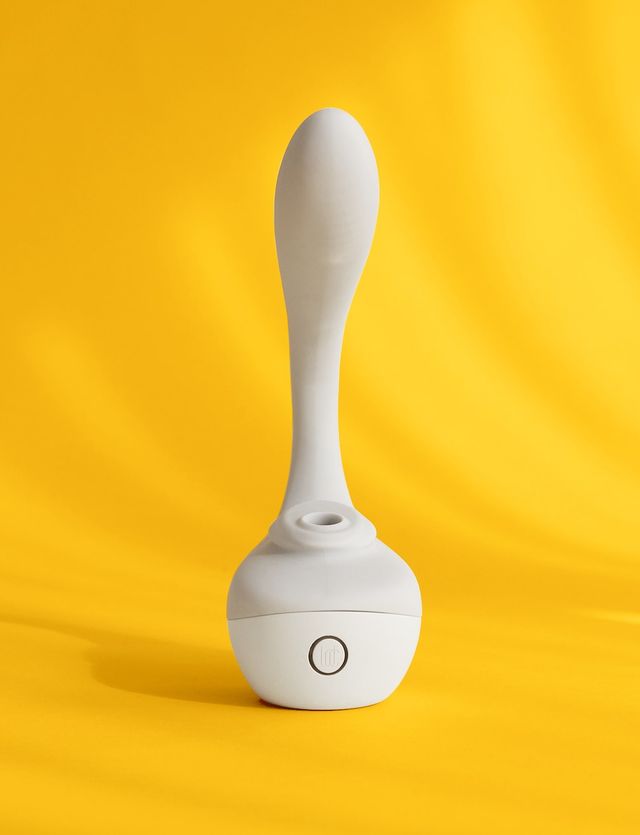
The Osé. Image courtesy of Lora DiCarlo.
The sexual liberation of CES can be attributed to Lora Haddock DiCarlo and her firm’s uniquely designed vibrator, the Osé. Developed with the help of engineers from the robotics lab at Oregon State University, the Osé uses micro-robotics to mimic human movements and stimulate the g-spot and clitoris simultaneously. While its users might welcome the technology, the Consumer Technology Association (CTA), which hosts CES, did not.
Her startup was given a CES innovation award for a prototype of the Osé, but, two months before CES 2019, had the award revoked. Whereas, a CTA spokesperson told one outlet that the device “didn’t fit into any existing product categories,” Haddock claims the CTA deemed the product to be “immoral, obscene, indecent, profane or not in keeping with CTA’s image.”
This came despite the fact that sex toy maker OhMiBod has been at CES every year since 2011 and pornography producers Naughty America demoed virtual reality products at the event in 2019. Haddock suggested that the revocation of the award reflected a gender bias in the tech industry, while Lynn Comella, an associate professor of gender and sexuality studies at the University of Las Vegas, argued that the trade show was out of touch with the technological evolution of the (female-led) sex toy industry. Given the presence of “booth babes” at CES and the general gender (and race) biases in tech overall, neither argument would be too surprising.
Regardless of the reason why Haddock’s award was revoked, it has since been reinstated and her firm pre-sold over 10,000 Osé units in December. CES is using 2020 as a trial run for sexual health and wellness products. In addition to the Osé, Haddock’s firm will be showcasing two new products alongside numerous other companies that will be presenting vibrators, lube and solutions for premature ejaculation, among other things.
The lifting of the ban will also be impacting the 3D printing firms exhibiting at CES, which will include Formlabs, whose partner, Dame Products, will be showing visitors how it used 3D printing to speed up time-to-market. Dame’s flagship product, Eva, is a hands-free vibrator meant to provide clitoral stimulation, with or without a partner.

Eva was prototyped with 3D printing and launched on Indiegogo, allowing the Brooklyn startup to get off the ground without traditional overhead expenses. It also made it possible for Dame to quickly iterate product designs, thus speeding up delivery to market. As a result, Dame is already on the second generation of Eva and has released a number of other items for sexual health and wellness.
Janet Lieberman-Lu, co-founder and CTO of Dame Products, said of her firm’s presence at CES, “We’re excited to be joining Formlabs at our first CES while the CTA is considering whether to keep sextech as a category. Vibrators are consumer electronics – they’re personal care items like electric toothbrushes and razors – so they deserve to be showcased in the same venues.”
Join the discussion of this and other 3D printing topics at 3DPrintBoard.com.
Subscribe to Our Email Newsletter
Stay up-to-date on all the latest news from the 3D printing industry and receive information and offers from third party vendors.
Print Services
Upload your 3D Models and get them printed quickly and efficiently.











You May Also Like
How Metal Additive Manufacturing Is Reshaping the Future of Aerospace and Defense Engineering
Additive manufacturing (AM) is steadily changing the way we think about producing metal parts for aircraft. Whilst aerospace and defense companies have been using metal AM for over twenty years,...
The AM Adoption Problem No One Models
Through its short history, Additive Manufacturing has been presented to the investment community as a classic high growth technology story. Manufacturing is a multi-trillion-dollar market. Even a small percentage looks...
The Business of Customized Sports Equipment: How 3D Printing Is Changing Athletic Gear
For years, 3D printing in sports has been linked mostly with prototypes, concept shoes, and one-off experiments for elite athletes. Helmets, cleats, and footwear midsoles often took over the headlines,...
The Maritime Industrial Base is on Full Display at Additive Manufacturing Strategies 2026
2025 is the year that the AM ramp-up by the U.S. Maritime Industrial Base Program (MIB) became common knowledge throughout the industry. But everyone who attended AMS 2024 was already...