
Henkel & Shapeways: Large-Scale Manufacturing with Loctite Materials

Together, Henkel and Shapeways are reaching for bigger and better solutions in 3D printing, complementing each other in partnership to expand large-scale manufacturing of Loctite materials. The two companies will be exhibiting at Formnext, presenting more about their work together from November 19-22 in Frankfurt.
 Germany’s Henkel is a global adhesive technology leader, while Shapeways is undeniably one of the leaders in product creation, offering a platform for others to see their ideas fabricated on demand. As accessibility and affordability in 3D printing continue to sweep the world, the two companies are on a mission to help other companies integrate 3D printing and 3D printed components into their production lines—and especially with the use of the next generation resins included in the Loctite brand. Shapeways provides both the technology and capability for enhancing materials and presenting even greater accessibility to industrial users.
 Currently, the two companies are launching the ‘Loctite Powered by Shapeways’ multi-step program, which allows users to order predefined Loctite demo parts, including a new photopolymer for fire safety standard UL’s 94V-0.
“We are excited about the collaboration with Shapeways as a leading technology platform for customized 3D printing solutions,” explained Philipp Loosen, Head of 3D Printing at Henkel. “Combining Shapeways’ technology and production expertise with our materials know-how and industry access enables a powerful combination for the large-scale 3D printing of customized Loctite parts. Based on the partnership, we will launch a digital platform leveraging novel opportunities to its global customers for Loctite solutions in 3D printing through Shapeways’ existing platform integration.”
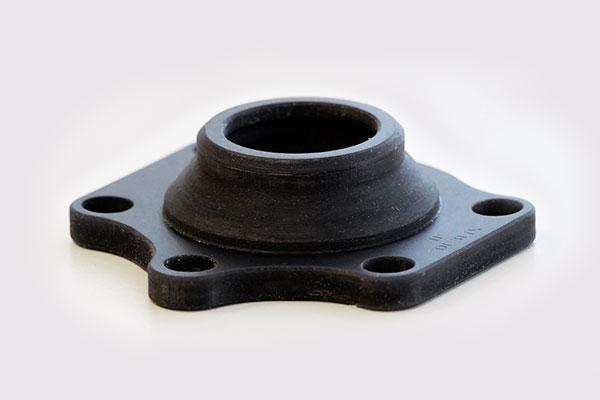
Loctite 3D Printing 3870 High Impact Bearing Cover
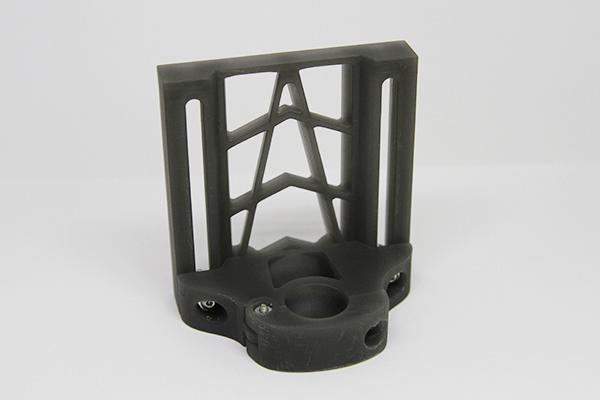
Loctite 3D Printing 3172 Tough High Impact Gray Robot Bracket
Both Henkel and Shapeways have been in the news recently. Henkel—a 143-year-old company—has continued its presence in the 3D printing market, further strengthening it with their Loctite brand and division. They continue to operate the bulk of their global portfolio in other technology, innovation, and branding to include adhesives, laundry, home care, beauty, and more. They also continue to lead as a force in sustainability.
As the two powerful forces combine resources in working together, they will be able to build on the strength of Shapeways, with factories and offices in New York, the Netherlands, and a network of other partners around the world. Shapeways has continued its dynamic presence, with a recent e-commerce integration with Etsy, a customized jewelry collection, and accelerated expansion.
For the future, the 3D printing partnership is on a mission to continue enhancing the functionalities they have created, ultimately allowing customers for Henkel to order industrial Loctite parts. If you will be attending Formnext next week, find out more about their new program at Hall 12.1, Booth C41.
What do you think of this news? Let us know your thoughts! Join the discussion of this and other 3D printing topics at 3DPrintBoard.com.

Loctite 3D Printing 3860 High Temp Exhaust Manifold
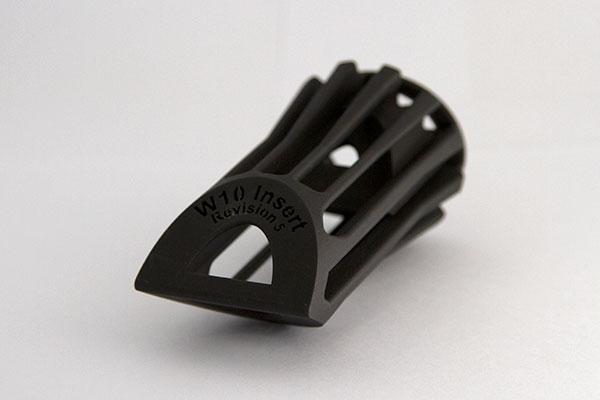
Loctite 3D Printing 3843 Tough HDT80 Black Puck Adapter
Subscribe to Our Email Newsletter
Stay up-to-date on all the latest news from the 3D printing industry and receive information and offers from third party vendors.
Print Services
Upload your 3D Models and get them printed quickly and efficiently.













You May Also Like
10 Years of Multi Jet Fusion: Onsite at HP’s Vancouver, Washington Facility
At this year’s RAPID event in Boston, HP Additive Manufacturing Solutions celebrated ten years in the additive manufacturing (AM) market. The company ushered in the milestone with several innovations, including...
These 3D Printed Lattices Can Sense Damage Before Failure
A new paper, “Full-Field Damage Monitoring in Architected Lattices Using In situ Electrical Impedance Tomography,” points to lattices being able to detect damage. This could really help composites in critical...
3D Printing News Briefs, October 3, 2026: Hypersonics, Hotends, & More
We’re starting off with defense in this weekend’s 3D Printing News Briefs, as Titomic was awarded a $5 million U.S. defense contract, and VulcanForms announced a partnership with Specter Aerospace...
3D Printing News Briefs, October 1, 2026: Defense, Enclosures, & More
In today’s 3D Printing News Briefs, we’re starting with defense news, first from Massivit and then from AML3D. Then we’ll move on to U.S. manufacturing of a new large-format LPBF...

























































