3D Printing Industry Experts Interview With Ricky Solorzano Co-Founder and CEO of Allevi

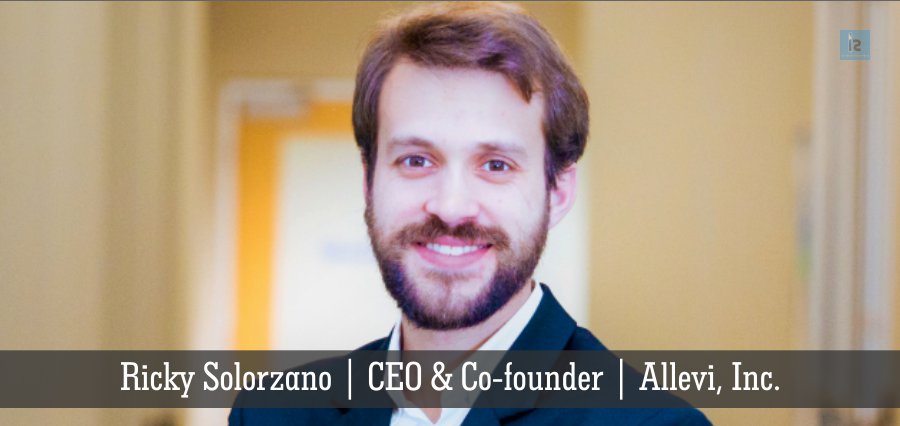
Ricky Solorzano is the Co-Founder and CEO of Allevi. Ricky is looking to combining IoT, organ engineering, and 3D Printing to bring bioprinting solutions to the World, Space, and Beyond. Allevi, Inc. believes 3D tissues will have a huge impact on humanity and create an entire new industry. They want to help scientists create more accurate hearts, lungs, and even brains in the lab. Users are automating the creation of tumor models, printing vasculature within 3D gels, and achieving physiological markers unseen before in tissues.
Explain how you got to your current state in life?
Following my passion got me to this point. It was really about pursuing tissue engineering and thinking it had the possibility to change the world. At first I thought about medical school, but then I had a chance to start a company which was really cool.
What is your educational background?
I went to bioengineering school and worked in a tissue lab. I learned about geometry and how tissue engineering is important. I also took an entrepreneurship class in college. It opened my eyes to different ways one can affect the world around me.
Are startups on the cutting edge vs universities?
Our value is giving the scientist the ability to execute the idea. It is important for us to give people value and for them to bring theirs. It’s the combination of this co-creation that really pushes the fields forward.
What is your value proposition?
We are able to have a lot of power go into a bioprinter. We make them very friendly and easy to use still. We are abstracting the complexity of a bioprinter to simplicity.
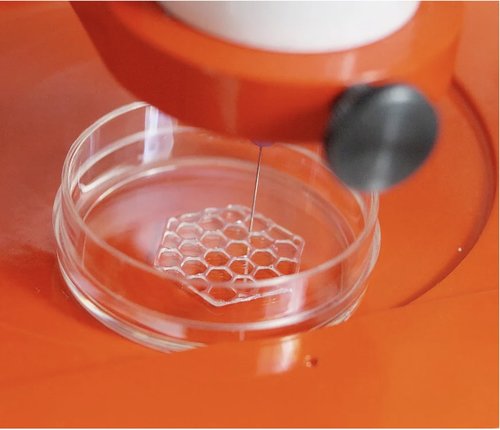
Allevi
What are future thoughts on this industry?
More and more tissues will be in the drug testing space. There will be more and more adoptions in investigative PIs (private investigators) to have a bioprinter within their labs. More companies will realize that it is important to have one in their labs. It is important to apply geometry to biology.
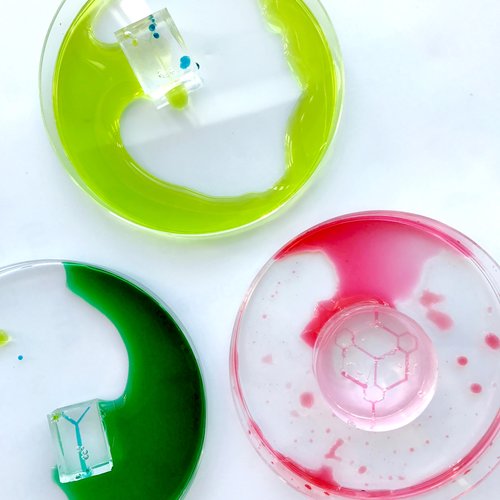
A lot of people within the industry of bioprinting are focusing on the importance of geometry applied to biology. Could you explain this a bit more?
Hearts need to be aligned. Shapes need to be consistent when created. It causes an organ or body part to be functional or not. Without geometric properties being maintained, parts will not work as efficiently as they could.
What would you do outside of this if you were not running Allevi?
Tissue engineering product development is probably where I would be. Being able to commercialize things is great way to make an impact. I have been able to learn this really well and continue.
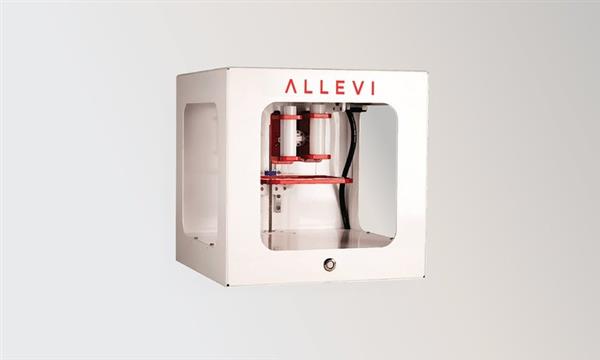
Allevi Dual Extruder
What skills should people be looking into to be in this industry?
Be passionate about a specific direction. If you are passionate about using a bioprinter, work as a bioengineer. It is really important to have a skill set within biology and biomaterials. I think every field can contribute, it just matters what makes you personally excited.
What is the toughest obstacle in terms of work?
Discovery and where do we go. It is hard to figure out what the next step is. We do not have a clear guidance on what to do. It is important to understand the industry as a whole and where it is progressing.
Subscribe to Our Email Newsletter
Stay up-to-date on all the latest news from the 3D printing industry and receive information and offers from third party vendors.
Print Services
Upload your 3D Models and get them printed quickly and efficiently.











You May Also Like
AM Drilldown: the Beginning of 3D Printing’s Next Phase in the Energy Sector
For much of the last decade, many have pushed an unjustifiably optimistic view of global energy consumption, along the lines of, fossil fuels are “on their way out.” Sadly, this...
Mikhail Gladkikh on Digital Inventory: “Think of It as Netflix for Manufacturing”
As manufacturers continue looking for ways to reduce supply chain risk, additive manufacturing (AM) is increasingly being discussed as more than just a production tool. Across aerospace, energy, defense, and...
ROBOZE Buys Dimanex Assets to Build “Physical AI” Platform
Dutch firm Dimanex got its start as an MRO platform for the railways. The company had a contract with the Dutch Army in 2018, and later that year signed one...
3D Printing Financials: Xometry Surges After Record Quarter and Siemens Deal
Shares of Xometry (Nasdaq: XMTR) surged on Thursday, May 7, after the company reported record first-quarter 2026 results and announced a major partnership with Siemens. The stock climbed as much...