3D Printing News Briefs: March 1, 2019

On this first day in March, we’re sharing business and dental news with you. Markforged is helping businesses speed up and facilitate their 3D printing adoption with its new Additive Manufacturing University, and 3DEO is more than doubling its production capacity this quarter. Lumi Industries has entered into a distribution agreement with Harzlabs for 3D printing dental resins, and Renishaw is leveraging Polygonica for its dental applications.
Markforged Announces Additive Manufacturing University
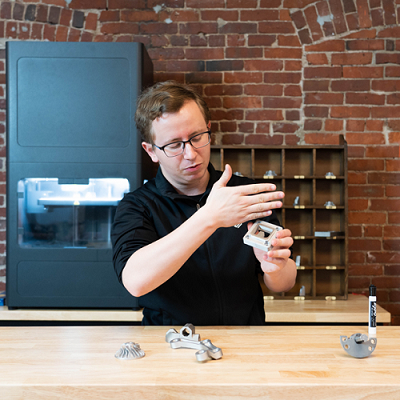 Boston 3D printer company Markforged announced a new program this week that’s meant to help large manufacturing businesses facilitate and accelerate their 3D printing adoption. Its Additive Manufacturing University was built to help companies learn some of the skills they’ll need to design for additive manufacturing, manage the 3D printing process, find new applications for the technology, and successfully build businesses cases for replacing the lengthy, expensive manufacturing processes traditionally used with 3D printing. There are three main ways for companies to take advantage of the Markforged Additive Manufacturing University: onsite at Markforged for single or multi-day workshops; certification and training delivered at a customer’s own facility; and the free, on-demand Markforged Learning Library.
“Markforged Additive Manufacturing University is really about inspiring industry-wide innovation. Once we’ve helped engineers, designers, and the manufacturing industry build a strong foundation of additive manufacturing skills, the potential is nearly limitless,” said Andrew de Geofroy, the Markforged Vice President of Application Engineering.
3DEO Continues Its Growth in 2019
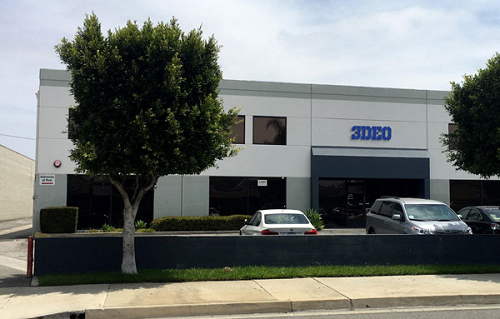 Metal 3D printing company 3DEO, Inc., based in Los Angeles and founded in 2016, grew a lot last year, having used its patented Intelligent Layering Technology to 3D print and ship over 30,000 paid parts to customers in multiple industries in 2018. It appears that this growth isn’t slowing down either, as the company is more than doubling its production capacity this quarter to meet customer demand with its proprietary metal 3D printers. It’s only the first day of March, and 3DEO has already locked down two more customer production orders that are scheduled for delivery this year, one for 24,000 pieces and another for 28,000.
“By all measures, 3DEO is rapidly expanding to fill a large void in the market of small complex metal parts. Customers are validating our technology across a variety of industries and we are either in production or quickly moving to production with many clients,” said Matt Petros, CEO and Co-Founder of 3DEO. “Additive manufacturing is finally competing directly with traditional manufacturing, enabling significant volumes to shift over to AM. It is a very exciting time for 3DEO, metal additive manufacturing and our customers.”
Lumi Industries and Harzlabs Announces Dental Distribution Agreement
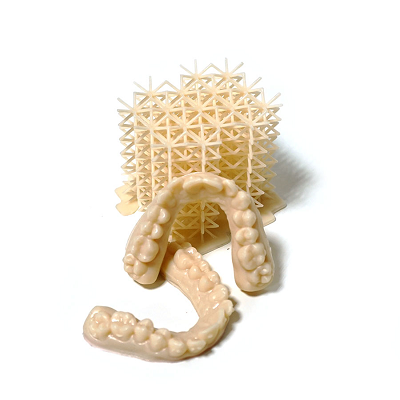 Russian startup HARZLabs, which manufactures resins, recently had a successful European launch at formnext 2018. The company keeps environmental protection in work spaces and the healthcare of operators at the forefront by using high quality raw materials that they say give their 3D printing resins a low rate of toxicity, with hardly any odor. This means they claim that they can be used safely in naturally ventilated laboratories, without requiring a dedicated evacuation system.
Now, Italian DLP 3D printing company Lumi Industries has entered into a distribution agreement with HARZLabs for its professional dental resins, and will be distributing the materials at a competitive price through its online store in 1 or ½ kilo leak-proof sealed bottles. The line of 3D printing dental resins is currently under certification, and includes Dental Cast, heat resistant Dental Yellow Clear, transparent and low-viscosity Dental Clear, and Dental Sand A1-A2, which is perfect for highly detailed prints.
Renishaw Leveraging Polygonica for Dental 3D Printing
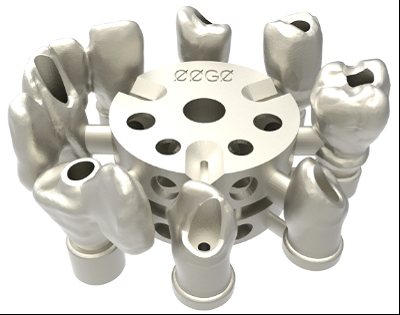 3D printing company Renishaw manufactures advanced 3D printers and software, but it also produces crowns and bridges through its dental services business. Renishaw leverages mesh processing software Polygonica to enable more reliable automation for this particular application, which used to be completed with lost wax casting and CNC milling processes. David Turner, Renishaw’s Software Development Manager, explained that the company runs into mesh integrity issues with small holes and gaps, non-manifold bodies, floating shells and voids, and incorrectly oriented triangles.
“The amount of mesh detail is really key to us because we’ve got tens of thousands of parts coming in monthly. That takes up a lot of server space plus the amount of bandwidth it takes to shift these parts around our manufacturing system is huge. Also, the amount of time to process those parts and create laser paths that we can actually then build the parts with goes up massively,” Turner said.
“Polygonica helps us reduce the amount of data in the mesh whilst guaranteeing not to lose important detail.”
Turner also said that Renishaw uses Polygonica to help with other mesh modeling needs, such as product identification and tracking, creating nesting algorithms, hub placement, and creating abutments. Renishaw also used Polygonica to develop its ADEPT craniomaxillofacial design tool for 3D printing, which you can learn more about in the following video:
Discuss these stories and other 3D printing topics at 3DPrintBoard.com or share your thoughts in the Facebook comments below.
Subscribe to Our Email Newsletter
Stay up-to-date on all the latest news from the 3D printing industry and receive information and offers from third party vendors.
Print Services
Upload your 3D Models and get them printed quickly and efficiently.












You May Also Like
How Does Nike’s 3D Printing Approach Fit Into Its Restructuring Plan?
Shares of Nike stock hit all-time highs in late 2021 but have cratered in the years following, with the company losing nearly 80 percent of its market cap since peaking....
AM Demand Signals: Global Grid Resilience, Part 2
The nature of the AI boom seems no clearer despite its persistence, yet it persists. For one thing, as I’ve discussed before, people really seem to dislike data centers. American...
The Part Is Only Half the Story: Why 3D Printing Needs a Digital Thread
A 3D printed part can generate a lot of information. The challenge is keeping track of it. Manufacturers need to know which design was used, what material went into the...
AM & National Competitive Advantage, Part One: the Real Problem with US Manufacturing
The problem with US manufacturing is the productivity growth rate. Depending on the source, US manufacturing productivity has either been flat or slightly declined since 2010. Before going any further...