Philippines: Department of Science and Technology Opens Additive Manufacturing Facility



3D printing continues to take hold in the Philippines, and government officials from the Department of Science and Technology (DOST) are embracing technology with the unveiling of the first Manufacturing Centre (AMCen) in the Philippines, where they plan to develop not only in hardware, but also related processes, and 3D printing materials.
Philippine officials are following the Industry 4.0 model, working to develop 3D printing and additive manufacturing processes within their country to include:
- Aerospace and defense
- Biomedical / hardware
- Printed electronics
- Agricultural machinery
- Automotive
AMCen will feature two separate research facilities:
- The Multiple Materials Platform for Additive Manufacturing (MATDEV) – a laboratory-scale facility for design and materials development
- The Research on Advanced Prototyping for Product Innovation and Development using Additive Manufacturing Technologies (RAPPID-ADMATEC) – responsible for creating innovation designs and rapid prototypes and focusing on 3D printing with metal powders. Scientists will also develop methods for fabricating, repairing and maintaining older or obsolete parts.
Researchers will be testing further AM processes with a variety of materials too like ceramics, polymers, nanomaterials, and combinations thereof. They plan to harness advantages of 3D printing like overall affordability, speed in production, and less waste of materials.
{Photo credit: OMLC)
“Additive manufacturing has limitless potentials–from aircrafts and automobile to medical and fashion applications–it is possible to create products for the same or lower cost without compromising quality. We are hopeful that with the establishment of AMCen we can see more researches geared towards this cutting-edge technology,” said Dr. Enrico C. Paringit, Executive Director for the Philippine Council for Industry, Energy, and Emerging Technology Research and Development (DOST-PCIEERD).
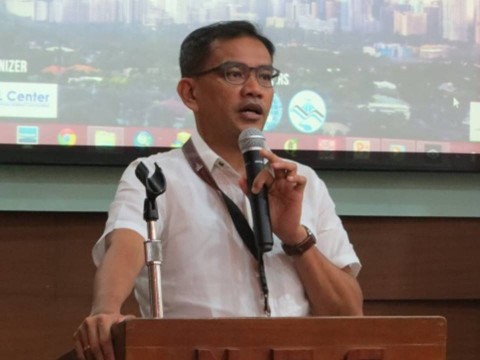
While the Philippines is already innovating in many industries with 3D printing, they plan to strengthen and expand efforts further at the facility, along with reaching out to academia within the country and enhancing research and development too.
Dr Rigoberto Advincula, Balik Scientist and Case Western Reserve University Professor, is slated to lead the new 3D printing center, along with researchers coming together from both the Industrial Technology Development Institute (ITDI) and the Metals Industry Research and Development Centre (MIRDC). Research and development efforts will strive to improve in quality and performance of the products created through 3D printing and additive manufacturing, along with enhancing strategies in manufacturing for the Philippines.

[Photo credit: OpenGov Asia]
What do you think of this news? Let us know your thoughts! Join the discussion of this and other 3D printing topics at 3DPrintBoard.com.
[Source / Images: OpenGov Asia; Republic of the Philippines]Subscribe to Our Email Newsletter
Stay up-to-date on all the latest news from the 3D printing industry and receive information and offers from third party vendors.
Print Services
Upload your 3D Models and get them printed quickly and efficiently.













You May Also Like
3D Printed Chip Packaging Specialist XTPL Enters Japanese Market
The additive manufacturing (AM) industry naturally wants to move beyond prototyping to production at scale, and the industry is certainly starting to demonstrate success with that objective, especially in Asia....
UT Researchers Use 3D Printing to Develop “Tabletop EUV Lithography” Process
Photolithography, the semiconductor manufacturing process whereby lasers transfer patterns onto chemical layers coating a substrate, is one of the most amazing industrial processes humanity has ever created. It is also...
3D Printing News Briefs, May 30, 2026: RIMPAC 2026, Acquisition, Ceramic Implants, & More
We’re kicking things off with materials news in this weekend’s 3D Printing News Briefs. Then it’s on to a hybrid manufacturing system for a maritime exercise, an expansion of industrial...
The University of Utrecht: “3D Printing Could Change Who Gets to Become a Manufacturing Power”
For decades, manufacturing has mostly been controlled by countries with huge factories, lower labor costs, and industrial systems that took years, sometimes decades, to build. But Utrecht University human geographers...