Launcher & AMCM Develop Largest Known 3D Printed DMLS Rocket Engine Part


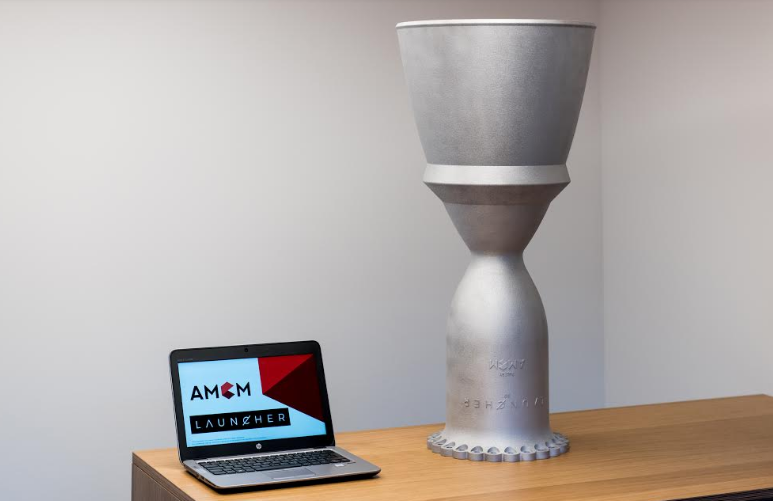
Launcher and AMCM have just announced successful production of a large single-part 3D printed rocket, now available for direct purchase from aerospace companies. The E-2 liquid rocket engine chamber was created on AMCM’s M4K 3D printer—a customized EOS M400 series machine that can fabricate parts up to 45x45x100cm. This rocket features engine thrust with 10-ton force (22,000 lbf), height of 85cm (33.5 inches), and diameter of 40 cm (15.7 inches).
(Photo Credit: Launcher/John Kraus)

(Photo Credit: Launcher/John Kraus)
In a recent press release sent to 3DPrint.com, the Launcher team states that 3D printing both the rocket chamber and nozzle together as one part allows for the highest performance in cooling, along with reducing part count and complexity in production—along with other typical but extremely enticing benefits such as affordability and speed in manufacturing. Functioning as part of the EOS group, AMCM produces customized AM machines, and Launcher is the first customer of the AMCM M4K. Last we checked with the Brooklyn-headquartered space startup, they well re just beginning development and testing of 3D printed rocket engines and components.
AMCM is known not only for their AM manufacturing prowess, but also for employing a specialized team of mechanical engineers responsible for custom machine development, with over a dozen projects completed so far. AMCM also designs and constructs laser and optical systems, continuing to push boundaries in innovations spanning multiple industries.
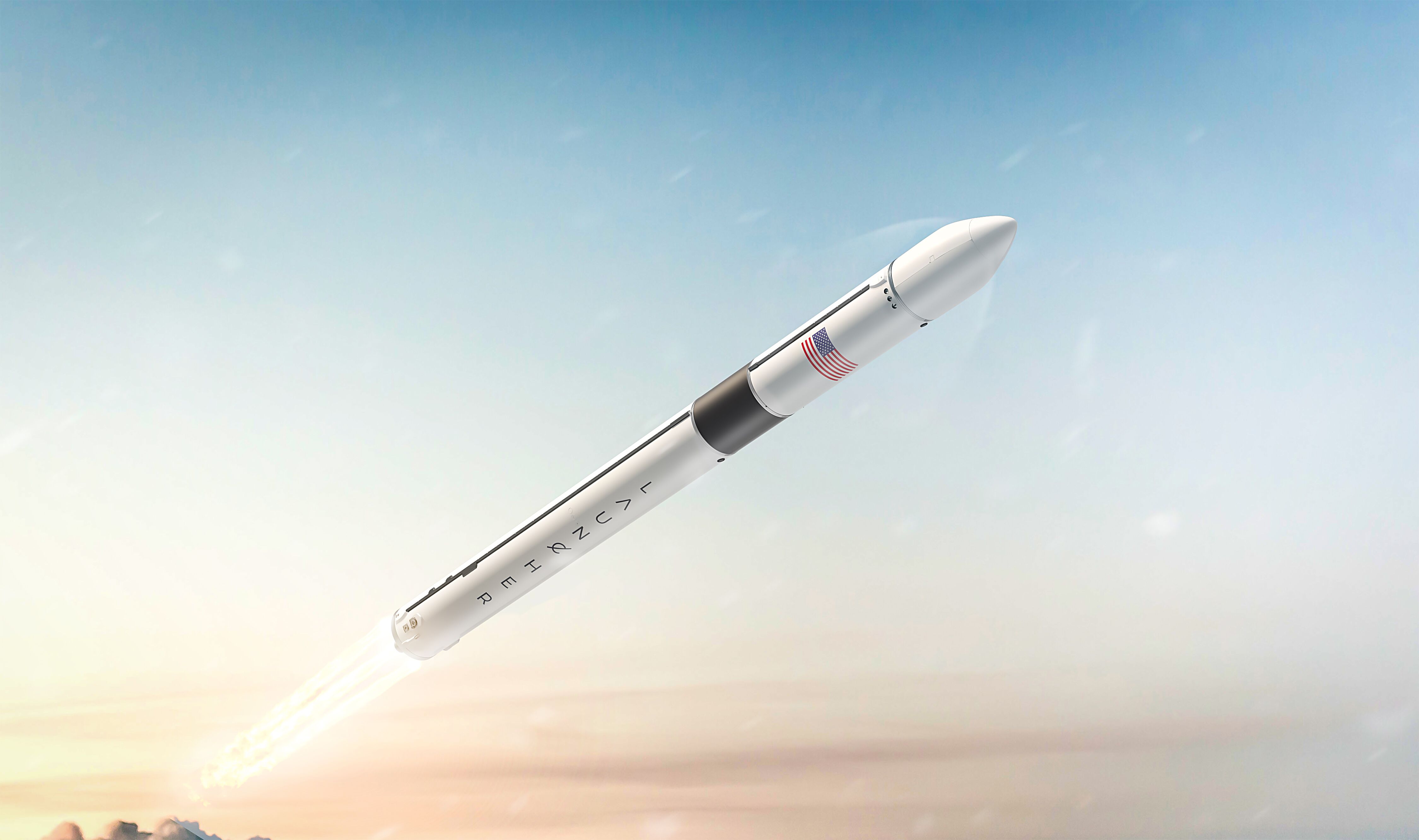
While we don’t know what type of influence this type of rocket will have on aerospace overall as Launcher was only founded a couple of years ago and doesn’t plan to put a test vehicle in orbit until 2026, 3D printing technology has undeniably infiltrated both aerospace and aeronautics (plus just about every other industry imaginable). We have followed countless stories regarding 3D printing and space, however, with the technology expected to play a role in everything from creating spaceship parts to making life for astronauts easier (even in uniform fabrication) and colonizing homes on the moon or on Mars. Along with that, 3D printing in space—once a staggering concept—is now almost an expected part of International Space Station activities as astronauts find maintenance easier in fabricating on-demand tools, and even dabble in bioprinting as zero gravity benefits are further explored.
Orbex, headquartered in London, is another company recently endeavoring to put 3D printed rockets into space, and they may also be vying for the envied industry slot of having made the largest known, single-part design using the SLM 800 3D printer for large scale production parts. They’ve now been pipped by a larger Launcher part. Let’s hope we have a 3D printing space race on our hands. The UK spaceflight firm may have the cash since they recently secured £30 million ($39.6 million) in funding for continued development of their orbital space launch systems.
What do you think of this news? Let us know your thoughts! Join the discussion of this and other 3D printing topics at 3DPrintBoard.com.
[Source / Images: Launcher]
[Photo Credit: Launcher/Alex Trebus]

(Photo Credit: Launcher/John Kraus)
Subscribe to Our Email Newsletter
Stay up-to-date on all the latest news from the 3D printing industry and receive information and offers from third party vendors.
Print Services
Upload your 3D Models and get them printed quickly and efficiently.













You May Also Like
3D Printing Financials: New Money Flows Into Medical, Industrial and AI 3D
Money continued to move into 3D printing in the second half of August. Hike Medical raised $22.5 million as it grows its 3D printed custom medical device business. Swiss additive...
3D Printing Financials: 6K Additive Sales Rise as Aerospace and Defense Demand Grows
6K Additive (ASX: 6KA) grew rapidly in the first half of 2026 as demand for its metal powders increased, particularly from aerospace and defense customers. The newly public company also...
HeyGears G1 Passes $14M on Kickstarter with Full-Color 3D Printing
HeyGears was started in 2015 and has been making value-driven Vat Polymerization systems for dental and home use. The company is marketing savvy and very driven. Now the firm has...
The Business Case for 3D Printed Stents
A new 3D printed stent developed at New York University (NYU) does not look like the devices doctors typically use today. Instead of a simple tube, the prototype resembles a...