Artec3D Scanning: Exact Metrology Works with Reading Historical Society to Preserve First World War I Monument in the US


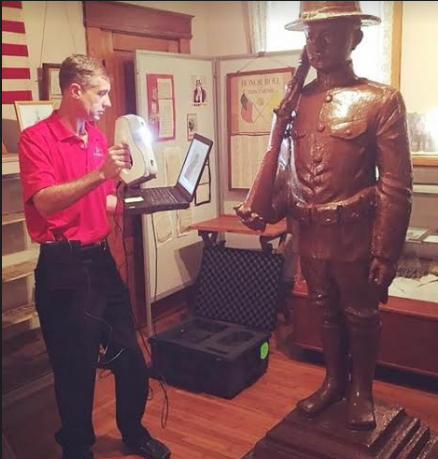
 The Exact Metrology team is continuing the ongoing preservation of history via 3D scanning with the Artec3D Eva 3D scanner. In their most recent project, they worked with the Reading Historical Society in Reading, Ohio to create an exact replica of the first World War I monument in the US, erected in 1919. The statue was scanned with the Artec3D Eva hand-held scanner and then 3D printed (using FDM technology) into mini 3D printed statues.
All hardware, software, and labor were provided to the Reading Historical Society for this project by Exact Metrology, although 3D printing was performed by a third party (upon delivery of an .stl file) since Artec3D’s specialty is in scanning only. Mesh repair may be a concern for some 3D scanning projects on this scale, but Chris Lafferty, of Artec Sales & Support at Exact Metrology, explained to 3DPrint.com that because they use Artec Studio 13 software along with Geomagic Wrap, any mesh issues are corrected easily.
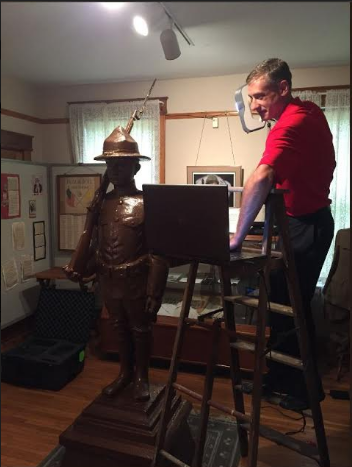
As we have seen with so many other collaborations using Artec3D devices, 3D scanners are invaluable in preserving artifacts because the process does not require any real human handling, aside from getting the works ready for scanning if necessary. Finding proper clearance around objects to complete scanning can be challenging but the process eliminates the potential for any further damage to items that in some cases may even be ancient.
For individuals who may be interested in 3D scanning an item or artifact, Lafferty imparts this advice:
“Depending on the project, the specifics of how to do this will range but basically all you need is to scan the object, process the data into a format that a 3D printer can recognize and have a 3D printer to print it out. You also need to have a passion for 3D data!”
The Artec3D Eva scanner works well for scans of medium size, including auto parts like wheels or exhaust systems, works of art, and nearly any object—even including those with black or shiny surfaces. Parts are scanned quickly and captured precisely, in high resolution. This device is suitable for a wide range of applications, including rapid prototyping, quality control exercise, medicine (for example, creating devices like prosthetics), and as in this case, heritage preservation.
Check out some of the other stories we have followed as other companies like NASA use the Artec3D scanner to build virtual reality training environments, medical device companies create custom chest implants for patients, and museums like the Stara Zagora relied on Artec3D to scan artifacts so they can make 3D models available to the public—highlighting specific catalogs of works that include pieces like sculptures, architectural works, and more.
What do you think of this news? Let us know your thoughts! Join the discussion of this and other 3D printing topics at 3DPrintBoard.com.
[Source / Images: Exact Metrology]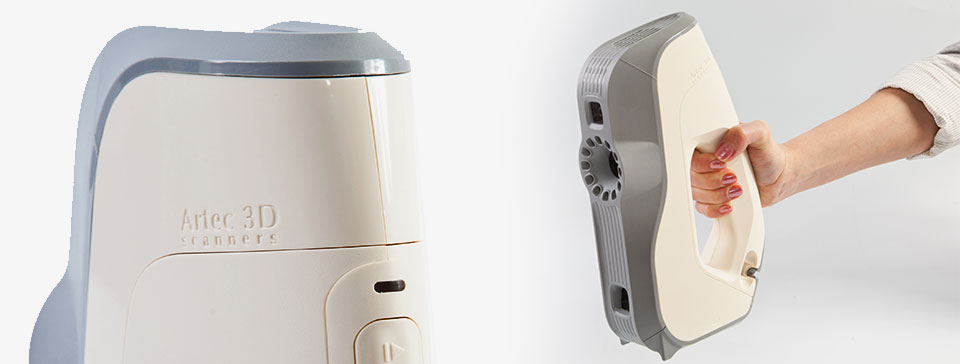
Subscribe to Our Email Newsletter
Stay up-to-date on all the latest news from the 3D printing industry and receive information and offers from third party vendors.
Print Services
Upload your 3D Models and get them printed quickly and efficiently.












You May Also Like
The Seminal Moment: Creality’s IPO Analysis & Possible Effects
Something super important happened just a few days ago, and too few people paid attention. Creality, a pioneer in low-cost desktop material extrusion printers, went public. Creality is now listed...
As Longevity Gains Momentum, Rem3dy Health Raises £14 Million for 3D Printed Nutrition
Longevity hack or healthcare trend? The answer may depend on who you ask, but investor interest in personalized nutrition is growing as consumers search for the next longevity hack. Now,...
3Dnatives to Present ADDITIV Metals 2026: Resolving Key Barriers to Scaling Metal Additive Manufacturing
As the metal additive manufacturing sector prepares for a massive leap—with market valuations expected to climb from $6.02 billion to $7.02 billion this year—the industry is shifting its focus from...
Stratasys Dental’s Negar Movahed Says They’re “Open for Partnerships”
According to “3D Printing for Dentistry 2025: Market Study and Forecast” by AM Research, the dental 3D printing market generated $5.2 billion in revenue in 2024—that’s nearly one third of...