‘Bugs Bunny’, 3D Printed Edible Bug Treats in Bunny Shapes – Created By German Design Student


While governments and scientists — from agronomists to engineers — are scrambling to conceive of ways to confront what seems like an inevitable world food crisis, looking for viable ways to feed a growing global population with dwindling resources, one German design student, Carolin Schulze, has devised a small but workable plan.
Schulze’s plan involves rethinking the basics of the average human diet, including core ingredients like meat 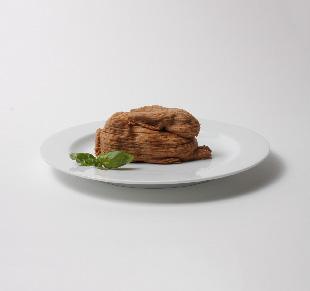 from mammals and fish. While it takes up to 13 pounds of grain to produce one pound of beef, the same amount of grain can yield nearly 20 pounds of mealworms. Schulze wondered what would happen if humans could overcome their aversion to consuming insects, a major and promising source of dietary protein. The solution she came up with was a clever one: Schulze produced apparently tasty, fried pastries using mealworms as the main ingredient.
The enterprising design student raised mealworms in small bins, harvesting them and then grinding them to a rough paste. She mixes the worms with grated onion and potato to create a soft dough mixture, which she transfers to an 8-inch-long cylinder that is inserted into the housing of her homemade 3D printer, which is powered by an air compressor. The 3D printer creates rabbit-shaped dough forms from the dough mixture, building them up layer by layer, with the completed object an approximately 3” by 1 ½” rabbit, which she then deep-fries in a light cooking oil.
Why mealworms? As Schulze points out, Westerners have an aversion to eating insects, which some Eastern cultures do not and have thus relied to varying degrees on bugs as excellent sources of dietary protein. By changing the form of the mealworm — basically, disguising it by giving it a clever and neutral shape and combining it with familiar foodstuffs like onions and potatoes and a dash of salt for seasoning — Schulze was able to make it palatable to her vegetarian and omnivorous friends alike, all of whom seem to have been her good-humored guinea pigs if the video she released with her project is any indication.
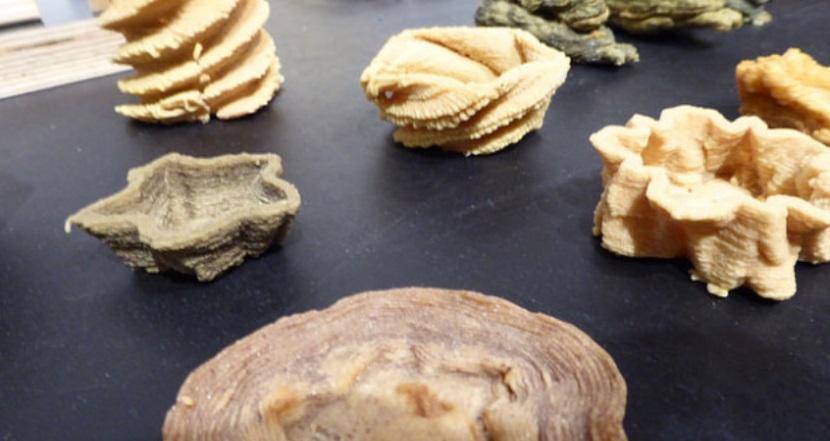
Schulze also created 3D printed mealworm pastries in the shape of grasshoppers as well as basket-shaped forms that can be filled with other ingredients (perhaps a bug pie?), but the rabbits were the stars of the show when she presented her project, “Bugs Bunny” (“Falscher Hase” in German) at Dutch Design Week in Eindhoven, Netherlands in late October. Schulze had already won the public design award and the design award for the most interesting experiment at the Burg Biebichenstein Art Academy, where she attends in Halle, Germany.
It’s probably somewhat telling that her project was not pronounced “most tasty,” but Schulze’s concept is ingenious in its resourcefulness. Surely those diners who think nothing of opting for the mystery meat of a typical fast-food burger restaurant would fare better on a steady diet of Sculze’s “Bugs Bunnies”!
Let’s here your thoughts on these interesting little treats in the 3D Printed Bug forum thread on 3DPB.com. Check out the video below, detailing the process.
https://vimeo.com/107787671
Subscribe to Our Email Newsletter
Stay up-to-date on all the latest news from the 3D printing industry and receive information and offers from third party vendors.
Print Services
Upload your 3D Models and get them printed quickly and efficiently.













You May Also Like
3D Printing News Briefs, August 8, 2026: Seawall Funding, Defense Capabilities, Supports, & More
We’re starting with business in this weekend’s 3D Printing News Briefs, then moving on to defense. We’ll move on to young 3D printing entrepreneurs, and finish with some research out...
The Barnes Global Advisors Lands BPMI Metal AM Database Contract
Other than workforce development, materials qualification is perhaps the greatest existing barrier to the scale-up of metal additive manufacturing (AM). Moreover, improving access to data on metals qualified for the...
EOS Joins the MAT‑H2 Consortium
EOS is joining the MAT‑H2 consortium. MAT is an EU-funded group that aims to do research into a hydrogen-led economy. The thinking is that hydrogen will be a clean energy...
Australian OEM AML3D Closes Record Year, Eyes $54M Global Sales Pipeline
The US Department of Defense (DoD) finally seems to be implementing a strategy it has spent years refining, centered on bringing its international allies and partners more into the fold...