IST Offers Solutions to Safely Recycle and Reuse Waste Solvents from 3D Print Finishing



Substances which dissolve a solute are called solvents – normally liquids, but these can also be gases and solids. Organic solvents are used in all sorts of everyday applications, such as in nail polish removers and detergents, paint thinners, and dry cleaning, and also in the pharmaceutical and chemical industries as part of purification processes and chemical syntheses.
 Solvents are also used in 3D print finishing when you’re working with resin, or even plastic filaments such as PLA or ABS. It’s important to make sure that these hazardous chemicals are recycled properly once you’re done using them in your 3D printing projects…we only have one planet to live on at the moment, and it’s our job to take care of it to the best of our ability. This is where International Surface Technologies (IST) comes in.
Based in Quebec, Canada, IST is one of the top manufacturers of industrial equipment and machines, and has been in business for over four decades. IST is well known for designing and building strong, reliable equipment that can hold up well in the harsh environments of the industrial sector, and has developed solutions for customers in a wide variety of industries, including aerospace, automotive and transportation, construction, energy and general manufacturing, metal transformation, and military.

IST offers many contract manufacturing and multidisciplinary engineering services, including prototyping, printed circuit board (PCB) designs, 3D modeling, process automation, and electrical, mechanical and computer-aided design (CAD). It also designs custom machines for all types of surface treatment requirements, ranging from sandblast systems and machines with computer controls developed for unique production processes to batch-type and continuous-flow solvent recycling solutions.
 The company manufactures solvent recycling technologies and washing equipment, including aqueous and ultrasonic cleaning systems, metal part-cleaning equipment, and solvent recyclers, under its registered ISTpure trademark.
According to the website, “ISTpure on-site Solvent Recycling System provides cost-effective solution for safely recycling solvents and other hazardous chemicals from industrial processes. Our systems are easy-to-use, require low maintenance and supervision, and are built with robust, corrosion-free stainless steel tanks.”
It’s important to note that all IST’s solvent recycling solutions are CSA approved in Canada and the US and are safe to use in a Class I, Division 2 classified locations.
Before recommending one of its solvent recycling systems, IST first evaluates a customer’s contaminants and solvents material safety data sheets (MSDS), as it is extremely important to determine if there are any harmful acids or nitrocellulose in the dirty solvent mix that cannot be treated in such a distillation process.
There are a few different ISTpure solvent recycling systems to choose from:
- SR Series Batch-Type Solvent Recyclers
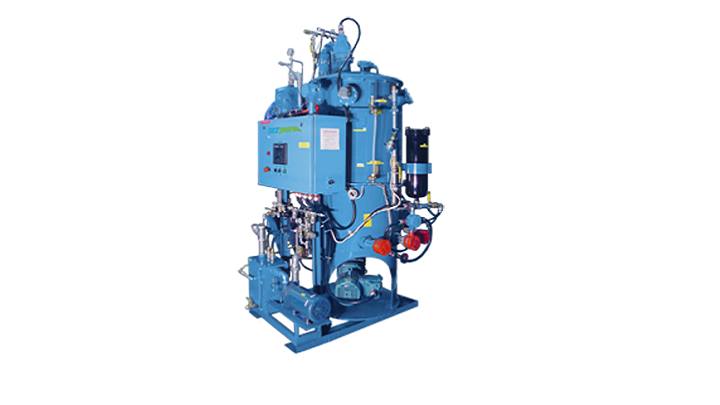
- CSR Series Continuous Flow Solvent Recyclers
- SRXC Series Distillation Columns
 The Batch-Type equipment, which allows for a total of two distillation processes daily including process setup and cool-down time, is available in tank capacities of 30, 60, 120, 180, and 240 liters. An optional vacuum system is available in order to increase the distillation process, or ramp up the performance when you’re dealing with more volatile solvents like acetone. In order to reduce energy consumption, vacuum systems can lower the boiling point of some solvents by up to 30%, making the process even more cost-effective.
CSR Series Solvent Recyclers, which come with vacuum pumps for safe solvent transfer, can provide you with a helpful continuous flow distillation process for recycling industrial solvents. These specific units are good fits for industrial companies that consume a very high amount of solvent each day.
The chemical Distillation Columns are fully automated, and are designed to separate chemicals, contaminants, and/or water from whatever chemical product is currently being purified. IST can tailor these systems to your specific production volume and chemicals blend.
-

- CSR Series Continuous Flow Solvent Recyclers
-
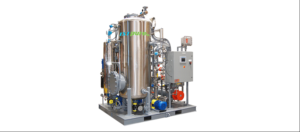
- SRXC Series Distillation Columns
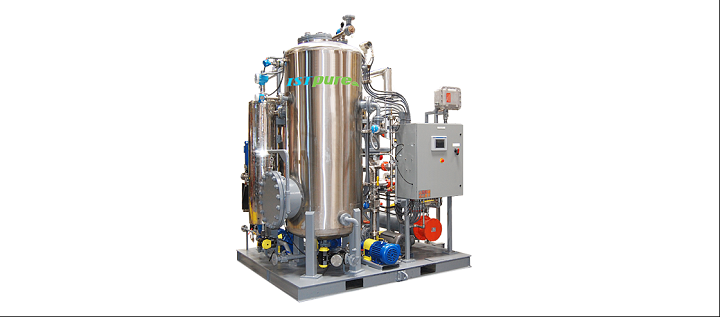
It’s been proven that the company’s ISTpure solvent recycling equipment can decrease solvent purchases by up to 95%, and hazardous waste disposal costs by up to 90%. IST said that most of its clients have achieved an excellent recovery rate of over 97% of pure solvent that’s been able to be recycled and reused in their processes; many have reported an Return on Investment (ROI) in as little as four to twelve months. You can use their ROI Calculator tool to estimate your payback period considering your solvent types and daily consumption.
So if you need to recycle solvents after you’re finished with the often necessary 3D print post-processing, IST is the place to go.
Discuss solvent recycling, 3D print finishing, and other 3D printing topics at 3DPrintBoard.com or share your thoughts in the Facebook comments below.
[Images: IST]
Subscribe to Our Email Newsletter
Stay up-to-date on all the latest news from the 3D printing industry and receive information and offers from third party vendors.
Print Services
Upload your 3D Models and get them printed quickly and efficiently.













You May Also Like
SWISSto12 Closes $70 Million Series C Round
Swiss satellite manufacturer SWISSto12 has closed a $70 million Series C round. This follows $84.8 million that the company received from ESA and ESA member states, and previous rounds that...
Rocket Lab Buys Iridium in $8 Billion Deal, Creating a New SpaceX Rival
Rocket Lab is buying Iridium for $8 billion in a cash-and-stock deal worth $54 per share. Shareholders will receive $27 in cash plus additional Rocket Lab common stock. The company...
SWISSto12 and HPS/LSS Build Unfurling Antenna for Next-Gen Satellite
SWISSto12 is to work with HPS/LSS. High Performance Space Structure Systems and Large Space Structures are two separate firms that work together on large antenna reflectors. The two will work...
Japan’s Space Compass Corporation Buys a SWISSto12 Satellite
Japanese firm Space Compass Corporation has agreed to buy a SWISSTo12 GEO optical data relay satellite. The compact Hummingsat will be used for Space Compass’ optical data relay service. Space...