Nano Dimension Announces New 3D Bioprinting Subsidiary to Develop Solutions for End Stage Renal Disease

 These days, when we hear about Israel-based company Nano Dimension, it’s generally news about the company’s highly anticipated PCB 3D printer DragonFly 2020, which 3DPrint.com recently had the opportunity to see at formnext 2016, CES 2017, and SOLIDWORKS World 2017. The company also recently announced that it received a grant to develop ceramic inkjet 3D printing technology. But not one to rest long, Nano Dimension has a new announcement: the 3D printed electronics leader is creating a new subsidiary in order to advance its new 3D bioprinting initiative.
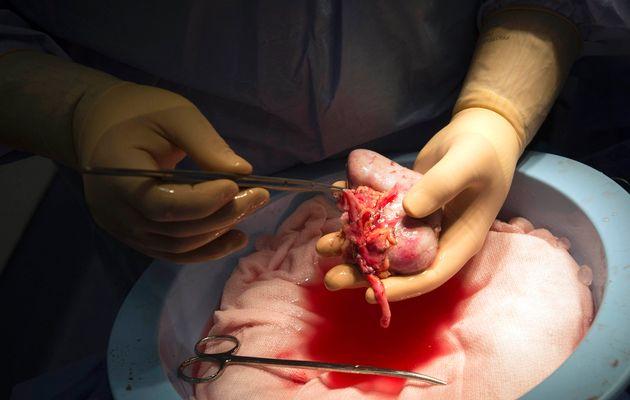
Thousands around the world await kidney transplants. [Image: Reuters]
Nano Dimension has been conducting market research into applications of its 3D bioprinting technology, and says that it will now be developing a platform to 3D bioprint both connective tissues and cells, which will be used to create biological structures that will function as human kidneys. The subsidiary will focus mainly on developing solutions for end stage renal diseases (ESRD) which ultimately lead to kidney failure.
Amit Dror, CEO of Nano Dimension, said, “We believe that our high-end 3D printing capabilities, together with our expertise in nano-chemistry and advanced materials, provide significant added value to the promising field of bio-printing. We look forward to bringing our know how and IP in multi-material 3D printing, and integrating it into the emerging world of 3D bio-printing. We believe that bio-printing platform with these advantages has the potential to enable the creation of very complex biological structures.”Amit Dror [Image: Nano Dimension]
![Amit Dror [Image: Nano Dimension]](https://3dprint.com/wp-content/uploads/2017/02/Amit-Dror-Nano-Dimension.jpg)
Medicare fees for ESRD services in the United States rose by 3.3% between 2013 and 2014, reaching an amount of $32.8 billion, according to the United States Renal Data System. The US Department of Health and Human Services reports that the country’s kidney transplant list, with roughly 98,000 current candidates, is continuing to grow, but that only 19,000 kidney transplants were performed last year, as the active waiting list is “five times greater than the number of available donor kidneys.”
 Nano Dimension’s new subsidiary is set to advance its 3D bioprinting initiative. We’ll be keeping an ear out as more information becomes available, but we do know that it will be seeking funding that is independent from Nano Dimension’s current leading work in 3D printed electronics.
There are some other big names currently working with 3D bioprinting and kidney disease, such as tissue engineering company Organovo, which is partnering with the Murdoch Children’s Research Institute for bioprinted kidney research. The University of Würzburg has been working on 3D printing different sizes and shapes of kidney phantoms, to determine how much radiation is necessary for optimal imaging, and a 3D printed kidney helped researchers prove that patients could have better luck passing kidney stones while riding roller coasters!
However, the solutions that currently exist for 3D bioprinting of tissue, at least to the best of Nano Dimension’s knowledge, have “significant barriers” in successfully creating tissues that will accurately mimic the functions of complex kidney tissues. But, the average cost of kidney transplantation is $334,000, according to a December 2014 Milliman research report, so the more companies working on kidney bioprinting solutions, the better. Discuss in the Nano Dimension forum at 3DPB.com.
Subscribe to Our Email Newsletter
Stay up-to-date on all the latest news from the 3D printing industry and receive information and offers from third party vendors.
You May Also Like
3D Printed Heat Spreader Could Improve Efficiency of Electronics
The low-hanging fruit for decarbonization has long been improving the efficiency of existing systems, hence the justification for LED lights and ENERGY STAR certified appliances. While such minor moves are...
3D Printing News Unpeeled: Marine Gearboxes, 3D Printed Motors and $1.7 Million in Seed Funding
UK based Equipmake just released their Ampere-220 e-axle system. The system, which is meant for high performance electric cars, was similar to one released on the Ariel HIPERCAR. It has...
CEAD Unveils 36-Meter-Long 3D Printer for Abu Dhabi’s Al Seer Marine
CEAD, a Dutch original equipment manufacturer dedicated to large-format 3D printers, has unveiled what it claims to be the world’s largest robotic arm-based 3D printer. At 36 meters long and...
3D Printed Biocomposites Could Help Reduce Marine Plastic Pollution
Concerns about the impact of plastic litter and microplastics in the oceans are at the forefront of environmental study. For decades, the marine environment has suffered from the degradation of...