Organovo Partners with Murdoch Childrens Research Institute for Bioprinted Kidney Research


 The name Organovo is one that instantly commands admiration, if not awe, from anyone familiar with it. The tissue engineering company is something of a hero within both the medical and 3D printing industries, and it will always be known as one of the pioneering organizations in the field of bioprinting for its exVive 3D printed liver tissue. Recently, Organovo announced its plans to develop an entire functional, transplantable 3D printed human liver, but amidst all the well-deserved attention the company is receiving for its bioprinted liver tissue, it’s important to remember that that Organovo isn’t a one-organ company – it’s working on much more than just the liver.
In 2015, Organovo announced that it had also developed 3D printed kidney tissue, an innovation for which it was awarded Popular Science’s “Best of What’s New” Award later that year. There’s little doubt that the technology will eventually result in a functional 3D printed kidney, and today, Organovo took another step toward that goal through a collaboration with Professor Melissa Little and the Murdoch Childrens Research Institute at the Royal Children’s Hospital in Melbourne, Australia. The partnership will work towards creating an architecturally correct bioprinted kidney for possible therapeutic applications.
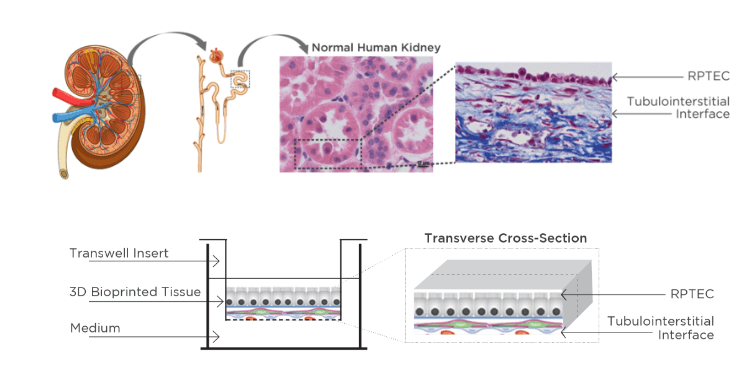
Organovo’s bioprinted kidney tissue allows thorough study into nephrotoxicity.
“Partnerships with world-class institutions can accelerate groundbreaking work in finding cures for critical unmet disease needs and the development of implantable therapeutic tissues,” said Keith Murphy, CEO, Organovo. “This collaboration with Professor Little’s lab is another important step in this direction. With the devoted and ongoing support of the Methuselah Foundation, leading researchers are able to leverage Organovo’s powerful technology platform to achieve significant breakthroughs.”
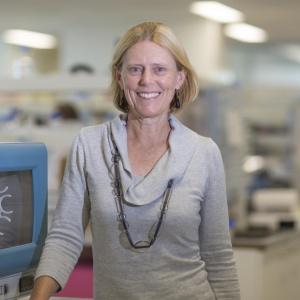
Professor Melissa Little
Professor Little is the Theme Director of Cell Biology at the Childrens Research Institute, and she heads up the Kidney Research Laboratory. Much of her research has focused on the molecular basis of kidney development, as well as renal disease and repair, and she has been internationally recognized for her studies on potential regenerative kidney therapies. She is also a Professor in the Faculty of Medicine, Dentistry and Health Sciences at the University of Melbourne.
“We have developed an approach for recreating human kidney tissue from stem cells,” said Professor Little. “Using Organovo’s bioprinter will give us the opportunity to bioprint these cells into a more accurate model of the kidney. While initially important for modelling disease and screening drugs, we hope that this is also the first step towards regenerative medicine for kidney disease. We are very grateful to Organovo and the Methuselah Foundation for this generous support, which will enable us to advance our research with the first Organovo bioprinter in the southern hemisphere.”
 The project is being funded by the Methuselah Foundation, a nonprofit organization dedicated to extending healthy life through tissue engineering and regenerative medicine. The foundation has supported Organovo’s work in the past as part of its University 3D Bioprinter Program, which is donating a total of $500,000 to be divided among multiple institutions for research projects involving Organovo bioprinters. The funds will cover bioprinter costs as well as key aspects of project execution.
“We at the Methuselah Foundation have been a long-time supporter of academic and industry research in 3D bioprinting, regenerative medicine, and tissue engineering,” said David Gobel, CEO, Methuselah Foundation. “Our University 3D Bioprinter Program puts Organovo’s breakthrough 3D bioprinting technology in the hands of the brightest scientists at tissue engineering centers of excellence.”
Discuss in the Organovo forum at 3DPB.com.
Subscribe to Our Email Newsletter
Stay up-to-date on all the latest news from the 3D printing industry and receive information and offers from third party vendors.
Print Services
Upload your 3D Models and get them printed quickly and efficiently.













You May Also Like
50,000 Orders and Counting: EPlus3D & Chinese AM Services Provider Are Scaling Liquid Cooling Solutions for AI Servers
An under-appreciated story driving the additive manufacturing (AM) industry this year has been the divergence between what’s driving the market in China and what’s driving it everywhere else. Let’s start...
Additive Manufacturing Has a Major Growth Opportunity; Trust Will Decide Who Captures It
After years of overpromising, the next phase of AM growth will be won by companies that consistently deliver what they say. When I entered additive manufacturing in 2014, after 15...
Seven Trends Reveal What’s Next for 3D Printing at TCT Shenzhen 2026
TCT Shenzhen 2026 opened on October 14 in Hall 15 of the Shenzhen World Exhibition & Convention Center in Bao’an, and ran through October 16. The event brought together equipment...
AM Investment Strategies 2026 Sets the Stage for AMS 2027
AM Investment Strategies 2026 Nov. 5 · 12 p.m. ET · Free online event RESERVE YOUR SPOT ↗ A one-hour online discussion featuring some of the biggest names in 3D...