Hoet and Aoyama Unveil New Line of Custom 3D Printed Eyeglass Frames for Yuniku

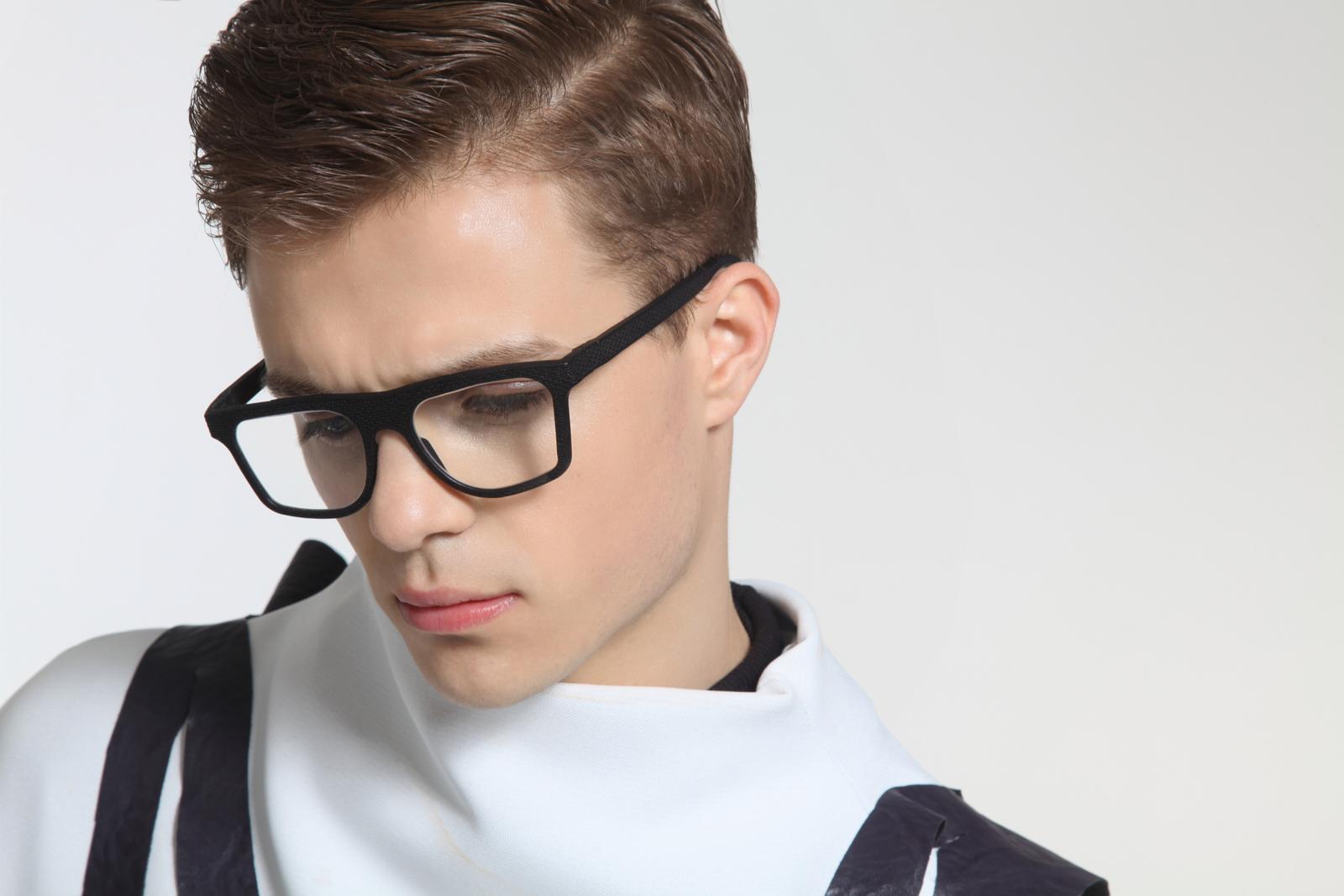
3D printed frames by Hoet
Tomorrow in Munich the doors will open at Opti, an international trade show for optics and design that attracts exhibitors and visitors from around the world. The show, which has been going on for ten years now, will dedicate a portion of its space to looking back at its own history and the groundbreaking products that have made it a center of attention for those interested in eyewear. But they aren’t going to be looking into their past so deeply that they won’t do what they have become known for: provide an opportunity to introduce the latest in cutting edge optics.
Last year, HOYA wowed us with the introduction of Yuniku, a system that allows for scanning a customer’s face, creating eyewear that has optimally positioned lenses, customizes the frame to fit both the lenses and the customer’s face, and finally actually 3D prints the frames themselves. This intriguing new method for the creation of custom eyewear was the result of a collaboration between HOYA, Hoet Design Studio, and Materialise. One of the hot new developments to look for this year comes from a partnership that includes Aoyama Optical in addition to Materialise, Hoet and HOYA. This latest collaboration in customized eyewear will be comprised of 3D printed frames and promises to be, well, eye-catching to say the least. This display will provide a glimpse at what is to be on offer when the Yuniku system is officially launched.
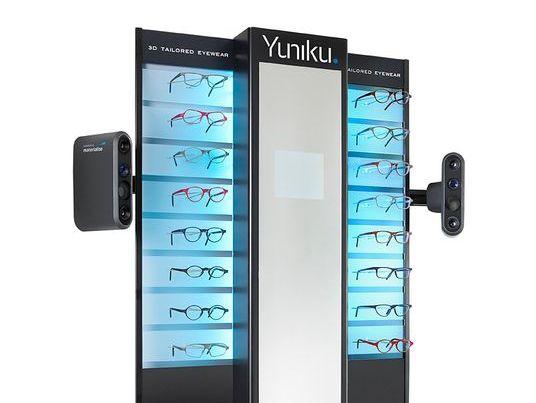
The Yuniku scanner [Image: HOYA Vision Care]
“Standardized production and a one-size-fits-all approach are no longer enough. We offer customizable options that speak directly to an individual’s tastes and preferences. Aoyama’s goal with this collection was to bring true mass customization to a luxury consumer-grade product.”
The idea of providing specific eyewear for each individual doesn’t, technically, make it unique, but the point appears to be, rather, that each individual is unique and, given the number of configurations of eyewear + facial type, mathematically that is almost the same thing. The beautifully shot black and white promotional video for Yuniku eyewear does an excellent job of showcasing eyes, the attribute that is most often obscured by glasses rather than supported by them. Unfortunately, it works against itself somewhat in that at no point during the video, or anywhere on their website, do any of the models actually wear glasses. In fact, only the briefest glimpse of the eyewear is given and the majority of the video dedicated to artistic pandering.
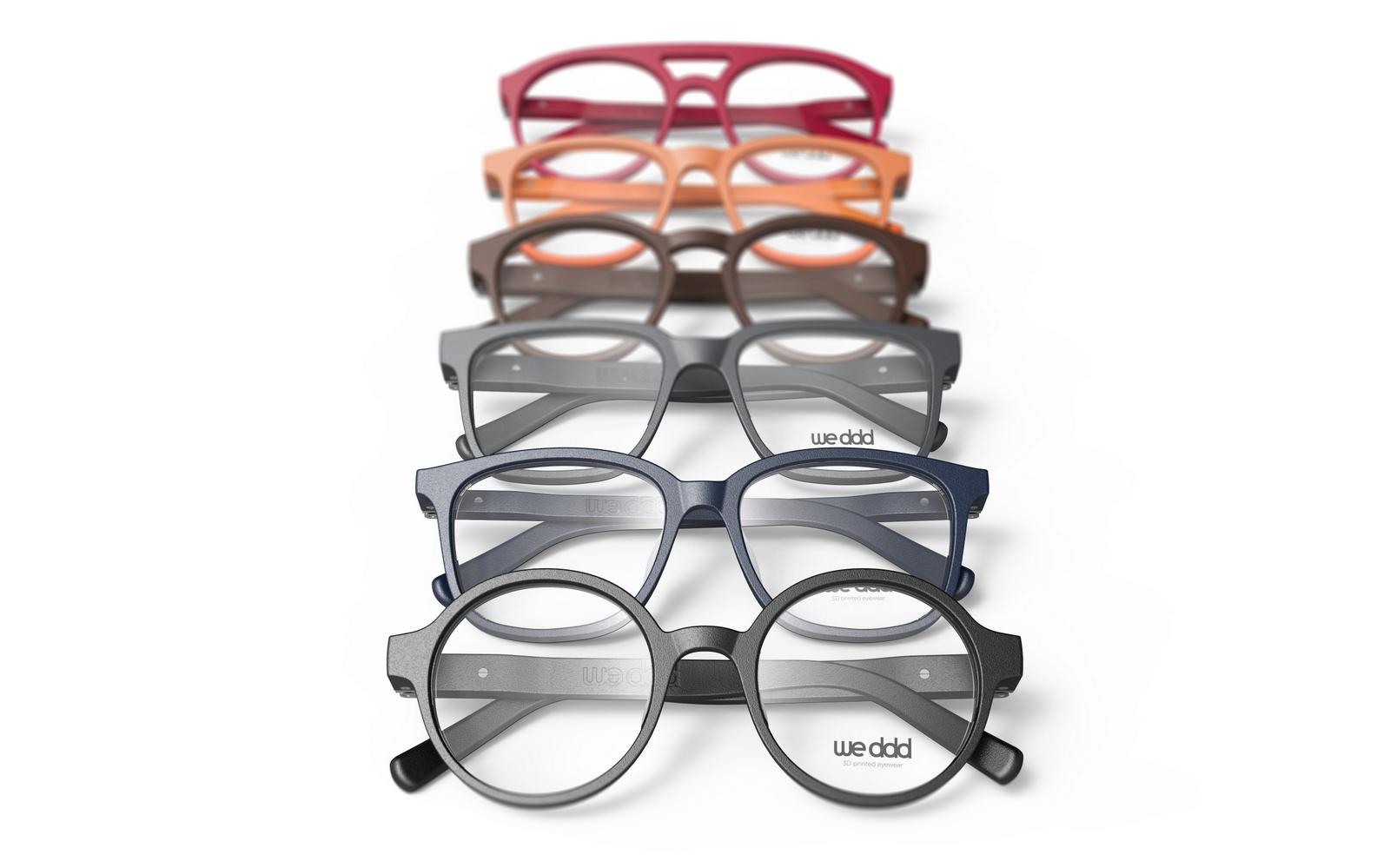
Aoyama’s We DDD Collection, produced in collaboration with Materialise [Image: Aoyama]
Subscribe to Our Email Newsletter
Stay up-to-date on all the latest news from the 3D printing industry and receive information and offers from third party vendors.
Print Services
Upload your 3D Models and get them printed quickly and efficiently.











You May Also Like
Killer 3D Printing Applications: Factory Automation
Across the globe, factories are using 3D printing to improve operations. Iterative improvements to production lines, automation tools, repairs, additions, custom parts for custom lines, housings for new sensors, and...
American Rheinmetall Orders $300K in 3D Printed Titanium Prototypes for U.S. Army Systems From IperionX
As I’ve noted more than once in recent months, 2025 was the year for critical minerals, and the U.S. additive manufacturing (AM) industry made the most of that. IperionX, the...
Roboze Opens U.S. Aerospace & Defense Headquarters in El Segundo
The manufacturing sector is made up of clusters: “geographic concentrations of interconnected companies” that both cooperate and compete with each other. Of course, this is true about any sector in...
EOS Invests $3M In Its Texas Manufacturing & Logistics Facilities to Serve North American Customers
The trajectory of reshoring under President Trump has been largely a mixed bag so far. While tariffs still seem to be doing more harm than good to the U.S. domestic...